




Adapting to Different Casino Dealer Roles
Casino dealers work in varied gaming environments and must adjust their skills accordingly.
Each role requires clear communication, accurate procedures, and consistent attention to players.
Therefore, professional flexibility helps dealers deliver reliable service across different casino settings.
Versatility Across Casino Games
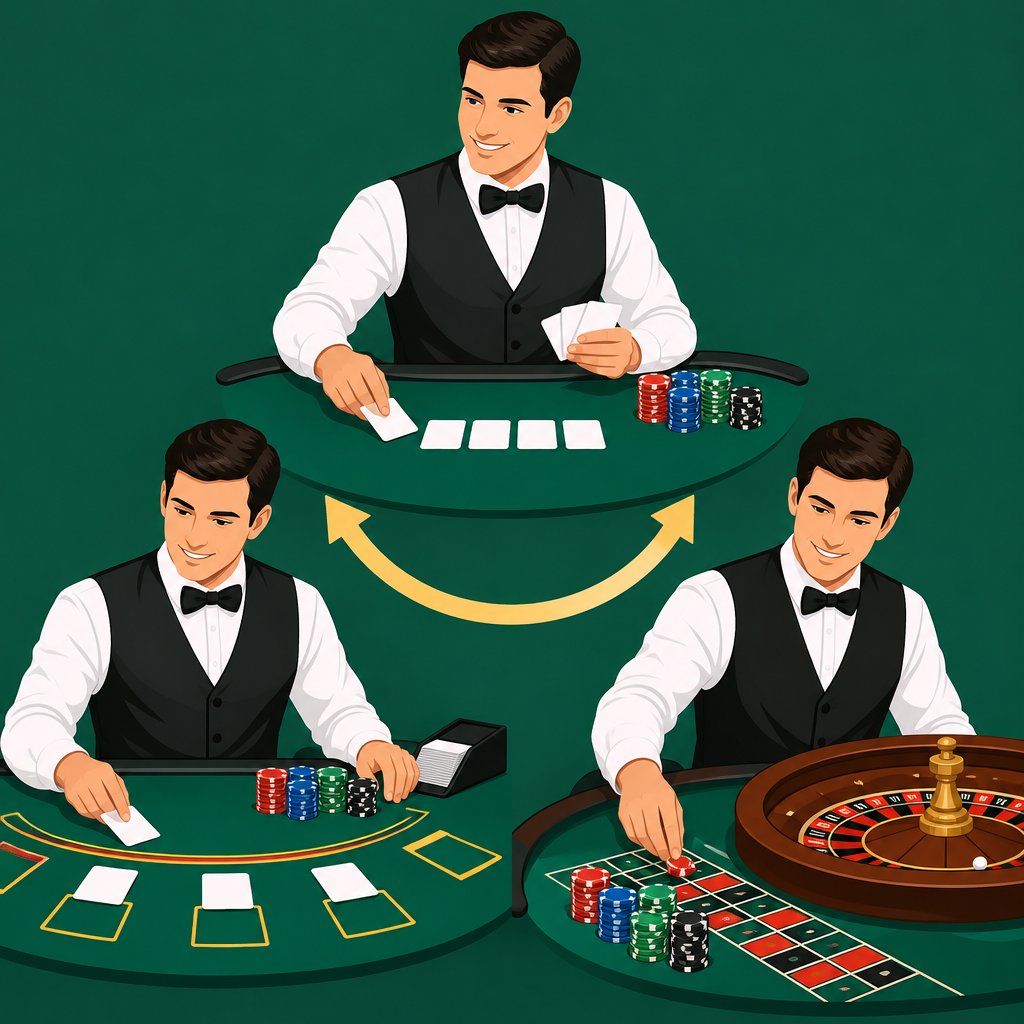
Dealers may handle blackjack, poker, or roulette during their careers.
Each game requires knowledge of its rules, procedures, and strategies.
By changing their approach, dealers can support an engaging experience for every player.
Communication with Different Players
Players differ in experience, expectations, and preferred pace.
Consequently, dealers should explain processes clearly to beginners and communicate efficiently with high rollers.
They can adjust their tone and timing while maintaining professionalism throughout play.
Problem-Solving During Casino Operations
Different assignments strengthen a dealer’s ability to respond quickly.
When challenges arise, dealers must assess situations and resolve issues confidently.
Moreover, calm decision-making helps them protect accuracy and maintain professional service.
Adapting to Casino Technology
Modern casinos may use electronic gaming tables and streaming platforms.
Dealers must learn these systems and follow their operating procedures.
Staying current with technology helps professionals remain adaptable within the industry.
Career Benefits of Role Adaptability
Role flexibility can expand a dealer’s opportunities across the gaming industry.
Experience with varied games and players can strengthen overall performance.
Ultimately, adaptable dealers can provide consistent service while pursuing broader professional opportunities.
Understanding the Different Types of Casino Dealer Roles
Casino dealers perform different duties depending on the game they conduct.
Each role requires specific knowledge, decisions, and techniques.
Moreover, dealers must manage games accurately while maintaining an efficient pace.
- A blackjack dealer conducts blackjack games, calculates card values, and applies the game’s rules.
- A poker dealer oversees poker games, supports fair play, and enforces the game’s rules.
- A roulette dealer spins the wheel and manages bets across the available roulette options.
Specific Skills and Knowledge Required for Each Role
Blackjack dealing depends on fast math, quick decisions, and rule knowledge.
Poker dealing emphasizes communication, hand knowledge, efficient management, and impartiality.
Roulette dealing requires coordination, mental math, betting knowledge, and pace control.
- Blackjack dealers need math skills, decision-making ability, rule knowledge, and pace management.
- Poker dealers need communication skills, poker knowledge, efficient management, and impartiality.
- Roulette dealers need hand-eye coordination, mental math, betting knowledge, and pace management.
Training and Preparation for Casino Dealers
Training builds essential dealing techniques and game knowledge.
It also teaches dealers the rules and regulations for various casino games.
Furthermore, thorough preparation improves efficiency, accuracy, and professionalism on the casino floor.
- Well-trained dealers approach their duties with greater confidence.
- Proper instruction helps dealers handle different situations effectively.
- Customer service training develops communication and conflict resolution skills.
Preparation for Different Dealer Roles
Dealers can strengthen their performance by practicing consistently.
They should also review game rules carefully to reduce mistakes during gameplay.
Additionally, ongoing learning helps dealers respond to changing games and technologies.
- Practice dealing techniques regularly to improve speed and accuracy.
- Study the rules of different casino games to support accurate play.
- Observe experienced dealers to learn effective techniques and strategies.
- Use online resources and tutorials to develop skills outside work.
- Follow industry trends to adapt quickly to new games or technologies.
By investing time in preparation, dealers can strengthen their skills across different roles.
Consequently, focused training helps dealers provide accurate and professional service to players.
Explore Further: Effective Marketing Strategies for Financial Advisors
Adaptability and flexibility help casino dealers thrive in the fast-paced casino industry.
Adaptability helps dealers transition smoothly between games while meeting player and casino needs.
Flexibility enables dealers to adjust their approach when situations change.
The Importance of Adaptability and Flexibility
These qualities help dealers manage demanding situations and deliver exceptional customer service.
Furthermore, adaptable dealers can support smooth gameplay across changing circumstances.
Strong adaptability also encourages positive relationships with colleagues and players.
- Adaptability allows dealers to transition smoothly between roles and games while meeting player and casino needs.
- Flexibility helps dealers adjust their approach according to each situation.
- These qualities improve dealers’ ability to manage challenging situations and provide excellent service.
- They also support a positive workplace and stronger relationships with colleagues and players.
Ways Casino Dealers Can Strengthen Their Adaptability
Dealers can build flexibility by organizing their work and reviewing each game’s rules and procedures.
Transform Your Career Today
Unlock a personalized career strategy that drives real results. Get tailored advice and a roadmap designed just for you.
Start NowAdditionally, effective communication helps dealers coordinate with players and colleagues during gameplay.
Remaining calm and receptive to feedback supports continued improvement during challenging situations.
- Stay organized and review the rules and procedures for every game you may deal.
- Practice multitasking and time management when handling multiple games and players.
- Communicate clearly with players and colleagues to support smooth gaming experiences.
- Accept feedback and learn from experienced dealers to strengthen your skills and knowledge.
- Remain calm under pressure and maintain a positive attitude during difficult situations.
By cultivating these attributes, dealers can navigate the casino industry’s diverse demands effectively.
Consequently, they can deliver exceptional gaming experiences to casino patrons.
Explore Further: Restaurant Manager's Guide to Staff Motivation
Communication Skills
Effective communication skills help casino dealers support smooth gameplay and customer satisfaction.
Without clear communication, misunderstandings can occur and create negative player experiences.
Therefore, dealers should strengthen communication across their casino responsibilities.
Listening Skills
Active listening helps dealers understand player needs and requests.
Dealers should also pay attention to instructions from supervisors and colleagues.
When uncertainty arises, dealers can ask questions to clarify instructions and requests.
- Listen actively to players and understand their needs and requests.
- Pay attention to instructions from supervisors and other dealers.
- Ask questions whenever clarification supports better understanding.
Verbal Communication
Clear speech helps players hear and understand important game information.
A professional tone supports respectful interactions with players and colleagues.
Polite language also helps dealers maintain courteous communication throughout the casino.
- Speak clearly and confidently so players can hear and understand you.
- Use a professional tone and language with players and colleagues.
- Remain polite and courteous during every interaction.
Non-Verbal Communication
Non-verbal signals can reinforce spoken messages during player interactions.
Attentive eye contact shows players that dealers remain engaged.
Open body language can make communication feel more welcoming.
- Use appropriate gestures and facial expressions to support your message.
- Maintain eye contact to show attentiveness and engagement.
- Keep your body language open and inviting.
Conflict Resolution
Calm communication helps dealers manage difficult players and challenging situations.
Dealers should hear each perspective before deciding how to respond.
Seeking common ground can support peaceful solutions.
- Stay calm and composed when handling difficult players or situations.
- Listen to both sides before reaching a resolution.
- Find common ground and offer peaceful solutions.
Teamwork
Team communication helps dealers coordinate game procedures efficiently.
Cooperation with colleagues supports a cohesive gaming experience.
Supporting fellow dealers also encourages a positive work environment.
- Collaborate with dealers to support an efficient gaming experience.
- Communicate with colleagues to coordinate game procedures smoothly.
- Assist fellow dealers when needed to maintain a positive workplace.
Strong communication helps casino dealers create a welcoming atmosphere for players.
It also helps dealers build positive relationships with their colleagues.
Because communication works both ways, dealers should welcome feedback and improve their interactions.
Discover More: The Future of the Casino Dealer Profession
Handling Difficult Situations
- Stay calm and composed when dealing with unruly players.
- Do not take things personally; remember that it is part of the job.
- Listen attentively to players’ concerns and issues.
- Address conflicts swiftly and fairly to maintain order.
- Seek assistance from security or management if necessary.
Strategies for Maintaining Composure
- Practice deep breathing techniques to stay relaxed.
- Take short breaks when feeling overwhelmed.
- Focus on the task at hand and avoid distractions.
- Use positive self-talk to boost confidence and resilience.
- Seek support from colleagues or supervisors for guidance.
Discover More: Essential Duties of a Restaurant Manager
Building Rapport with Players
- Understanding rapport’s significance across dealer roles remains crucial.
- A positive connection enhances the overall gaming experience for players.
- Players are more likely to return when casino staff value and respect them.
- Furthermore, rapport can increase customer loyalty and satisfaction.
- Exceptional service can also result in higher tips for dealers.
Creating a Positive and Engaging Player Experience
Greet players warmly to establish a friendly tone for the game.
Additionally, remember player preferences and respond to their needs.
Engage players in light conversation to develop a comfortable rapport.
Throughout the game, provide attentive, responsive, and friendly customer service.
Finally, offer assistance whenever players need helpful and supportive guidance.
These practices help dealers build strong player relationships and create a positive casino atmosphere.
Seeking Feedback and Improvement
Casino dealing improves when dealers actively seek feedback.
Constructive feedback reveals areas for improvement and strengthens professional performance.
Continuous learning helps dealers succeed in the dynamic casino industry.
- Dealers should ask supervisors and players for constructive feedback.
- Both positive and negative feedback support professional growth.
- Supervisors can explain how to handle different dealer roles effectively.
- Players’ feedback reveals their satisfaction and preferences.
- Dealers can sign up for training programs to improve their abilities.
- Training also helps dealers stay updated with current dealing techniques.
- Networking with experienced dealers provides valuable professional insights.
- Dealers should embrace challenges as opportunities for growth and development.
- Senior dealers can provide mentorship that strengthens dealing skills.
- Workshops and seminars can expand dealers’ knowledge bases.
- Dealers should accept feedback positively and refine their performance.
- Online forums and communities allow dealers to exchange ideas with peers.
- Regular reflection helps dealers learn from their experiences and mistakes.
- Personal improvement goals encourage dealers to strive for excellence.
- Continuous self-improvement remains essential in casino dealing.
- A growth mindset helps dealers adapt to different roles effectively.
- Feedback helps dealers recognize strengths and address weaknesses.
- Learning from supervisors and players supports better future performance.
- New techniques can help dealers respond to changing industry expectations.
- Consistent practice enables dealers to apply feedback with confidence.
Understanding the Various Casino Dealer Roles
Casino dealers handle different games, and each game demands focused attention.
They must adjust their procedures to match the specific game in progress.
Recognizing role differences supports accurate and consistent dealing.
Transform Your Career Today
Unlock a personalized career strategy that drives real results. Get tailored advice and a roadmap designed just for you.
Start NowDeveloping Versatility in Dealing
Dealers strengthen versatility by adjusting their dealing methods for each game.
They can apply game-specific procedures while maintaining a steady pace.
This approach helps them serve players effectively across changing assignments.
Enhancing Customer Service Skills
Customer service should reflect the expectations and pace of each game.
Dealers can build rapport by remaining respectful, attentive, and responsive.
As a result, players receive support that suits the gaming environment.
Improving Technical Knowledge
Dealers need current knowledge of each game’s rules and strategies.
That knowledge helps them answer questions and provide accurate service.
Regular review also supports confident decisions during gameplay.
Flexibility in Shift Assignments
Dealers should prepare for different shifts and changing schedules.
They can maintain professionalism when assignments vary.
Therefore, schedule flexibility supports dependable performance across casino operations.
Staying Calm Under Pressure
Pressure can arise during active games or changing assignments.
Dealers should remain composed and follow professional procedures.
Meanwhile, calm behavior helps preserve an orderly gaming experience.
Continuous Learning and Improvement
Dealers can improve by studying different games and reviewing their performance.
They should seek opportunities to expand their knowledge and dealing skills.
Consistent learning supports greater versatility in dealer roles.
Building a Strong Reputation in the Industry
Dealers build strong reputations by adapting across multiple responsibilities.
Their accuracy, service, and composure demonstrate professional reliability.
Versatility can support career growth and create advancement opportunities.
Career Growth Through Role Adaptation
Adapting to different dealer roles strengthens versatility, knowledge, and professionalism.
Furthermore, flexible dealers can manage varied games, schedules, and player needs.
These capabilities can help dealers build industry reputations and pursue career advancement.
Additional Resources
Google search results for Adapting to Different Casino Dealer Roles Service Industry
Bing search results for Adapting to Different Casino Dealer Roles Service Industry


