




Health and Safety Training for Amusement Park Attendants
Health and safety training is crucial for amusement park attendants.
It helps create a safe environment for employees and visitors.
Attendants face risks while operating rides, interacting with guests, and handling emergencies.
Health and Safety Training for Amusement Park Attendants
- Health and safety training teaches amusement park attendants proper safety protocols.
- The training covers emergency procedures, ride operation, first aid, and guest interaction.
- Proper training helps prevent accidents and injuries while protecting employees and guests.
- It also reduces liability risks and supports compliance with safety regulations.
Amusement Park Attendant Responsibilities
Amusement park attendants help keep guests safe and support smooth park operations.
They monitor attractions, assist guests, and address concerns during daily operations.
They also maintain rides and grounds while responding to incidents.
- Monitor rides and attractions to ensure safe and efficient operation
- Assist guests with boarding and exiting rides safely and orderly
- Enforce safety regulations and guidelines to help prevent accidents and injuries
- Respond quickly and appropriately to emergencies or incidents
- Provide excellent customer service by answering questions and addressing concerns
- Clean and maintain rides, equipment, and park grounds
Amusement Park Attendant Shift Tasks
During each shift, attendants inspect rides and equipment before operations begin.
They secure restraints and monitor restrictions before each ride cycle.
They communicate with staff and document issues that require attention.
- Conduct pre-operational checks on rides and equipment
- Inspect and secure safety restraints and harnesses before each ride cycle
- Monitor guest behavior and enforce restrictions based on height, weight, and age
- Communicate with staff members and supervisors to coordinate operations and responses
- Complete incident reports and document issues arising during the shift
By performing these duties diligently, attendants help create a safe and enjoyable experience for park visitors.
You Might Also Like: Career Growth Opportunities for Financial Advisors
Common Hazards in Amusement Parks
Amusement park attendants encounter several hazards during their daily duties.
They can reduce these risks by following safety procedures and receiving appropriate training.
Awareness helps attendants protect themselves, guests, and fellow staff members.
Ride Operation Hazards
Ride equipment can malfunction while attendants perform operational duties.
Regular inspections and certified maintenance help identify problems before rides operate.
Clear communication supports an orderly response when attendants shut down rides.
- Attendants may encounter mechanical failures or malfunctions on rides.
- Training should emphasize regular ride inspections and maintenance by certified technicians.
- Attendants must follow proper communication protocols during ride shutdowns.
Guest Interaction Hazards
Guest disagreements can become confrontational when attendants enforce safety rules.
De-escalation techniques help attendants manage difficult interactions calmly.
Prompt attention to concerns can prevent situations from escalating.
- Unruly guests or safety enforcement can result in confrontations.
- Training should include conflict resolution and de-escalation strategies.
- Attendants should address guest concerns promptly to support positive experiences.
Weather-Related Hazards
Severe weather can create dangerous conditions for attendants and guests.
Weather monitoring helps staff recognize changing conditions quickly.
Clear evacuation procedures guide decisions when weather affects operations.
- Lightning storms and other extreme weather conditions can endanger attendants.
- Training should cover weather monitoring and evacuation procedures.
- Clear guidelines should identify when adverse weather requires suspended operations.
Manual Handling Hazards
Attendants may strain their bodies while lifting objects or assisting guests.
Proper lifting methods can reduce the likelihood of musculoskeletal injuries.
Rest breaks help attendants manage fatigue during physically demanding duties.
- Lifting heavy objects or assisting guests can cause musculoskeletal injuries.
- Training should cover proper lifting techniques and assistive devices.
- Adequate rest breaks can help prevent fatigue-related injuries.
Slip, Trip, and Fall Hazards
Uneven surfaces, spills, and crowded walkways can create fall risks.
Regular cleaning helps attendants address hazards before someone gets hurt.
Warning signs alert guests and staff to wet or unsafe surfaces.
- Uneven surfaces, spills, and crowded walkways increase fall risks.
- Regular cleaning schedules should address unsafe surfaces promptly.
- Proper signage should identify wet surfaces for guests and staff.
- Training should teach hazard awareness and safe walking practices.
Comprehensive training helps attendants recognize and manage workplace hazards.
Strict safety protocols support effective duties and protect guests and fellow staff members.
Attendants can reduce preventable risks by applying these practices consistently.
Delve into the Subject: How to Start Your Own Financial Advisory Firm
Training Techniques and Programs
Amusement parks can use several training techniques for their attendants.
First, hands-on training lets attendants practice skills in a real-world setting.
This approach familiarizes them with the environment where they will work.
Consequently, attendants gain a clearer understanding of their roles and responsibilities.
They also learn to respond to various situations and workplace challenges.
Meanwhile, simulations recreate situations that attendants may encounter at the park.
These exercises let attendants practice responses in a controlled environment.
Transform Your Career Today
Unlock a personalized career strategy that drives real results. Get tailored advice and a roadmap designed just for you.
Start NowFor example, simulations can cover emergencies, customer interactions, and other important tasks.
As a result, attendants can build confidence and make quicker decisions.
Training programs often combine practical exercises, classroom instruction, and online modules.
This combination gives attendants a well-rounded education for their roles.
Furthermore, varied training methods can improve performance and support a better guest experience.
Therefore, comprehensive training benefits both employees and park visitors.
Delve into the Subject: Top Skills Every Financial Advisor Should Master
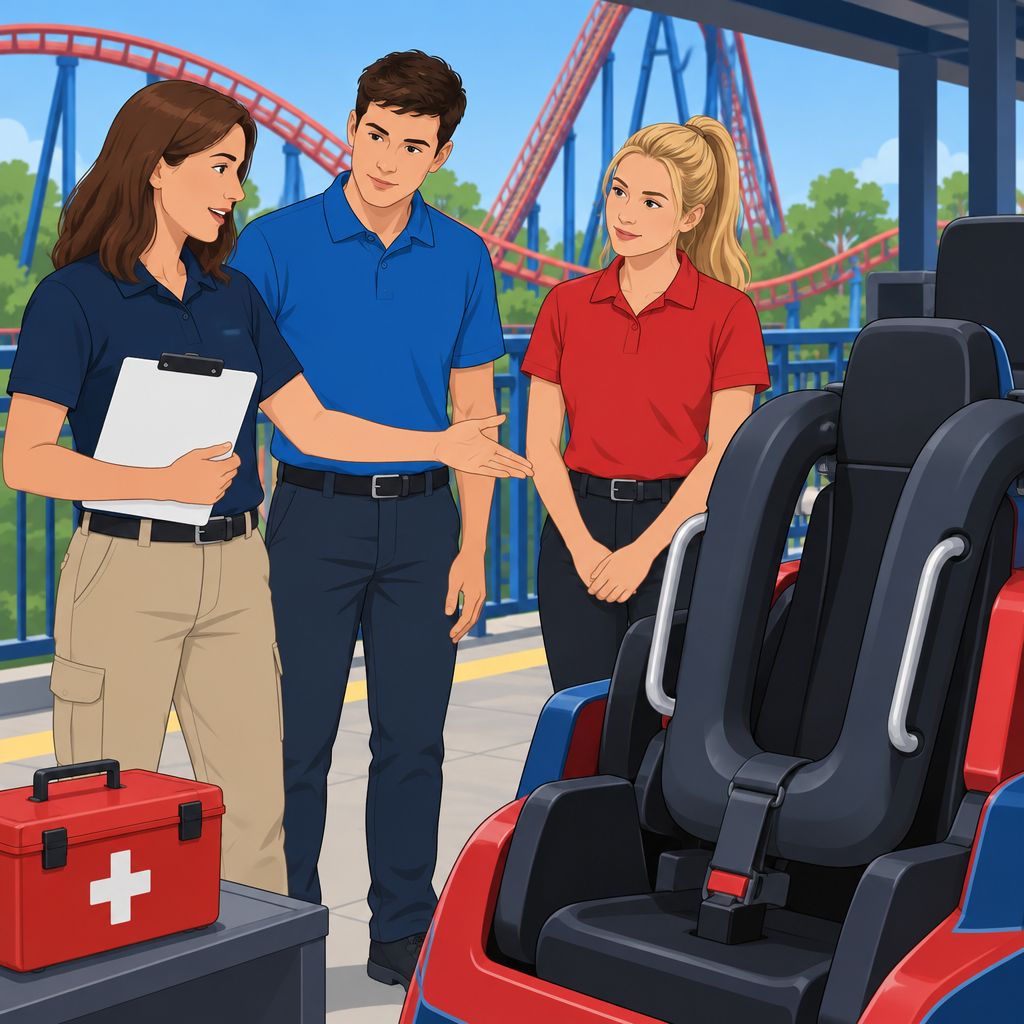
Emergency Response Procedures
Amusement park attendants need training in specific emergency response procedures.
These procedures help attendants protect guests during emergencies.
Thorough, ongoing training prepares attendants to act quickly and effectively.
- Attendants should follow established emergency response procedures.
- These procedures support guest safety during emergencies.
- Attendants must respond quickly to reduce potential risks.
- Regular training keeps attendants prepared for emergency situations.
Evacuation Protocols
Attendants should understand the designated evacuation routes throughout the park.
Clear communication helps staff coordinate evacuations efficiently.
Regular drills give attendants opportunities to practice evacuation procedures.
- Attendants should know evacuation routes for different park areas.
- Staff members must communicate clearly during evacuations.
- Regular drills should reinforce evacuation procedures.
- Attendants should assist guests with special needs during evacuations.
Quick, efficient evacuations help protect guests during emergencies.
Attendants must remain calm while guiding guests toward safety.
Decisive actions can support an organized emergency response.
First Aid and Medical Assistance
Attendants should learn basic first aid techniques and CPR.
First aid kits and AEDs should remain readily available throughout the park.
Attendants should know how to summon additional medical assistance.
- Attendants should receive training in basic first aid and CPR.
- First aid kits and AEDs should remain accessible.
- Quick medical responses can help prevent further complications.
- Attendants should request additional medical assistance when needed.
Medical emergencies can occur at any time in an amusement park.
Therefore, attendants must provide immediate first aid when appropriate.
Basic medical training can make a significant difference during emergencies.
Communication Protocols
Park management should establish clear communication channels for emergencies.
Attendants need quick access to park management and emergency services.
Regular communication drills help attendants remember emergency procedures.
- Staff should use established communication channels during emergencies.
- Attendants should contact management and emergency services quickly.
- Emergency codes or signals should alert staff and guests.
- Communication drills should reinforce emergency protocols.
Effective communication supports a coordinated emergency response.
Attendants must relay information quickly and accurately.
Accurate messages help staff respond to potential threats.
Incident Reporting
Attendants should report incidents and accidents promptly.
Accurate documentation helps identify patterns and potential hazards.
Simple reporting procedures make documentation easier for attendants.
- Attendants should report incidents without unnecessary delays.
- Accurate records can support future safety improvements.
- Reporting procedures should remain simple and straightforward.
- Training helps attendants document incidents correctly.
Proper reporting helps the park recognize recurring safety concerns.
Attendants support park safety by documenting incidents carefully.
Prompt reports can inform efforts to prevent future emergencies.
Teamwork and Collaboration
Park staff must collaborate during emergency responses.
Attendants should practice working together under stressful conditions.
Team-building exercises can strengthen communication and coordination.
- Staff collaboration supports effective emergency responses.
- Attendants should work together during high-stress situations.
- Team-building exercises can improve staff coordination.
- A teamwork culture can enhance park safety.
Successful emergency responses require staff members to work seamlessly.
Attendants should communicate effectively while addressing emergencies.
Cooperation helps staff manage emergencies throughout the park.
Transform Your Career Today
Unlock a personalized career strategy that drives real results. Get tailored advice and a roadmap designed just for you.
Start NowUncover the Details: Building Trust with Clients as a Financial Advisor
Communication Skills
- Effective communication helps prevent accidents and resolve conflicts at amusement parks.
- Attendants should actively listen and communicate clearly with guests to support safety.
- Training helps attendants remain calm and composed during difficult situations.
- Positive language and tone help attendants convey instructions and information clearly.
- Understanding non-verbal cues helps attendants assess guest needs and feelings.
Tips for Improving Communication
- Role-playing exercises help attendants practice communication scenarios with coworkers.
- Open-ended questions help attendants gather information and address concerns effectively.
- Active listening techniques include paraphrasing and summarizing to show understanding.
- Mutual respect and empathy foster positive communication between attendants and guests.
- Feedback and coaching help attendants improve their communication skills over time.
Ongoing training and development help amusement park attendants maintain high safety standards.
These opportunities keep attendants informed about changing technology and ride innovations.
They also strengthen confidence, motivation, and commitment to their roles.
Why Ongoing Training and Development Matters
Regular refreshers reinforce emergency procedures and first aid techniques.
Customer service practice helps attendants support guests consistently.
Additionally, learning opportunities prepare attendants to handle varied situations at the park.
- Technology and ride innovations require attendants to maintain current knowledge.
- Refresher training reinforces emergency procedures, first aid techniques, and customer service skills.
- Ongoing learning keeps employees engaged, motivated, and invested in their roles.
- Regular opportunities help attendants feel confident when handling different situations at the park.
Benefits of Continuous Learning for Amusement Park Attendants
Continuous learning strengthens safety measures and supports reliable park operations.
It also helps attendants deliver exceptional service and assistance to guests.
Furthermore, well-trained employees can contribute to morale, retention, and a professional workplace.
- Updated training helps attendants support safety protocols and reduce incidents.
- Improved knowledge helps attendants provide better service and assistance.
- Continuous development can improve morale, job satisfaction, and retention.
- Well-trained staff can reduce the park’s liability risks.
- Shared learning promotes professionalism, accountability, and teamwork among employees.
These benefits help attendants uphold safety standards, improve guest experiences, and support the park’s success.
Safety Training Supports Secure Park Experiences
Effective training equips amusement park attendants to protect employees and guests.
Attendants learn to identify potential hazards and respond appropriately during emergencies.
They also develop practical knowledge of safety protocols and effective communication.
Consequently, training helps attendants prevent accidents and injuries.
Furthermore, trained attendants can handle unexpected situations with greater confidence.
This preparation supports a safe and enjoyable experience for park guests.
Therefore, consistent training demonstrates the park’s commitment to a secure environment.
Additional Resources
Google search results for Health and Safety Training for Amusement Park Attendants Service Industry
Bing search results for Health and Safety Training for Amusement Park Attendants Service Industry


