




Mining’s Social and Cultural Effects
Mining provides essential resources, including metals and minerals.
Furthermore, mining operations shape social and cultural life within affected communities.
These operations can also influence community traditions and practices.
Therefore, examining these effects helps society understand mining’s broader impact.
Historical Perspective
Mining has supported human civilization for centuries.
Ancient communities extracted valuable minerals and resources from the earth.
These activities helped shape communities and cultures around the world.
Mining’s Role in Shaping Communities
Mining often encouraged people to establish and expand communities near extraction sites.
Settlements grew around mining sites and became active centers of employment and trade.
Residents depended on mining for employment and economic stability.
- Mining often drove the establishment and growth of communities.
- Settlements formed around mining sites and created vibrant activity centers.
- Mining towns developed unique identities and cultures connected to their industry.
Mining’s Influence on Cultural Norms and Traditions
Mining changed physical landscapes and influenced the social fabric of affected societies.
Miners created traditions and practices that communities passed through generations.
The demanding work encouraged miners to build strong relationships with one another.
- Mining influenced social customs alongside physical landscapes.
- Miners developed traditions suited to dangerous and demanding work.
- Miners formed tight-knit communities through camaraderie and solidarity.
Significant Events in Mining History
Several historical events demonstrate mining’s influence on migration and settlement.
The California Gold Rush attracted large numbers of people to the region.
Later, industrial mining accelerated urbanization and transformed traditional agricultural societies.
- The California Gold Rush sparked massive migration during the mid-nineteenth century.
- The event changed California’s landscape and produced lasting social effects.
- The Industrial Revolution increased mining activity and encouraged rapid urbanization.
- This period shifted societies from traditional agriculture toward industrialization.
Mining history reveals how resource extraction influenced settlement patterns and community development.
It also preserved traditions that reflected the demanding conditions of mining work.
Economic Impact of Mining
Mining activities can reshape local economies through employment, investment, demand, and changing prices.
These effects can create prosperity while also producing financial pressure for residents.
Therefore, communities need equitable economic planning alongside mining development.
Local Economic Effects
Mining operations can create job opportunities and stimulate economic growth within surrounding regions.
However, rising demand for goods and services can cause inflation and higher prices.
Consequently, mining can provide economic benefits while increasing living costs for local residents.
Economic Differences Within Mining Communities
Mining communities may experience unequal wealth distribution among residents.
Some individuals gain through mining jobs, contracts, and related business opportunities.
Meanwhile, other residents may receive few benefits, which can deepen social inequality.
Social Mobility and Economic Opportunities
Mining can help some individuals improve their socioeconomic position through better-paying employment.
Additionally, mining careers can provide opportunities for advancement and increased household income.
Yet environmental degradation, displacement, and labor exploitation can restrict opportunities for other groups.
Creating More Inclusive Mining Economies
Mining companies and local governments can cooperate to distribute economic benefits more fairly.
They can also address environmental harm, displacement, and unequal access to employment.
Through these measures, mining communities can pursue more sustainable and inclusive economic development.
See Related Content: How to Improve Efficiency as an Assembler
Environmental Concerns
- Mining activities can significantly impact the environment in nearby communities.
- Resource extraction can cause deforestation, soil erosion, and water contamination.
- Residents near mining sites may face health risks from pollutant exposure.
Environmental Degradation and Health Risks
- Mining can destroy natural habitats and reduce biodiversity.
- Heavy metals and chemicals can enter the air, water, and soil.
- These pollutants can harm plant and animal life, as well as human health.
Importance of Sustainable Mining Practices
- Mining companies must implement sustainable practices to minimize environmental harm.
- Sustainable mining reduces waste, conserves resources, and limits negative impacts.
- By prioritizing sustainability, companies can preserve social and cultural well-being in communities.
Delve into the Subject: Excavator Operation: Key Techniques and Tips
Community Relationships in Mining Areas
Mining activities can strengthen or strain relationships within communities.
However, environmental concerns, land rights disputes, and economic issues can create conflicts.
Local residents may feel marginalized or exploited by nearby mining companies.
Poor communication and limited transparency can further escalate tensions between communities and companies.
Successful Community Engagement and Collaboration
Some mining companies establish community development programs that benefit local residents.
Transform Your Career Today
Unlock a personalized career strategy that drives real results. Get tailored advice and a roadmap designed just for you.
Start NowThese programs can improve relationships by addressing community priorities.
Moreover, companies can build trust by involving residents in decisions and listening carefully.
- Job opportunities, education, healthcare, and infrastructure improvements can support local communities.
- Community participation can strengthen trust between residents and mining companies.
- Local organizations, government agencies, and NGOs can support sustainable development initiatives.
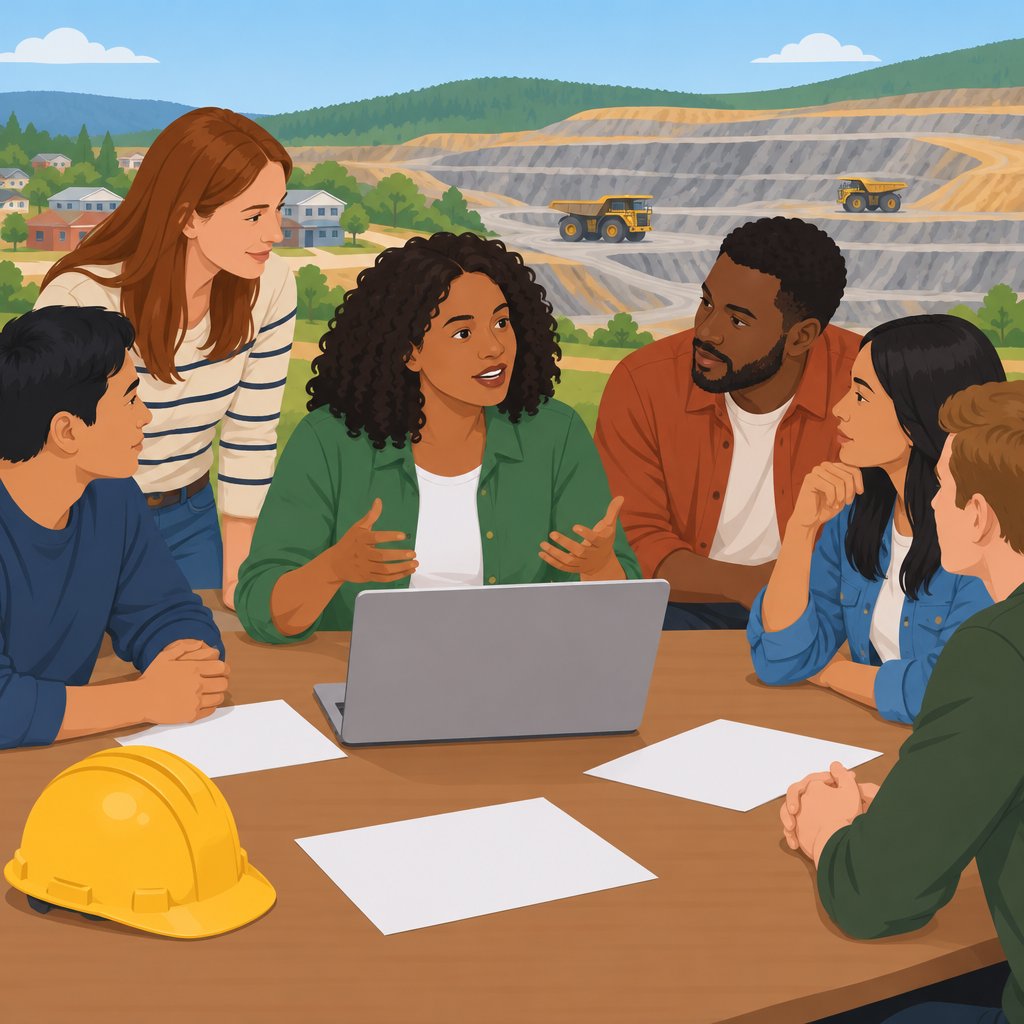
Newmont Mining Corporation’s Community Relations Approach
Newmont Mining Corporation has made community engagement a priority.
The company established Community Relations Teams across its operating regions.
These teams foster relationships with communities near Newmont’s operations.
- Newmont uses regular meetings, consultations, and open dialogues to address local concerns.
- The company seeks feedback from residents during its community discussions.
- Newmont invests in healthcare clinics, schools, and infrastructure upgrades in nearby villages.
- The company works with local stakeholders while implementing sustainable practices.
- This approach has helped Newmont gain credibility and community support.
Shared Value Through Community Partnerships
Community relationships remain essential to successful mining projects.
Therefore, mining companies should build trust, listen to concerns, and engage local communities.
These practices can reduce conflicts and support mutually beneficial outcomes.
By adopting effective engagement practices, companies can promote sustainable development.
Find Out More: The Impact of Climate Change on Mining Operations
Cultural Heritage in Mining Regions
Mining activities can significantly affect cultural heritage sites and traditions.
When operations disrupt or destroy these places, communities may lose landmarks and artifacts with deep cultural significance.
Therefore, mining projects should consider heritage protection before operations begin.
In many regions, communities and companies work to preserve cultural practices and landmarks.
They often consult archaeologists and cultural heritage experts to identify important sites.
These experts can help protect valuable locations before mining activities start.
Furthermore, communities benefit when mining companies recognize the cultural meaning of local traditions.
Many companies now conduct cultural heritage assessments during project planning.
These assessments help companies respect local values while planning mining activities.
Such efforts can help preserve regional identity and heritage.
- Mining regions can preserve cultural practices and landmarks.
- Experts can help protect important sites before mining begins.
- Cultural heritage assessments can honor local traditions and values.
Discover More: Essential Skills for Construction Managers
Labor and Social Justice
Mining operations rely on workers who face unique challenges and risks.
Furthermore, hazardous conditions can cause accidents, injuries, and fatalities.
Addressing these issues promotes social justice and equity within the industry.
- Worker safety: Mining companies should protect employees from hazardous working conditions and workplace risks.
- Fair wages: Fair wages can provide workers with decent living standards and greater economic security.
- Labor rights: Companies should protect workers’ rights to organize, bargain collectively, and work safely.
- Promoting social justice: Companies can support social justice through fair labor practices, worker rights, and community development. They can engage workers, communities, and governments to promote equity.
Social Activism and Advocacy
Social activism helps individuals and groups pursue social, political, economic, and environmental change in mining communities.
Advocates expose harmful mining effects, including human rights violations, environmental damage, and health risks.
They also encourage decision-makers to address community concerns and protect affected residents.
Furthermore, successful advocacy campaigns can increase public understanding of mining-related social issues.
Advocacy Campaigns and Grassroots Movements
Grassroots movements usually involve local residents or community organizations.
These groups seek to protect community rights, health, and environmental conditions.
Moreover, organized campaigns can pressure governments and companies to change harmful mining practices.
- In El Salvador, the Anti-Mining Movement pressured the government to ban metallic mining over water pollution and environmental destruction.
- Indigenous communities and allies protested the Dakota Access Pipeline over threats to land, water sources, and sacred sites.
Grassroots Movements and Social Change
Grassroots activism empowers communities that decision-makers often marginalize or overlook.
These movements also raise awareness and mobilize support from policymakers, media organizations, and the public.
Additionally, activists can build alliances with social justice and environmental organizations.
- Grassroots movements give marginalized communities a stronger voice in mining-related decisions.
- They increase public awareness of mining-related social issues and encourage broader support.
- They build solidarity with organizations pursuing social justice and environmental protection.
- They can influence local, national, and international decisions that affect mining communities.
- These efforts can encourage reforms that better protect community rights and well-being.
Social and Cultural Priorities for Sustainable Mining
Social and cultural considerations shape mining communities and support sustainable practices.
Mining activities affect local cultures and societies, so stakeholders must balance development with social and environmental needs.
By engaging communities, companies can build positive relationships and strengthen sustainability.
Furthermore, stakeholders should protect cultural practices while supporting sustainable development in mining projects.
Exploring mining’s relationship with society can encourage more responsible and inclusive practices.
Additional Resources
Google search results for The Social and Cultural Aspects of Mining Construction and Manual Labor
Transform Your Career Today
Unlock a personalized career strategy that drives real results. Get tailored advice and a roadmap designed just for you.
Start NowBing search results for The Social and Cultural Aspects of Mining Construction and Manual Labor


