




Introduction
Railroad engineering covers the design, construction, and maintenance of rail systems for efficient transportation.
Engineers apply technical knowledge to support reliable and effective rail operations.
They also adapt rail infrastructure as transportation needs and technologies change.
Future Trends in Railroad Engineering
As technology advances, railroad engineers must track emerging trends to support innovation.
Automation now represents a major trend shaping the future of railroad engineering.
It improves safety while increasing efficiency in train operations.
Meanwhile, advanced signaling systems such as Positive Train Control (PTC) enhance railroad safety.
Artificial intelligence and predictive maintenance can identify potential issues before they occur.
Furthermore, high-speed rail networks can reduce travel time and improve connectivity.
Green initiatives, including electrification and carbon reduction, continue gaining importance.
Innovative materials, such as composites and lightweight alloys, can improve infrastructure durability and sustainability.
Infrastructure upgrades involving bridges, tunnels, and tracks remain crucial for future rail transportation.
Finally, collaboration with energy and technology industries can foster innovation in railroad engineering.
Automation and Artificial Intelligence
Railroad engineers increasingly integrate artificial intelligence to improve safety and efficiency.
Automation can increase train operation accuracy and speed.
Furthermore, AI systems analyze data in real time to predict and prevent potential issues.
- Automation can increase train operation accuracy and speed.
- AI systems can analyze data in real time, predicting and preventing potential issues.
- Moreover, AI can optimize train schedules and routes to improve overall performance.
- Additionally, automation can reduce human error and improve railroad system reliability.
- Consequently, AI adoption can advance safety, efficiency, and railroad system performance.
Therefore, automation and artificial intelligence can significantly advance railroad engineering.
Sustainable Practices in Railroad Engineering
Railroad engineers increasingly use eco-friendly materials and practices to reduce environmental impacts.
These materials come from sustainable sources and affect the environment less than traditional alternatives.
Additionally, energy-efficient technologies help railway operations reduce energy waste and carbon emissions.
Engineers optimize energy use across trains, tracks, and supporting railway systems.
Renewable Energy and Smart Railway Infrastructure
Railway operators increasingly integrate solar panels, wind turbines, and other renewable energy sources.
These sources can power railway infrastructure and reduce dependence on fossil fuels.
Meanwhile, green initiatives support waste reduction, recycling programs, and other environmentally responsible practices.
Smart infrastructure further improves sustainability through monitoring systems, predictive maintenance, and energy-efficient signaling.
Collaboration and Lifecycle Assessment
Railroad companies, engineering firms, and environmental organizations collaborate to advance sustainable development.
Through collaboration, stakeholders share best practices, resources, and innovations across the industry.
Engineers also conduct lifecycle assessments to evaluate environmental impacts throughout railway projects.
These assessments identify improvements from initial design through maintenance and eventual decommissioning.
Gain More Insights: Training Programs for Aspiring Railroad Engineers
Development of Faster Trains
High-speed rail engineers continue developing trains that improve efficiency and reduce travel times.
- Engineers are developing faster trains to reduce travel times between major cities.
- These improvements can make rail travel more competitive with air travel and reduce carbon emissions.
- Engineers optimize aerodynamics and introduce new propulsion systems to achieve unprecedented speeds.
Introduction of Magnetic Levitation Technology
Magnetic levitation technology represents an exciting development in high-speed rail.
- Maglev trains float above the track by using powerful magnets.
- This design reduces friction and allows trains to reach higher speeds.
- Maglev trains can exceed 300 mph, transforming expectations for high-speed travel.
Engineers continue pushing high-speed rail toward faster, more efficient, and more sustainable transportation.
Discover More: The Benefits of Continuous Learning in Logistics Consulting
Technology advances continue to shape railroad engineering and improve the need for efficient operations.
Advanced track maintenance will become a significant future trend in railroad engineering.
These methods can help railroads manage infrastructure more efficiently.
Utilization of Predictive Maintenance Tools
Traditional maintenance relies on reactive measures that can become costly and time-consuming.
Predictive maintenance tools help railroad companies identify potential issues before they become major problems.
Furthermore, data analytics and machine learning analyze historical data to predict maintenance needs.
Transform Your Career Today
Unlock a personalized career strategy that drives real results. Get tailored advice and a roadmap designed just for you.
Start Now- These tools use data analytics and machine learning algorithms to analyze historical data and predict maintenance requirements.
- Railroads can schedule repairs and replacements at optimal times, reducing downtime and improving efficiency.
- This proactive approach saves time and money while enhancing railway safety.
Implementation of Drone Technology
Drone technology gives railroads an efficient way to inspect tracks and infrastructure.
High-resolution cameras and sensors help drones detect cracks, wear, and misalignments quickly.
Additionally, regular drone inspections help railroads address defects before they worsen.
- Drones can quickly detect defects such as cracks, wear, and misalignments in tracks.
- Railroads can identify issues early and take corrective action before conditions worsen.
- Drones also support track repairs, including welding and fastening, while reducing manual labor needs.
These advanced maintenance techniques can change how railroads manage infrastructure.
They can improve efficiency and safety while reducing costs and disruptions.
Consequently, railroads can support a more reliable and sustainable railway system.
Explore Further: Networking Tips for Expediters in Logistics
Improved connectivity remains a key future trend in railroad engineering.
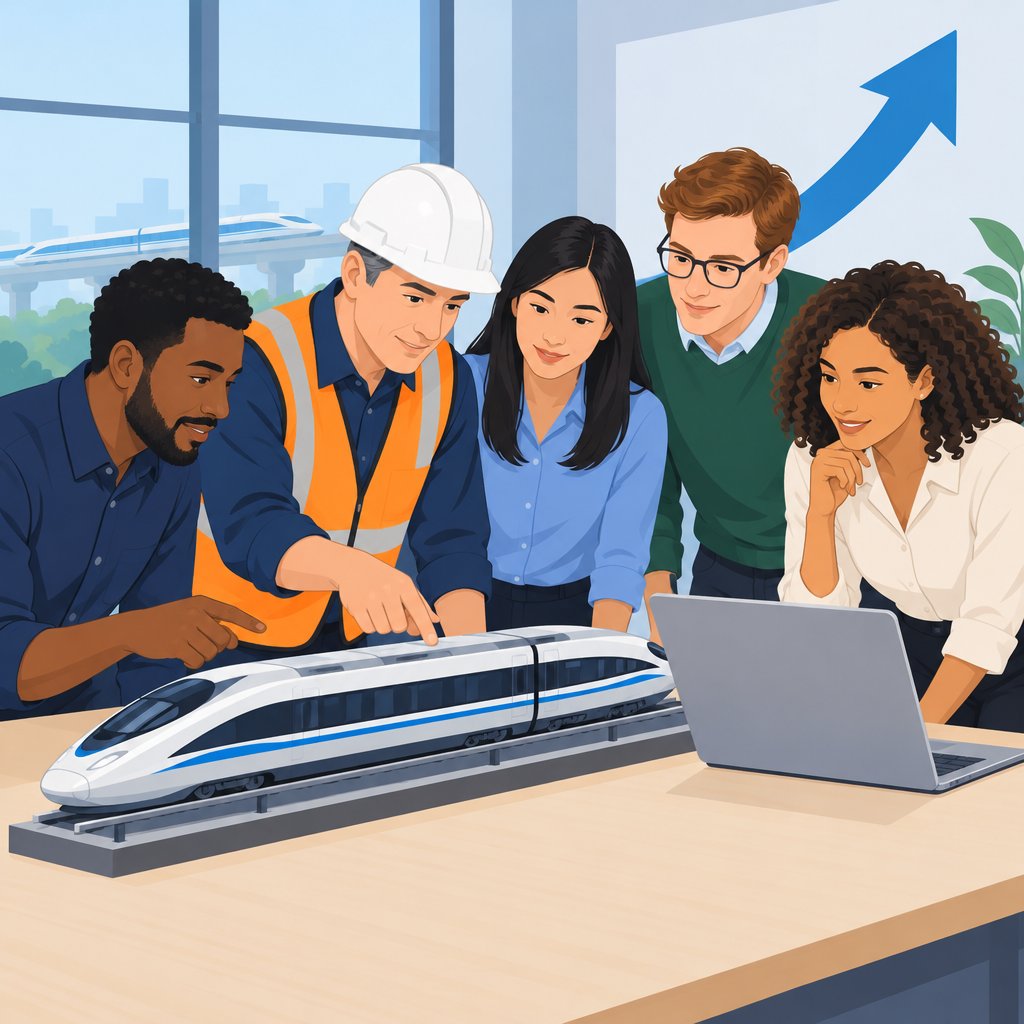
Real-Time Train Monitoring Through IoT
Sensors placed on trains gather data about speed, temperature, and maintenance needs.
They transmit this real-time data to a central control system.
Consequently, railroads can detect issues early and support proactive maintenance.
This approach can also improve service scheduling.
Enhanced Communication Between Trains
Effective communication supports safe and efficient train operations.
Upgraded systems can coordinate trains, stations, and control centers seamlessly.
This coordination can improve service reliability and reduce delays.
Furthermore, better communication can enhance passenger safety and satisfaction.
These connectivity improvements can strengthen operational efficiency, safety, and customer satisfaction.
Uncover the Details: Essential Tools for Efficient Delivery Drivers
Safety Innovations in Railroad Engineering
- Collision avoidance systems help prevent accidents during railroad operations.
- Advanced signaling technology supports smoother and safer railroad operations.
Railroad engineering continues to evolve, while safety remains a priority for industry professionals.
Recent advancements focus on preventing accidents and improving operational performance.
Therefore, railroad professionals must understand these innovations and their practical applications.
Collision Avoidance Systems
Collision avoidance systems detect potential collisions and automatically apply brakes to prevent accidents.
These systems reduce risks associated with human error and mechanical failures.
As a result, they provide additional protection for passengers and railroad employees.
Advanced Signaling Technology
Advanced signaling technology improves coordination between trains and trackside infrastructure.
Real-time data and communication networks help railroads manage traffic more effectively.
Consequently, these systems support smoother operations, fewer disruptions, and stronger safety measures.
Expansion of Infrastructure
- Construction of new tracks and stations to meet rising demand
- Upgrading existing railroad systems for improved efficiency and capacity
Railroad infrastructure must expand as passenger and freight demand increases.
This growth requires new routes, stations, and improvements to established systems.
These projects can strengthen capacity, efficiency, sustainability, and regional connectivity.
Construction of New Tracks and Stations
Growing populations and expanding urban areas increase the need for additional tracks and stations.
Existing infrastructure can become overburdened in densely populated regions.
Therefore, new tracks can create routes and improve connections between destinations.
New stations can support the smooth movement of passengers and goods.
Designers may include waiting areas, ticketing counters, and shops.
Additionally, solar panels and rainwater harvesting systems can support sustainable station designs.
Upgrading Existing Railroad Systems
Railroads can also modernize existing systems to improve efficiency and capacity.
Upgrades may include tracks, signaling systems, and train operations.
Moreover, automation and data analytics can support safety, reliability, and punctual service.
High-speed rail services can reduce travel time between major cities.
Transform Your Career Today
Unlock a personalized career strategy that drives real results. Get tailored advice and a roadmap designed just for you.
Start NowThey can also provide an alternative to air travel.
Investment in these networks can support economic growth and regional connectivity.
Rail expansion can also help reduce carbon emissions.
Digital Transformation in Railroad Engineering
Railroad engineering now approaches a digital transformation that could reshape the industry.
Several technologies are changing how railroad companies plan, operate, and manage their systems.
These advances can improve efficiency, decision-making, collaboration, and customer service.
- Big data analytics for decision-making and planning
- Cloud-based platforms for streamlined operations
Big Data Analytics for Railroad Planning
Railroad companies use big data analytics to support better decision-making and planning.
By analyzing extensive data, operators can optimize routes, schedules, and maintenance activities.
Consequently, data-driven planning can reduce costs and help operators address potential issues earlier.
Cloud-Based Platforms for Railroad Operations
Cloud-based platforms help railroad companies streamline operations and improve collaboration.
Centralized data and applications give operators real-time access to important information.
Furthermore, these platforms support train tracking, maintenance management, and staff communication.
Digital Tools Supporting Industry Competitiveness
Cloud systems also help railroad operators scale their operations efficiently.
This flexibility allows companies to respond more effectively to changing market conditions and customer demands.
By embracing digital tools, railroad companies can strengthen operations and remain competitive within an evolving industry.
Future Trends in Railroad Engineering
Railroad engineering will continue evolving as technology and sustainability reshape industry practices.
These developments can improve operational efficiency, strengthen reliability, and support better connections.
Railroads can prepare for changing demands by adopting practical innovations across their systems.
Innovation and Sustainability in Railroad Engineering
Railroads should embrace innovation to remain competitive and reduce their environmental impact.
Furthermore, targeted investments can improve efficiency while supporting safer and more sustainable operations.
A culture of continuous improvement can help the industry build a more interconnected future.
- Automation and digitalization will transform railroad operations.
- High-speed rail networks will become more prevalent.
- Sustainability initiatives will advance energy efficiency.
- Electrification and hybrid technologies will gain traction.
- Predictive maintenance will enhance reliability and safety.
- Modular construction techniques will improve infrastructure development.
Additional Resources
Google search results for Future Trends in Railroad Engineering Transportation and Logistics
Bing search results for Future Trends in Railroad Engineering Transportation and Logistics


