




Introduction
Port operations managers play a crucial role in ensuring efficient and smooth port operations.
They oversee cargo handling, berth management, and vessel scheduling.
Technology helps optimize port operations by streamlining processes, enhancing productivity, and improving overall efficiency.
Key Technologies Used by Port Operations Managers
Port operations managers use several technologies to coordinate cargo, equipment, and terminal activities.
These tools support automated handling, operational tracking, real-time visibility, and performance monitoring.
Together, they provide structured information for managing port processes efficiently.
- Automated container handling systems
- Terminal operating systems
- IoT devices for tracking cargo and equipment
- Data analytics software for performance monitoring
Automated Container Handling Systems
Automated container handling systems move cargo containers from ships to storage yards.
For example, ports can use automated stacking cranes, automated guided vehicles, and robotic arms.
As a result, automation increases productivity and reduces human error.
Terminal Operating Systems
Terminal operating systems help port operators manage and optimize terminal operations.
They track cargo movement, container status, and berth schedules.
Additionally, these systems support communication among shipping lines, terminal operators, and customs authorities.
IoT Devices for Tracking Cargo and Equipment
IoT devices help managers track cargo and equipment in real time.
Operators can attach these devices to containers, vehicles, and equipment.
Meanwhile, the devices provide location data, temperature monitoring, and security alerts.
Data Analytics Software for Performance Monitoring
Data analytics software helps managers monitor key performance indicators.
These indicators include container dwell time, vessel turnaround time, and equipment utilization.
Consequently, operators identify inefficiencies, optimize processes, and make data-driven decisions.
Automated Container Handling Systems
Automated container handling systems streamline port operations through cranes and robots.
These systems move containers between ships, storage areas, and trucks.
Additionally, automation supports continuous work and can improve operational flow.
- Explanation of how automated cranes and robots improve efficiency
- Benefits of reducing human error and increasing safety
- Examples of ports using these systems successfully
How Automated Cranes and Robots Improve Efficiency
Automated cranes and robots use sensors and software to position containers precisely.
They move containers quickly between ships, storage areas, and trucks.
Because they operate 24/7 without breaks, they support faster ship turnaround and reduce port congestion.
Benefits of Reduced Human Error and Increased Safety
Automation reduces manual container handling and limits opportunities for human error.
Robots and cranes follow programmed instructions, which helps prevent mistakes and costly delays.
Furthermore, fewer manual tasks can reduce accidents and injuries, improving workplace safety.
Ports Using Automated Handling Systems Successfully
The Port of Rotterdam uses automated cranes and robots for container handling.
This approach supports efficient operations, reduced turnaround times, and increased throughput.
Similarly, the Port of Singapore invests in automated systems to improve productivity and competitiveness.
These examples show how automation can support modern port operations management.
Port managers can streamline processes, reduce errors, and enhance safety by using these systems.
As a result, automated handling can help ports optimize efficiency and maintain smooth operations.
Delve into the Subject: Exploring Logistics Software for Consultants
Terminal Operating Systems
Terminal Operating Systems (TOS) support port operations managers by coordinating cargo movement and inventory.
These systems help managers organize terminal activities through a centralized digital platform.
As a result, TOS can support more efficient cargo flow across port operations.
TOS Software Capabilities
TOS software provides a centralized platform for monitoring and controlling port activities.
For example, the software supports vessel scheduling, container tracking, and equipment utilization.
Consequently, managers can coordinate essential operational information through one system.
Transform Your Career Today
Unlock a personalized career strategy that drives real results. Get tailored advice and a roadmap designed just for you.
Start NowCore TOS Features
TOS includes berth planning, yard management, and gate operations.
These features help managers organize cargo movement through different terminal areas.
Furthermore, coordinated planning can improve the flow of goods through the port.
Integration with Other Technologies
TOS can connect with RFID systems, automation equipment, and predictive analytics tools.
These integrations streamline operational processes and support more efficient terminal management.
Therefore, managers can coordinate related activities while improving productivity and controlling costs.
Delve into the Subject: What Is a Freight Broker? Key Roles and Responsibilities
IoT Devices for Tracking Cargo and Equipment
- Overview of RFID tags, GPS trackers, and sensors used in ports
- Benefits of real-time visibility and asset management
- Case studies of ports implementing IoT for improved operations
Port operations managers increasingly use IoT devices to streamline their processes.
These devices provide real-time visibility of cargo and equipment throughout the port.
They include RFID tags, GPS trackers, and sensors.
RFID Tags, GPS Trackers, and Sensors in Ports
RFID tags use radio waves to transmit data.
Ports commonly use them to track containers, pallets, and other supply chain assets.
GPS trackers use satellites to provide location data for vehicles, vessels, and port equipment.
Meanwhile, temperature and humidity sensors monitor environmental conditions for perishable goods.
Real-Time Visibility and Asset Management Benefits
IoT devices provide real-time visibility of cargo and equipment.
This visibility helps managers make better decisions and improve operational efficiency.
Additionally, managers can respond quickly to issues that may arise.
These devices also support asset management through utilization, maintenance, and inventory insights.
Port IoT Implementations and Operational Improvements
Several ports have implemented IoT devices to enhance their operations.
The Port of Rotterdam uses IoT sensors to monitor container movements.
These sensors help optimize cargo handling processes.
The approach has reduced wait times, improved security, and increased efficiency.
Similarly, the Port of Barcelona uses RFID technology to track containers.
This technology streamlines logistics operations and supports faster turnaround times.
It has also contributed to cost savings.
Explore Further: Transportation Analyst: Career Growth
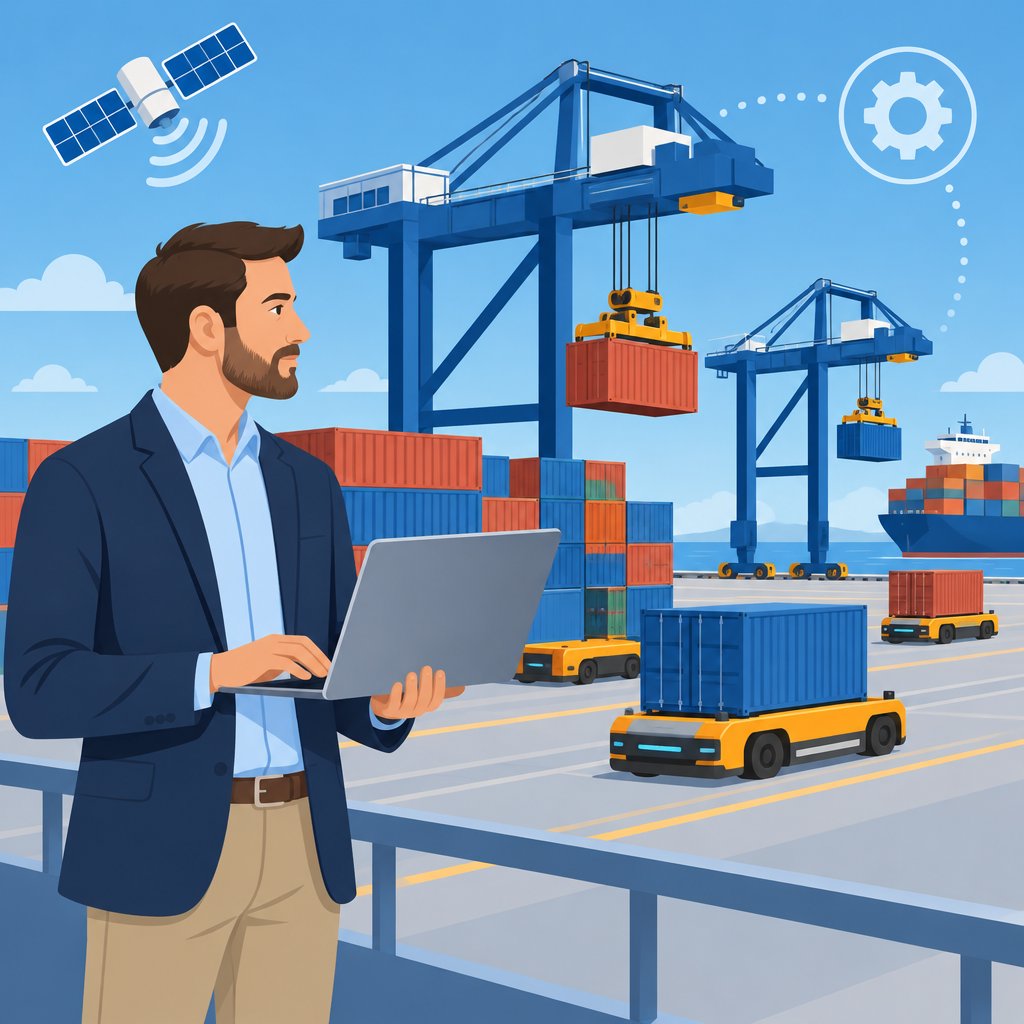
Data Analytics Software for Performance Monitoring
Port operations managers rely on data analytics software to monitor operational performance efficiently.
Data analytics software helps managers monitor performance across port operations.
These tools gather valuable insights that support operational decision-making.
Decision-Making Through Data Analysis
Analytics tools examine large volumes of data collected from port operations.
They analyze information from various operational sources.
Consequently, managers can identify patterns, trends, and anomalies.
Predictive Analytics for Maintenance and Resources
Predictive analytics helps managers forecast equipment maintenance needs.
Historical data helps predict when maintenance becomes necessary.
This approach supports resource allocation and helps prevent costly downtime.
Port Examples Using Data Analytics
Several ports use analytics to optimize different operational activities.
Their applications include container handling, vessel scheduling, and truck movement.
These examples show how analytics can improve efficiency and reduce congestion.
- Port of Rotterdam uses analytics to improve container handling efficiency and reduce congestion.
- Port of Singapore uses predictive analytics to schedule vessel arrivals and departures.
- Port of Los Angeles analyzes real-time traffic patterns to optimize truck movement.
Operational Benefits of Data Analytics
Data analytics software supports more efficient port operations.
It also improves decision-making processes and resource allocation.
Transform Your Career Today
Unlock a personalized career strategy that drives real results. Get tailored advice and a roadmap designed just for you.
Start NowBy using these capabilities, port managers can optimize operational performance.
See Related Content: Certifications Beneficial for Packaging Engineers
Technology Supports Port Performance
Automation and connected devices remain central technologies for modern port operations.
They help managers coordinate activities and respond to changing operational demands.
Performance monitoring tools provide additional visibility for informed operational decisions.
- Automation supports efficient operational workflows.
- IoT connects devices and improves operational visibility.
- Performance monitoring helps managers track results.
Ongoing Technology Investment
Continuous technology investment helps ports remain competitive as operational demands change.
Modern tools can support cost savings, stronger safety measures, and more sustainable operations.
Therefore, port leaders should treat technology investment as an ongoing operational priority.
Technology Trends Shape Future Operations
Port operations managers should monitor emerging technologies and assess their practical value.
A proactive approach can help ports improve productivity and adapt to industry changes.
Managers should stay informed, take action, and explore technologies that can strengthen port performance.


