




Internet of Things and Its Growing Importance
The Internet of Things (IoT) connects devices through networks that support seamless communication.
Connected devices share data and insights across many environments.
They range from household items to industrial sensors.
As a result, IoT improves automation and efficiency across various sectors.
In today’s technological landscape, IoT influences many important applications.
Businesses use IoT to support smarter decisions and improve operational efficiency.
Furthermore, IoT contributes to smart homes, healthcare advancements, and intelligent transportation systems.
Integrating IoT solutions improves user experiences and increases productivity.
This ongoing expansion reflects society’s growing reliance on data-driven strategies.
Responsibilities of IoT Developers
An IoT developer plays an important role within this connected ecosystem.
These professionals design, build, and maintain scalable IoT solutions.
Their primary responsibility involves creating applications that harness connected devices.
IoT developers work with various technologies and communication protocols.
They use MQTT, CoAP, and HTTP to support device communication.
Understanding these protocols enables efficient data transfer and effective device management.
Additionally, developers work with cloud platforms such as AWS, Azure, and Google Cloud.
Security remains a vital concern throughout IoT development.
Developers must implement measures that safeguard sensitive data.
Strong encryption protects information from unauthorized access.
Secure authentication protocols further improve device safety.
These developers also collaborate with cross-functional teams.
They work alongside hardware engineers and data scientists.
This collaboration helps devices meet user needs and operate effectively.
Teams also conduct rigorous testing to ensure system reliability and performance.
Because the field evolves quickly, IoT developers must continue learning.
They need to follow emerging trends and technologies closely.
For example, developers must adapt to edge computing and artificial intelligence integration.
Embracing these advances supports innovative and scalable IoT solutions.
Through their skills, IoT developers improve efficiency and support better quality of life.
Their contributions provide a foundation for the continuing IoT transformation.
Technology changes quickly, and IoT developers support connected solutions across many industries.
Their work combines device software, cloud services, data handling, and security.
This role requires technical knowledge and effective collaboration.
Responsibilities of an IoT Developer
IoT developers manage tasks that support successful IoT implementation and operation.
They coordinate hardware, software, data, and security requirements throughout development.
They also maintain systems after deployment to preserve reliable functionality.
- Designing IoT Solutions: IoT developers design systems that connect devices and support reliable communication.
- Developing Firmware: They write firmware that operates devices and supports performance and compatibility.
- Creating APIs: Developers build APIs that connect devices with cloud platforms.
- Implementing Security Measures: They apply security protocols to protect devices and data.
- Data Management: IoT developers process and analyze the large data volumes that devices generate.
- Collaborating with Teams: They work with hardware engineers, software developers, and analysts.
- Testing and Debugging: They test applications and fix problems before deployment.
- Updating Systems: Developers provide updates and maintenance to preserve system functionality.
Skills and Qualifications for IoT Development
IoT development requires programming knowledge, networking expertise, and embedded systems experience.
Developers also need data analysis, problem-solving, project management, and communication skills.
A computer science or electrical engineering background can provide a useful foundation.
- Programming Skills: Python, Java, C, and C++ support application and device development.
- Networking Knowledge: Developers should understand protocols such as MQTT and HTTP.
- Familiarity with IoT Platforms: AWS IoT, Google Cloud IoT, and Microsoft Azure IoT support development work.
- Understanding of Embedded Systems: Microcontroller knowledge supports firmware development.
- Data Analysis Skills: Data processing and statistical analysis help developers use collected information.
- Problem-Solving Skills: Analytical thinking helps developers troubleshoot complex issues.
- Project Management: Agile knowledge supports iterative development processes.
- Communication Skills: Clear communication supports collaboration across multidisciplinary teams.
Tools and Technologies for IoT Development
IoT developers select tools according to each project’s technical requirements.
Transform Your Career Today
Unlock a personalized career strategy that drives real results. Get tailored advice and a roadmap designed just for you.
Start NowThese tools support coding, cloud integration, data storage, testing, monitoring, and security.
Appropriate technologies can improve development efficiency and support scalable solutions.
- Development Environments: Visual Studio Code and Eclipse simplify coding tasks.
- Cloud Platforms: AWS, Google Cloud Platform, and Microsoft Azure provide IoT services.
- IoT Platforms: ThingSpeak and Arduino IoT Cloud provide application development frameworks.
- Database Management Systems: MongoDB and InfluxDB store and manage IoT data.
- Networking Tools: Wireshark helps developers monitor traffic and diagnose network issues.
- Simulation Tools: Cisco Packet Tracer enables IoT environment simulations before implementation.
- Testing Tools: Postman and JMeter support application testing and API validation.
- Security Tools: OpenVAS and Nessus help developers assess system security.
Career Opportunities in IoT Development
The IoT developer role continues to evolve as organizations adopt connected technologies.
Professionals can strengthen their credentials through IoT or cloud computing certifications.
Growing adoption creates opportunities for developers with strong technical and collaborative abilities.
Importance of Scalability in IoT Solutions
Scalability supports the long-term success of Internet of Things solutions.
As IoT technology evolves, connected devices continue to increase rapidly.
A scalable solution handles growth without reducing performance or reliability.
Organizations must prepare for future changes and fluctuations in demand.
Therefore, scalable systems simplify the integration of new devices and services.
This adaptability helps companies respond quickly to market trends and customer needs.
Moreover, scalable solutions support larger data volumes as more devices generate information.
Efficient data handling improves decision-making without slowing operations or causing interruptions.
Finally, scalability improves cost efficiency by matching resource use with actual requirements.
Organizations can reduce infrastructure and maintenance expenses over time.
Challenges in Developing Scalable IoT Solutions
Developing scalable IoT solutions presents several technical and operational challenges.
Understanding these obstacles helps developers design stronger and more adaptable systems.
Each challenge can affect performance, reliability, security, or future expansion.
- Device Heterogeneity: Devices use different designs, capabilities, and communication protocols, which complicates integration.
- Data Management: Growing device numbers increase the difficulty of storing, processing, and analyzing datasets.
- Network Limitations: Limited bandwidth can make reliable connectivity difficult across numerous devices.
- Security Concerns: Additional devices expand the attack surface and increase protection requirements.
- Latency Issues: Applications requiring immediate processing may struggle to maintain low latency during expansion.
- Legacy Integration: Older systems can hinder the integration of modern IoT solutions.
- Cost Constraints: Budget limitations can restrict scalability and complicate infrastructure decisions.
Strategies for Building Scalable IoT Solutions
Developers can use several strategies to manage scalability challenges effectively.
These approaches create IoT systems that remain robust, efficient, and adaptable.
They also help solutions accommodate future growth without unnecessary complexity.
- Modular Architecture: Build separate components that support easier expansion and integration.
- Cloud Computing: Use cloud services for storage and processing during fluctuating workloads.
- Microservices Approach: Divide applications into smaller services that scale independently.
- Edge Computing: Process data near devices to reduce latency and bandwidth usage.
- Standard Communication Protocols: Adopt common protocols to improve compatibility across devices.
- Automated Resource Management: Allocate resources automatically as system demands change.
- Regular Performance Testing: Test systems throughout development to identify scalability problems early.
- Data Aggregation: Combine data before transmission to reduce processing demands and overload.
- Prioritized Security: Add security measures early to protect the ecosystem during expansion.
- User Feedback and Iteration: Use user experiences to guide ongoing improvements and adaptability.
Scalable IoT development requires careful planning, consistent testing, and adaptable system design.
By combining modular architecture, cloud services, and microservices, developers can support future growth.
Discover More: Key Skills for Success as an IT Change Manager
Importance of Data Management in IoT
Data management supports successful IoT development.
IoT devices generate vast amounts of information that organizations must manage carefully.
Effective management improves data quality, security, accessibility, and operational efficiency.
Organizations can use structured strategies to gain valuable insights from IoT data.
- Data Quality: High-quality data supports better analytics outcomes.
Poor data quality can lead to misguided decisions. - Operational Efficiency: Streamlined management improves operational processes.
Efficient operations save time and reduce costs. - Security and Compliance: Strong practices improve data security.
Regulatory compliance helps businesses avoid penalties. - Data Accessibility: Proper management provides access to relevant information.
Accessible data encourages collaboration across teams and departments. - Scalability: Effective management supports organizational growth.
Organizations can expand operations without compromising data integrity.
Strategies for Collecting and Analyzing IoT Data
Organizations need strategic planning to collect and analyze IoT data effectively.
Clear processes help teams optimize their use of collected information.
Several practical approaches can improve data collection, processing, and analysis.
- Define Clear Objectives: Establish the results you want from data collection.
Clear objectives guide the entire management process. - Use Edge Computing: Process information near the network edge.
This reduces latency and bandwidth usage for real-time decisions. - Implement Data Filtering: Filter information at its source.
This minimizes irrelevant data transmission and storage. - Utilize Cloud Integration: Use cloud platforms for storage and analysis.
Cloud integration supports large data sets and team collaboration. - Automate Data Collection: Use automated systems to gather information continuously.
Automation reduces human error and improves efficiency. - Apply Predictive Analytics: Use predictive analytics to identify valuable insights.
This approach helps organizations anticipate trends and demands.
Tools and Platforms for Managing IoT Data
Various tools and platforms support efficient IoT data management.
Organizations should compare available capabilities before choosing a suitable solution.
Compatibility, scalability, support, and cost can guide the selection process.
- Amazon Web Services (AWS): AWS provides services designed for IoT applications.
Its scalability and flexibility make it a preferred choice. - Google Cloud Platform (GCP): GCP offers data analytics and machine learning capabilities.
Its ecosystem supports seamless IoT device integration. - Microsoft Azure: Azure IoT Suite supports end-to-end data management.
It combines analytics with machine learning for deeper insights. - IBM Watson IoT: IBM’s platform supports device management and predictive analytics.
It helps users build intelligent IoT applications. - InfluxDB: InfluxDB is a time-series database for high write and query loads.
It handles large volumes of IoT data efficiently. - Kaa IoT Platform: Kaa is an open-source platform that simplifies device management.
It supports data collection and analytics. - ThingSpeak: ThingSpeak supports IoT data collection and visualization.
Users can analyze information in real time.
When selecting a platform, organizations should evaluate several practical factors.
- Compatibility: Ensure the tools work with existing systems.
- Scalability: Choose platforms that support the deployment’s future needs.
- Support and Community: Select platforms with strong support and active communities.
- Cost: Evaluate potential expenses against available budgets.
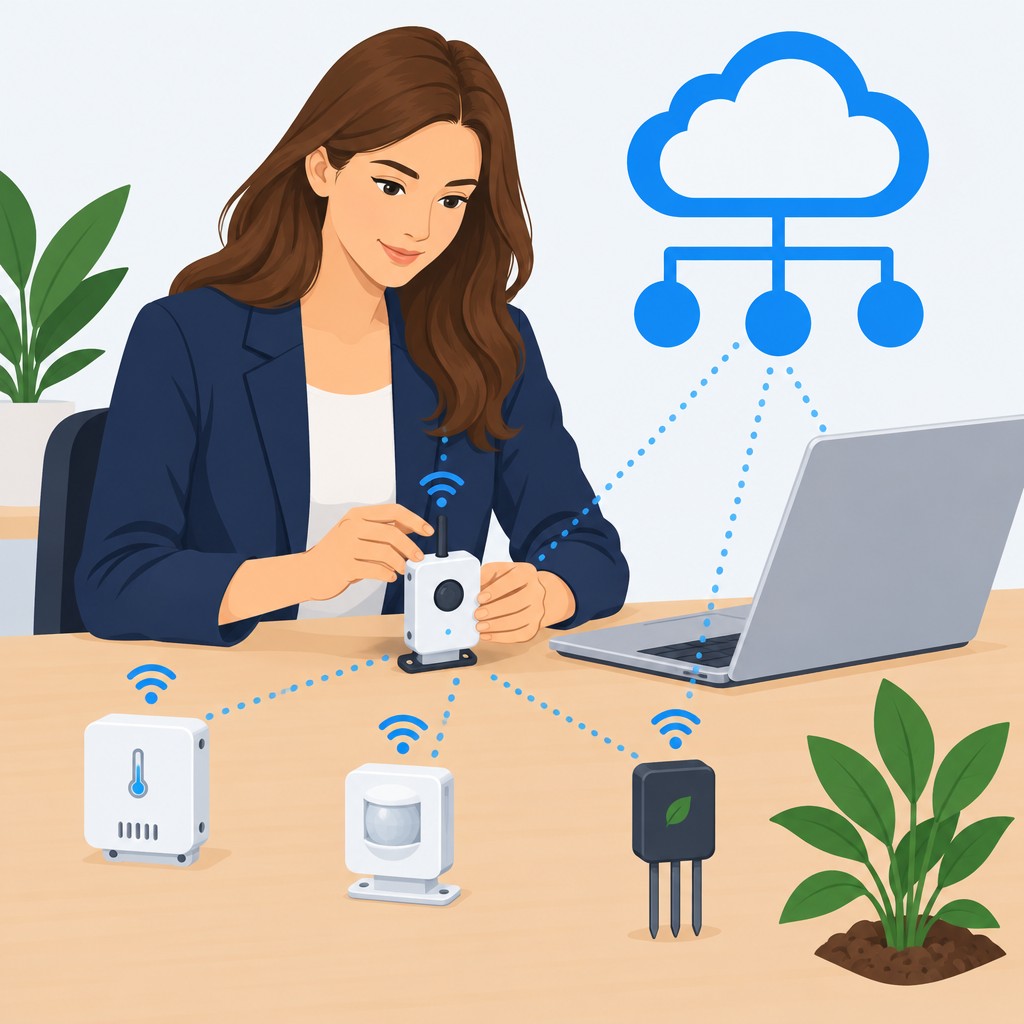
Business Value of IoT Data Management
Data management strengthens the performance of IoT solutions.
Effective collection and analysis make IoT information more useful.
Suitable tools can further improve how organizations handle their data.
IoT developers should master data management practices to support successful solutions.
Organizations can improve outcomes by focusing on data quality, accessibility, and security.
Transform Your Career Today
Unlock a personalized career strategy that drives real results. Get tailored advice and a roadmap designed just for you.
Start NowStrong data management helps businesses use IoT technologies effectively and remain competitive.
You Might Also Like: Big Data Engineer: Importance of Continual Learning
The Internet of Things has transformed daily life and many industries.
Smart home devices and industrial machinery now support new ways to interact with technology.
As connected systems expand, developers must treat security as a central design priority.
Why IoT Security Matters
IoT devices often collect sensitive personal or business data.
Strong protections prevent unauthorized users from accessing that information.
Security also protects device integrity, operational safety, and user trust.
- Data Protection: IoT devices often collect sensitive personal or business data.
- Device Integrity: Compromised devices can cause failures, safety hazards, or operational disruptions.
- User Trust: Users need confidence that IoT devices protect their information and operations.
- Compliance and Regulation: Many industries require organizations to protect collected data.
- Financial Impact: Security breaches can create remediation expenses and reputational damage.
- Operational Safety: Unauthorized access can create serious risks in critical environments.
Security Threats Affecting IoT Devices
IoT devices face several threats that developers must identify during planning and deployment.
Attackers may target devices, networks, transmitted data, or physical equipment.
Understanding these risks helps teams select appropriate safeguards.
- Unauthorized Access: Attackers may enter devices or networks and expose protected information.
- Data Interception: Attackers may misuse transmitted data when systems lack encryption.
- Botnet Attacks: Criminals may control compromised devices for distributed denial-of-service attacks.
- Malware: Malicious software can disrupt operations or steal valuable data.
- Physical Attacks: Physical tampering can provide access or interrupt device operations.
- Insecure Communication: Weak communication protocols can expose device interactions to interception.
Practices for Building Secure IoT Solutions
Developers can reduce exposure by applying security controls throughout the solution lifecycle.
These controls should protect devices, communications, networks, users, and operational processes.
Teams should also review their safeguards regularly as threats and systems change.
Strong Authentication Methods
Strong authentication prevents unauthorized users from accessing IoT accounts and devices.
Developers should combine suitable user and device authentication methods.
Unique credentials also reduce the risks associated with shared or predictable passwords.
- Use two-factor authentication for user accounts.
- Use public key infrastructure to secure device communications.
- Assign unique default passwords during each device installation.
Encryption for Data Protection
Encryption protects information while devices exchange data.
It also limits the value of intercepted communications.
Teams should select encryption methods that match the sensitivity of their data.
- Use secure sockets layer or transport layer security protocols for data transmissions.
- Use end-to-end encryption for sensitive data.
Regular Software Updates
Regular updates help developers address known vulnerabilities.
They also keep firmware and software aligned with current security requirements.
An effective update process should deliver patches promptly and reliably.
- Implement automatic updates for firmware and software.
- Publish security patches promptly to address known vulnerabilities.
Secure Device Configuration
Proper configuration reduces unnecessary opportunities for attackers.
Developers should remove services and access points that devices do not need.
They should also replace default credentials with complex, unique passwords.
- Disable unnecessary services and ports.
- Change default passwords and use complex, unique credentials.
Network Security Controls
Network controls limit unwanted traffic and reduce the impact of compromised devices.
Secure remote access protects administrative connections.
Network segmentation also separates IoT devices from core business systems.
- Use firewalls to control incoming and outgoing traffic.
- Use virtual private networks for secure remote access.
- Separate IoT devices from core business networks.
Continuous Monitoring and Analysis
Continuous monitoring helps teams identify suspicious activity.
It can reveal unusual network behavior before incidents spread.
Regular assessments help organizations find weaknesses and improve their defenses.
- Use real-time intrusion detection systems to identify network anomalies.
- Conduct regular audits and vulnerability assessments.
Incident Response Planning
A response plan helps teams manage security incidents efficiently.
Clear responsibilities allow teams to document incidents and communicate without unnecessary delays.
Planned remediation steps help restore security after an incident.
- Identify and document security incidents quickly.
- Establish communication protocols with affected parties.
- Evaluate remediation measures that can restore security.
Security Education for Stakeholders
Users and stakeholders influence the security of daily IoT operations.
Security education helps them recognize common attacks and protect their access.
Regular awareness supports safer decisions across the organization.
- Teach stakeholders to identify phishing attempts and social engineering attacks.
- Explain the importance of device security during daily operations.
Security Supporting Sustainable IoT Development
IoT security remains a critical challenge as technologies continue to evolve.
A robust security posture protects valuable data and maintains user trust.
Transform Your Career Today
Unlock a personalized career strategy that drives real results. Get tailored advice and a roadmap designed just for you.
Start NowProactive safeguards help developers build IoT solutions that remain efficient and secure.
Security measures can protect devices while supporting continued innovation.
Therefore, every IoT development strategy should make security a fundamental consideration.
Investing in security today can reduce future costs and preserve organizational integrity.
You Might Also Like: Future Trends in Data Warehouse Architecture
Integration of IoT Devices and Platforms
IoT technology continues to reshape industries and daily activities.
As connected systems evolve, developers must integrate devices and platforms effectively.
Successful integration improves functionality, coordination, and operational performance.
Benefits of IoT Device and Platform Integration
Integration connects separate systems and enables them to support shared operational goals.
Furthermore, coordinated devices can improve automation and strengthen decision-making.
Organizations can gain several practical benefits from this connected approach.
- Improved Efficiency: Integrated devices streamline operations and reduce downtime.
- Enhanced Data Sharing: Coordinated devices support broader and more useful data analysis.
- Cost Savings: Efficient integration reduces the resources required to manage separate systems.
- Better User Experience: Connected platforms create a more cohesive interface and experience.
- Scalability: Integrated platforms simplify the addition of devices and functions.
As a result, data can move smoothly between devices and support intelligent interactions.
These improvements help businesses use IoT capabilities more effectively.
Therefore, integration can strengthen performance in competitive markets.
Challenges Affecting IoT Integration
Despite these benefits, developers face several obstacles when integrating IoT devices.
Different technical approaches can make communication and coordination difficult.
These challenges can reduce the efficiency and reliability of IoT solutions.
- Diverse Protocols: Devices may use different communication protocols, which complicates integration.
- Data Standardization: Inconsistent formats can prevent meaningful information exchange.
- Interoperability: Compatibility issues may prevent devices from interacting smoothly.
- Security Concerns: Integration can expose vulnerabilities and increase attack risks.
- Scalability Limitations: Some platforms may struggle as connected networks expand.
Consequently, developers must address these obstacles through careful planning and implementation.
Early attention to compatibility can prevent larger integration problems later.
Security and performance also require attention throughout the integration process.
Strategies for Seamless IoT Integration
Developers can apply several strategies to create more reliable integrated systems.
These approaches improve communication, compatibility, security, and operational control.
Each strategy addresses a specific requirement within the integration process.
- Use Standard Protocols: Select protocols such as MQTT or HTTP to support cross-device communication.
- Implement Middleware: Use middleware to connect devices that rely on different protocols.
- Adopt APIs: Create well-defined APIs that standardize interactions between devices and platforms.
- Normalize Data: Align data formats to improve compatibility and processing.
- Prioritize Security: Apply encryption, authentication, and data integrity controls during integration.
- Design for Growth: Build modular solutions that support future expansions.
- Test Thoroughly: Evaluate integrated systems to identify and resolve issues early.
- Monitor Continuously: Track system performance to detect integration problems proactively.
Together, these practices promote dependable communication and improve the user experience.
Moreover, consistent testing and monitoring help maintain system reliability.
Developers can therefore create integrated IoT environments that deliver practical value.
Building Cohesive IoT Ecosystems
Integrated devices and platforms support the development of robust IoT solutions.
Understanding integration benefits and challenges helps developers select suitable implementation strategies.
When systems work together, organizations can improve workflows, control costs, and strengthen user experiences.
Standard protocols, middleware, security, and monitoring help maintain that coordination.
Learn More: Top Certifications for Software Quality Assurance Testers
Real-World Applications of Scalable IoT Solutions
Scalable IoT solutions have transformed various industries.
These applications harness connected devices to improve efficiency and optimize processes.
They also enhance decision-making across many business environments.
Manufacturing
Manufacturing companies use IoT devices to monitor equipment and production processes.
These devices gather real-time data.
The data enables predictive maintenance and supports more efficient operations.
Companies like GE have implemented IoT platforms to improve manufacturing efficiency.
- Reduced downtime through timely maintenance
- Optimized production schedules
- Enhanced quality control
Agriculture
Farmers use IoT solutions to monitor crops and livestock.
Smart sensors track soil moisture levels and weather conditions.
Transform Your Career Today
Unlock a personalized career strategy that drives real results. Get tailored advice and a roadmap designed just for you.
Start NowThis information supports precise irrigation and fertilization.
- Increased crop yields
- Resource conservation
- Improved sustainability practices
Healthcare
Healthcare providers use IoT devices to monitor patients.
These solutions allow doctors to track vital signs remotely.
Furthermore, IoT integration has expanded telehealth options.
- Increased patient engagement
- Timely interventions
- Reduced healthcare delivery costs
Transportation and Logistics
IoT helps companies optimize supply chains.
Fleet management systems track vehicle locations and performance.
Companies like Uber and FedEx use IoT data to enhance their services.
- Reduced operational costs
- Real-time shipment tracking
- Improved route optimization
Smart Cities
Urban environments increasingly use IoT to support better governance.
Smart cities manage traffic flow, waste, and energy consumption with connected devices.
Cities like Barcelona have successfully implemented these solutions.
- Enhanced public services
- Improved resource management
- Decreased environmental impact
Case Studies of Successful IoT Implementations
Several organizations have implemented scalable IoT solutions successfully.
These examples illustrate the real-world impact of IoT technology.
Their experiences show how connected systems can support practical improvements.
John Deere Agricultural Technology
John Deere adopted IoT technology for agricultural machinery.
The company developed advanced equipment with embedded sensors.
Those sensors collect data about soil health and crop conditions.
Farmers receive actionable insights that help optimize their practices.
As a result, John Deere has increased productivity and crop profitability.
Siemens Manufacturing Systems
Siemens integrated IoT solutions into its manufacturing processes.
The company developed a Digital Twin to simulate machines and production lines.
This technology supports real-time tracking and analysis.
Siemens improved efficiency and reduced operational costs.
This case emphasizes the advantages of scalable IoT frameworks.
Philips Healthcare Monitoring
Philips Healthcare pioneered remote patient monitoring through IoT.
The company introduced connected health devices for tracking chronic conditions.
Patients receive continuous support and education from their healthcare teams.
Philips reported greater patient satisfaction and fewer hospital visits.
This approach demonstrates IoT’s potential in healthcare.
Impact of Scalable IoT Solutions on Business Operations
Scalable IoT solutions significantly affect business operations.
They support data-driven decisions and improve efficiency.
Companies using these technologies experience many operational benefits.
Enhanced Data Collection
IoT devices collect vast amounts of data.
This information guides decision-making and strategic planning.
Businesses can analyze trends and patterns for better insights.
Improved Operational Efficiency
IoT solutions streamline processes and reduce waste.
Companies can automate repetitive tasks and minimize human error.
This automation supports cost savings and increased productivity.
Better Customer Experience
IoT technology enables personalized customer interactions.
Companies can tailor products and services to user preferences.
Enhanced experiences can increase customer satisfaction and loyalty.
Transform Your Career Today
Unlock a personalized career strategy that drives real results. Get tailored advice and a roadmap designed just for you.
Start NowReal-Time Monitoring
IoT solutions provide real-time monitoring of business assets.
Businesses can track inventory, equipment status, and environmental conditions.
This visibility supports prompt action and improved management.
Competitive Advantage
Companies adopting scalable IoT solutions can gain a significant edge.
They use data and technology to innovate and outperform competitors.
IoT investment can strengthen market position and future growth opportunities.
Business Growth Through Scalable IoT
Scalable IoT solutions continue transforming industries.
The applications and case studies demonstrate their broad potential.
Companies can improve efficiency, customer satisfaction, and business success through these technologies.
Career Opportunities in IoT Development
IoT developers create scalable solutions that support reliable connectivity and data exchange across devices.
These systems drive innovation across multiple sectors.
Therefore, developers need strong knowledge of IoT architecture, connectivity management, and efficient data processing.
Well-designed IoT systems improve efficiency, lower costs, and support sustainability.
As industries adopt IoT, organizations increasingly seek developers who can build robust, adaptable systems.
A career in IoT development offers diverse paths and challenging opportunities.
Learning programming languages, cloud computing, and machine learning can strengthen your technical skills.
Moreover, community forums and workshops can deepen your practical expertise.
Security knowledge also helps developers protect data and respect user privacy.
By prioritizing protection, developers build greater trust in connected systems.
Because IoT evolves quickly, successful developers continue updating their knowledge.
Explore online courses, tutorials, and industry publications to guide your professional growth.
Joining relevant groups and networking with professionals can further enrich your learning experience.
Ultimately, IoT development offers opportunities to influence technology across industries and improve people’s lives.
Start building your IoT expertise and contribute to meaningful technological progress.
Additional Resources
Google search results for IoT Developer: Building Scalable IoT Solutions Information Technology
Bing search results for IoT Developer: Building Scalable IoT Solutions Information Technology


