




Plant pathologists play a crucial role in studying and understanding fungal infections in plants.
These professionals investigate fungal diseases that affect plant health.
Methods for Studying Fungal Infections
When fungal infections occur in plants, they can cause significant damage to crops, leading to yield losses and economic impact.
By studying fungal infections, plant pathologists identify the agents responsible for these diseases.
They then develop strategies to manage and control those diseases effectively.
Plant pathologists use microscopy, molecular biology, and bioinformatics to study and characterize fungal pathogens.
Understanding how fungal infections spread through plants helps researchers develop effective disease management strategies.
These strategies can help prevent crop losses.
Plant pathologists also analyze interactions between plants and fungal pathogens.
This analysis shows how host plants respond to infection and develop resistance.
Furthermore, studying fungal infections provides valuable insights into plant pathogen biology and ecology.
These insights can lead to innovative solutions for disease control.
Their work supports global food security and sustainable agriculture practices.
Methods for Identifying Fungal Infections
Microscopic examination reveals the physical characteristics of fungal structures.
By examining spores, mycelium, and related structures, pathologists can identify the fungus present.
Additionally, DNA analysis identifies fungal species through their genetic makeup.
This molecular technique supports precise identification when physical features require further confirmation.
Common Fungal Diseases and Treatment Decisions
Accurate identification helps pathologists recommend appropriate treatment strategies.
However, incorrect identification can lead to ineffective or harmful treatment.
Powdery mildew commonly appears as a white, powdery substance on plant leaves.
In contrast, downy mildew typically produces yellow or brown spots on leaves.
Rust produces orange or reddish-brown lesions on plant tissues.
Therefore, visible symptoms can help distinguish among common fungal infections.
Pathologists combine these observations with microscopic and DNA evidence for more reliable identification.
Tracking Fungal Infection Patterns
Researchers study how fungal pathogens move through plant tissues during infection.
These observations reveal disease progression and clarify how infections develop within plants.
Consequently, infection patterns help guide research into fungal disease management.
Observing Fungal Movement Within Plants
Microscopy and molecular markers allow researchers to track fungal movement through plant tissues.
These techniques help researchers identify fungal entry points and colonization routes.
Furthermore, detailed observations clarify how pathogens spread after entering plant tissues.
Environmental Factors Affecting Infection Spread
Plant pathologists examine environmental conditions that support fungal growth and transmission.
Temperature, humidity, and soil composition can influence plant susceptibility to fungal infections.
By studying these factors, researchers can anticipate outbreaks and develop preventive measures.
Strategies for Preventing and Controlling Infections
Researchers use infection observations to develop practical methods for controlling fungal diseases.
Resistant plant varieties can reduce the effects of fungal pathogens.
Additionally, crop rotation and biological controls can suppress fungal populations.
Using Pathogen Diversity in Resistance Breeding
Plant pathologists study fungal genetic diversity to support disease-resistant breeding programs.
Researchers identify genes associated with pathogen virulence or plant resistance.
These findings support targeted approaches for managing fungal infections more effectively.
Integrating Research Into Sustainable Disease Management
Plant pathologists collaborate with breeders, agronomists, and other stakeholders.
Transform Your Career Today
Unlock a personalized career strategy that drives real results. Get tailored advice and a roadmap designed just for you.
Start NowThese partnerships connect research findings with practical management approaches for farmers and growers.
Through this interdisciplinary work, researchers support plant health and future food security.
Gain More Insights: How to Stay Updated in Seed Technology
Research on Fungal Infection Resistance
Plant pathologists investigate how plants resist fungal infections.
They examine plant genetics, breeding methods, and treatment strategies.
This research supports sustainable approaches for protecting crops from damaging infections.
Investigating Plant Genetics for Resistance Mechanisms
First, researchers examine plant genetics to identify genes that provide fungal infection resistance.
These genes reveal molecular pathways that plants use to defend against pathogens.
Consequently, researchers can develop targeted strategies that strengthen plant immunity.
- Plant pathologists study the genetic makeup of plants.
- Researchers identify genes associated with resistance to fungal infections.
- Scientists use genetic insights to understand plant defense mechanisms.
Developing Resistant Plant Varieties Through Breeding
Next, researchers breed plant varieties that resist specific fungal pathogens.
Plant pathologists collaborate with breeders to develop cultivars with stronger resistance traits.
Through controlled breeding, researchers introduce resistance genes from wild relatives into commercial crops.
- Breeding programs create plant varieties with natural resistance traits.
- Researchers select and combine traits during controlled breeding programs.
- This process can take several years before producing resilient plant populations.
Evaluating Treatments for Resistant Plants
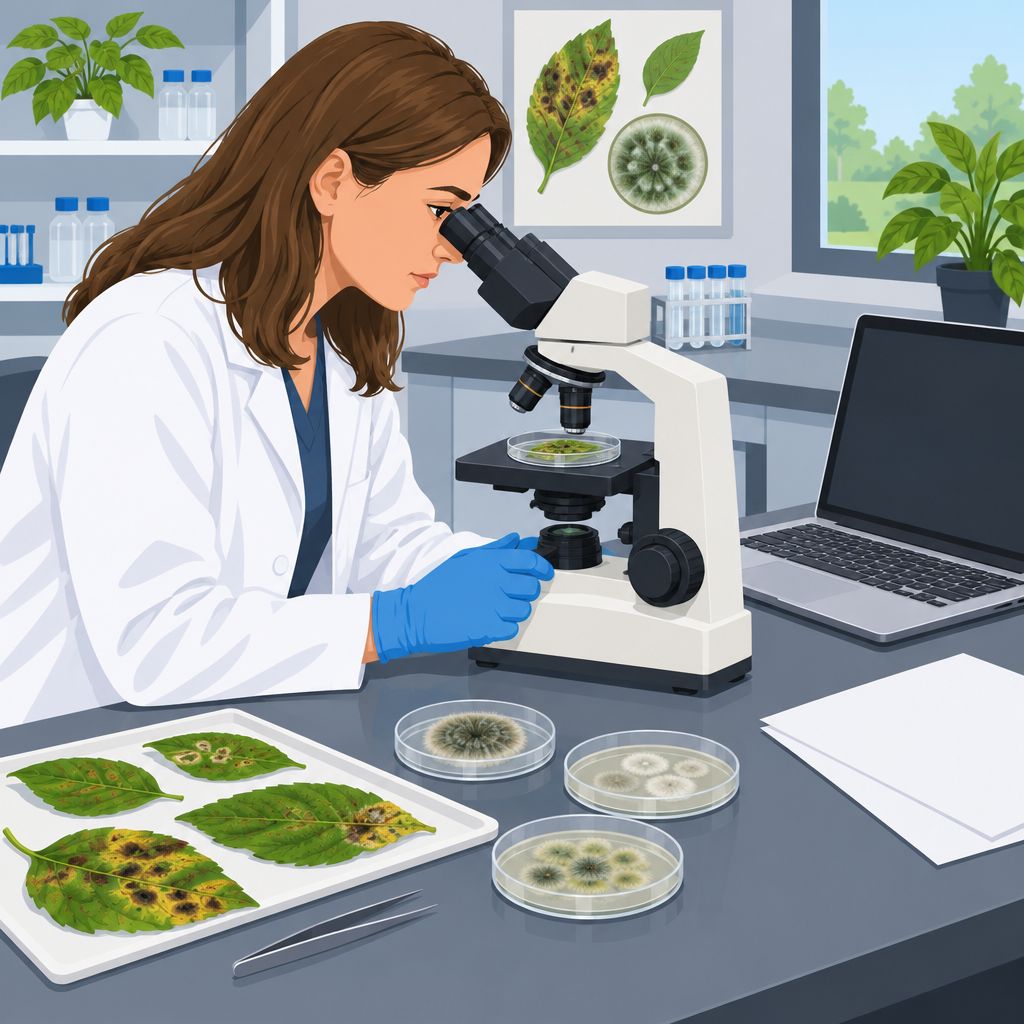
After developing resistant varieties, plant pathologists test treatments against fungal infections.
Researchers compare application methods and dosages for fungicides and other control measures.
They evaluate plant responses to improve disease management strategies.
- Researchers test various treatments on resistant plant varieties.
- Experiments identify effective application methods and treatment dosages.
- Continuous monitoring helps researchers respond to evolving fungal pathogens.
Advancing Sustainable Disease Management
Research on fungal infection resistance combines genetics, breeding, and treatment evaluation.
Plant pathologists use these approaches to clarify plant and fungal interactions.
Their findings support sustainable solutions that protect crops from devastating infections.
Delve into the Subject: Pest Control Advisor: Trends and Innovations
Impact of Environmental Factors on Fungal Infections
Understanding environmental effects remains crucial for managing fungal infections in plants.
Environmental conditions influence fungal development and disease spread within plant populations.
Researchers can use these relationships to develop effective prevention and management strategies.
Environmental Conditions and Fungal Infection Development
Plant pathologists examine how environmental conditions promote or inhibit fungal pathogen growth.
Temperature, humidity, and soil quality influence the severity of fungal infections.
Certain fungi thrive in warm and humid conditions.
Consequently, high moisture and temperature can increase plant vulnerability to infection.
Researchers use weather patterns and seasonal changes to anticipate potential disease outbreaks.
Temperature, Humidity, and Soil Quality
Temperature strongly influences fungal infections in plants.
Most fungal pathogens require specific temperatures for optimal growth.
However, temperatures outside those ranges can slow or accelerate disease spread.
Researchers study temperature effects to tailor disease management strategies.
Humidity also affects fungal infection development.
High humidity helps fungal spores germinate and infect plant tissues.
Therefore, plant pathologists assess humidity levels when evaluating disease spread.
They also recommend practices that reduce excessive moisture.
Soil quality can further affect fungal disease severity.
Poor drainage, nutrient imbalances, and compaction can weaken plants.
Weakened plants become more susceptible to fungal attacks.
Researchers therefore connect soil health with disease prevention recommendations.
Environmental Practices That Support Plant Health
Plant pathologists develop recommendations that optimize environmental conditions and promote plant health.
Transform Your Career Today
Unlock a personalized career strategy that drives real results. Get tailored advice and a roadmap designed just for you.
Start NowFor example, growers can adjust irrigation schedules to prevent waterlogged soils.
Additionally, better air circulation can reduce humidity around plants.
Growers can also use mulches to maintain suitable soil moisture and temperature levels.
Plant pathologists work with growers and agricultural extension services to share these recommendations.
They educate growers about monitoring and managing environmental factors.
Therefore, sound agricultural practices can reduce fungal disease risks.
Integrated pest management strategies can further minimize disease impacts and support plant health.
Learn More: Technological Advances in Veterinary Care
Plant Disease Management Research
Plant pathologists investigate fungal diseases that threaten agricultural crops.
They combine laboratory research with field assessments to support practical disease management.
Furthermore, their findings help protect crops and support food security.
Integrated Disease Management
Plant pathologists collaborate with entomologists, agronomists, and other specialists.
Together, they develop integrated pest management plans for fungal diseases.
These plans combine cultural, biological, and chemical control methods.
- They develop integrated pest management plans.
- They evaluate biological control methods.
- They research chemical treatments for fungal diseases.
Biological Control Approaches
Biological control uses beneficial microorganisms or predatory insects against fungal pathogens.
Plant pathologists research these natural controls to reduce disease incidence.
Consequently, biological methods can reduce reliance on synthetic pesticides.
Chemical Treatment Research
Plant pathologists test fungicides for effectiveness against fungal diseases.
They also examine treatment safety and optimize application methods.
Additionally, they seek to reduce environmental impacts and limit resistance development.
Contributions to Sustainable Agriculture
Plant pathologists connect research findings with practical crop protection strategies.
Their collaborations support more coordinated responses to fungal diseases.
Ultimately, sustainable disease management helps preserve agricultural productivity and food security.
Find Out More: How to Become a Conservation Scientist
How Plant Pathologists Study Fungal Infections
Plant pathologists investigate fungal infections through coordinated laboratory, field, and educational activities.
They gather evidence about pathogens, infected plants, and disease conditions.
This combined knowledge supports practical responses that protect plant health.
Sampling and Diagnosis
Researchers collect samples from plants showing signs of fungal infection.
They use microscopy to examine fungal structures within those samples.
Additionally, molecular techniques help confirm the pathogen responsible for the observed disease.
Disease Progression Studies
Pathologists monitor infected plants at different stages of disease development.
These observations show how symptoms change as the infection advances.
Consequently, researchers use this information when developing disease control strategies.
Genetic Analysis
Genetic analysis reveals differences among fungal pathogens.
Researchers examine these differences to understand how pathogen populations change.
This knowledge can guide efforts to develop plant varieties with improved protection.
Pathogen Behavior Studies
Plant pathologists observe how fungal pathogens behave under different conditions.
They use these observations to assess how pathogens may spread among plants.
Therefore, pathogen biology informs practical approaches for managing fungal diseases.
Plant Defense Mechanisms
Researchers examine how plants respond when fungal pathogens attack them.
Transform Your Career Today
Unlock a personalized career strategy that drives real results. Get tailored advice and a roadmap designed just for you.
Start NowThey study defensive processes that help plants limit infection.
Ultimately, these findings can support the development of more resistant cultivars.
Communication and Education in Plant Pathology
Plant pathologists also communicate research findings beyond laboratories and research institutions.
They explain fungal disease risks and control approaches to farmers, gardeners, and other stakeholders.
Moreover, education helps people recognize problems and respond more effectively.
Sharing Research Findings
Pathologists share results that improve public understanding of fungal infections.
They describe current control methods in language that different audiences can understand.
This exchange encourages informed decisions that support sustainable agriculture.
Providing Training
Training sessions teach participants how to recognize symptoms of fungal infections.
Participants also learn approaches for managing affected plants.
As a result, education gives individuals practical knowledge for reducing crop losses.
Collaborating with Extension Services
Plant pathologists work with extension services to reach broader audiences.
These partnerships help distribute information about fungal infections and management practices.
Through collaboration, experts extend their educational impact across farming and gardening communities.
Supporting Plant Health and Food Security
Plant pathologists connect scientific investigation with communication and practical education.
Their work helps stakeholders understand fungal diseases and select appropriate responses.
These efforts contribute to healthier plants and stronger food security for future generations.
Plant Pathology and Food Security
Plant pathologists use microscopy, genetic analysis, and disease modeling to study fungal infections in plants.
These methods help them identify fungal diseases and understand their mechanisms.
Their work supports plant health and food security.
By identifying and mitigating fungal infections, plant pathologists help prevent crop losses and protect a sustainable food supply.
As climate change and emerging pathogens create challenges, plant pathology needs continued support and research.
Investment in this field helps researchers better understand and combat fungal infections, protecting the environment and food sources.
Additional Resources
Google search results for How Plant Pathologists Study Fungal Infections Agricultural
Bing search results for How Plant Pathologists Study Fungal Infections Agricultural


