




Introduction
IoT connects various devices across multiple environments.
These devices communicate and share data with one another.
This connectivity supports smarter decisions and automation across multiple industries.
IoT Device Connectivity
IoT systems connect devices that collect and exchange information.
Furthermore, shared data helps organizations make more informed decisions.
These connected systems also support automated activities across industrial environments.
Industrial Automation Systems
Industrial automation uses control systems to manage equipment in factories.
These systems improve productivity and efficiency while reducing human intervention.
Additionally, automated processes combine machinery, control systems, and information technologies.
IoT Benefits for Industrial Operations
IoT strengthens industrial automation through real-time data collection and analysis.
Consequently, industries can make better-informed operational decisions.
IoT devices also allow industries to monitor operations remotely.
Moreover, this technology helps decrease downtime and optimize resource allocation.
Predictive analytics improves maintenance by identifying potential issues before they escalate.
This proactive approach reduces costs and strengthens overall productivity.
IoT Developers and Industrial Transformation
This blog post examines how IoT developers enhance industrial automation.
It explores the innovative solutions they create for industrial environments.
It also considers their impact on the changing industrial landscape.
Understanding these advancements highlights IoT’s significance in modern industries.
The discussion details the tools and technologies IoT developers employ.
It further presents applications that demonstrate contributions to efficiency and sustainability.
Ultimately, readers will understand IoT’s transformative power in industrial automation.
The Role of IoT Developers
IoT developers create solutions that connect devices to the internet.
They enable communication between machines, sensors, and user interfaces.
They design, implement, and manage IoT systems within industrial environments.
- They analyze user requirements to design effective IoT solutions.
- They develop software that connects devices and gathers data.
- They secure IoT applications and devices against potential threats.
- They implement data management and storage solutions.
- They test and debug systems to ensure functionality and performance.
- They work with hardware engineers to integrate software and hardware.
- They maintain and update IoT systems over time.
Skills and Technologies Used by IoT Developers
IoT developers need diverse technical skills to build efficient and secure solutions.
They combine programming, networking, cloud computing, and embedded systems knowledge.
They also use analytics, security practices, and machine learning for industrial applications.
- Programming Languages: They use Python, Java, C++, and JavaScript.
- Networking Protocols: They use MQTT, CoAP, and HTTP for device communication.
- Cloud Computing: They use AWS, Google Cloud, or Azure for storage and processing.
- Data Analytics: They analyze IoT data to support informed decisions.
- Embedded Systems: They work with microcontrollers and microprocessors for hardware integration.
- Security Practices: They apply cybersecurity methods to protect IoT networks.
- Machine Learning: They integrate machine learning for predictive analytics.
Collaboration in Industrial Automation
IoT developers collaborate with diverse professionals throughout industrial automation projects.
This teamwork helps teams create comprehensive solutions for industry needs.
Moreover, collaboration improves integration, data analysis, communication, and system reliability.
- Hardware Engineers: They integrate software with sensors and devices.
- Data Scientists: They develop data analysis methods and generate insights.
- Network Engineers: They support reliable communication across connected devices.
- Project Managers: They define project scopes and oversee timely delivery.
- Quality Assurance Teams: They test systems against performance and reliability standards.
- End Users: They provide feedback that helps refine IoT applications.
IoT developers support innovation and efficiency across various industrial sectors.
They leverage advanced technologies to create powerful automated solutions.
As industries evolve, their responsibilities will likely expand further.
Enhancing Data Collection and Analysis
IoT devices and sensors support continuous data collection across industrial processes.
Manufacturers use this information to monitor performance metrics in real time.
Furthermore, central systems analyze sensor data and support rapid operational adjustments.
- Temperature sensors: These devices monitor temperatures in sensitive environments.
- Pressure sensors: These devices measure pressure in pipelines and machines.
- Flow meters: These devices track liquid and gas flow rates.
- Vibration sensors: These devices detect vibrations that may signal maintenance needs.
- Cameras: These devices provide visual monitoring for quality control and security.
These tools help companies identify operational changes quickly.
As a result, manufacturers can optimize processes through timely information.
Data Analytics in Industrial Automation
Data analytics transforms raw industrial data into actionable insights.
Transform Your Career Today
Unlock a personalized career strategy that drives real results. Get tailored advice and a roadmap designed just for you.
Start NowThese insights guide decisions, improve efficiency, and reduce waste.
Additionally, analytics helps companies respond quickly to operational issues.
- Descriptive analytics: This approach identifies trends in past performance.
- Predictive analytics: This approach anticipates outcomes using historical data.
- Prescriptive analytics: This approach recommends actions based on analysis results.
- Real-time analytics: This approach provides immediate insights for fast decisions.
Companies can forecast demand trends and adjust production accordingly.
They can also optimize resource allocation and production scheduling.
Consequently, analytics creates a more adaptive operational environment.
Improved Decisions Through Enhanced Data
Enhanced data collection helps companies make more informed operational decisions.
For example, machinery sensors can reveal wear before equipment fails.
This information allows industries to reduce downtime and maintenance costs.
- Preventive maintenance: Sensor data helps industries detect wear or malfunctions early.
- Supply chain optimization: Purchasing data helps retailers predict inventory needs.
- Energy management: Usage monitoring helps factories identify inefficiencies and reduce energy costs.
- Quality assurance: Cameras and sensors help manufacturers detect defects early.
- Customization and personalization: Analytics helps businesses adjust offerings to customer preferences.
Moreover, these applications can reduce waste, rework, overstock, and stockouts.
They also help businesses manage energy use and improve productivity.
Therefore, data-driven strategies can strengthen performance in changing markets.
Integrating IoT Data with Legacy Systems
Many industries still depend on legacy systems for important operations.
Integrating IoT data with these systems can create technical challenges.
However, businesses can modernize gradually while preserving existing investments.
- Middleware solutions: These tools connect IoT devices with legacy systems.
- API development: Developers use APIs to facilitate data exchange.
- Cloud data storage: Cloud solutions store and provide access to IoT data.
- Data normalization: Uniform data formats improve compatibility between systems.
- Incremental upgrades: Gradual updates improve functionality without requiring costly overhauls.
These approaches help businesses use IoT capabilities alongside established technology.
They also reduce disruption during the transition toward greater automation.
As a result, companies can retain valuable data while improving system functionality.
Challenges Affecting Data Collection and Analytics
Despite its benefits, industrial data collection and analysis presents several challenges.
Companies must protect sensitive information from cyberattacks and operational disruption.
They must also separate useful trends from large volumes of irrelevant data.
- Data security: Companies must protect sensitive industrial information.
- Data overload: Companies must filter essential insights from excessive data.
- Interoperability issues: Companies must help different devices communicate effectively.
- Skill gaps: Industries need professionals who can analyze and interpret data.
- Regulatory compliance: Companies must follow requirements for data use and storage.
Addressing these concerns requires thoughtful planning and strategic investment.
Security measures and skilled personnel can help mitigate operational risks.
Furthermore, strong data quality improves the value of analytical results.
Future of Data-Driven Industrial Automation
IoT devices and analytics continue to strengthen industrial decision-making.
Real-time insights help businesses adapt within competitive operational environments.
Meanwhile, companies can address technical and organizational challenges through careful planning.
By adopting data-driven practices, industries can improve efficiency and operational flexibility.
Uncover the Details: Tips for Managing ERP Implementation Projects
Improving Operational Efficiency
IoT solutions automate routine industrial tasks.
They streamline operations and reduce human error.
Consequently, operators can focus more attention on strategic goals.
Automation of Routine Tasks through IoT Solutions
Industrial operators use IoT technologies to simplify repetitive activities.
These systems improve workflow consistency across industrial operations.
They also help workers transfer their skills toward higher-value responsibilities.
- Data Collection: IoT devices continuously collect data from machines.
- Predictive Maintenance: IoT analytics predict when machines need service.
- Inventory Management: Smart sensors automatically track inventory levels.
- Supply Chain Automation: IoT systems track goods in real time.
- Energy Management: Smart systems monitor energy consumption patterns.
Predictive maintenance helps companies prevent costly equipment downtime.
Similarly, inventory monitoring reduces stockouts and excess inventory costs.
Real-time supply chain information supports better routes and timely deliveries.
Energy insights also help operators adjust consumption and reduce utility costs.
Case Studies on IoT Applications Improving Operational Performance
Several industries have adopted IoT solutions to improve operational performance.
These applications support productivity, safety, and more informed decisions.
Transform Your Career Today
Unlock a personalized career strategy that drives real results. Get tailored advice and a roadmap designed just for you.
Start NowThe following examples show how companies apply IoT in different environments.
- General Electric: GE used IoT solutions to optimize turbine performance.
- Real-time analytics helped GE reduce downtime and improve efficiency.
- Siemens: Siemens used IoT to monitor manufacturing equipment.
- Its Smart Manufacturing initiative increased productivity by 30 percent.
- Dow Chemical: Dow used IoT sensors in its operations.
- The sensors improved safety measures and reduced chemical spills.
- Honeywell: Honeywell used IoT applications to enhance building management systems.
- IoT sensors supported energy savings and reduced operating costs.
- AGCO Corporation: AGCO introduced IoT into its agricultural machinery.
- The technology improved efficiency and supported accurate data-driven decisions.
These examples demonstrate IoT’s broad value across industrial sectors.
Moreover, companies can strengthen productivity while improving workplace safety.
As a result, IoT adoption can support stronger operational standards.
Impact on Resource Management and Cost Savings
Resource management remains essential for efficient industrial operations.
IoT solutions help businesses use available resources more effectively.
They also reveal opportunities to reduce waste and control costs.
- Real-time Monitoring: IoT devices show current resource consumption levels.
- Operators can use this information to make timely decisions.
- Reduced Waste: Targeted data collection identifies wasteful practices.
- Companies can address inefficiencies before they increase operational waste.
- Enhanced Productivity: Automation improves workforce allocation.
- Employees can focus on valuable tasks instead of repetitive processes.
- Predictive Analytics: Predictive tools help companies allocate resources effectively.
- Companies can anticipate needs and adjust resources accordingly.
- Cost Reduction: Automation and waste reduction can lower operating costs.
- Companies can redirect savings toward additional innovation.
These improvements create more sustainable and profitable operations.
Furthermore, efficient resource management can strengthen overall profitability.
It can also support broader environmental goals through reduced waste.
By automating routine work, companies can dedicate more effort to innovation.
Meanwhile, efficient operations help businesses prepare for future industrial challenges.
Investing in IoT technology can accelerate operational excellence.
As businesses implement these solutions, they can encourage continuous improvement.
Proactive industrial automation helps companies respond to rapid change.
Discover More: Best Practices for Effective Software QA Testing
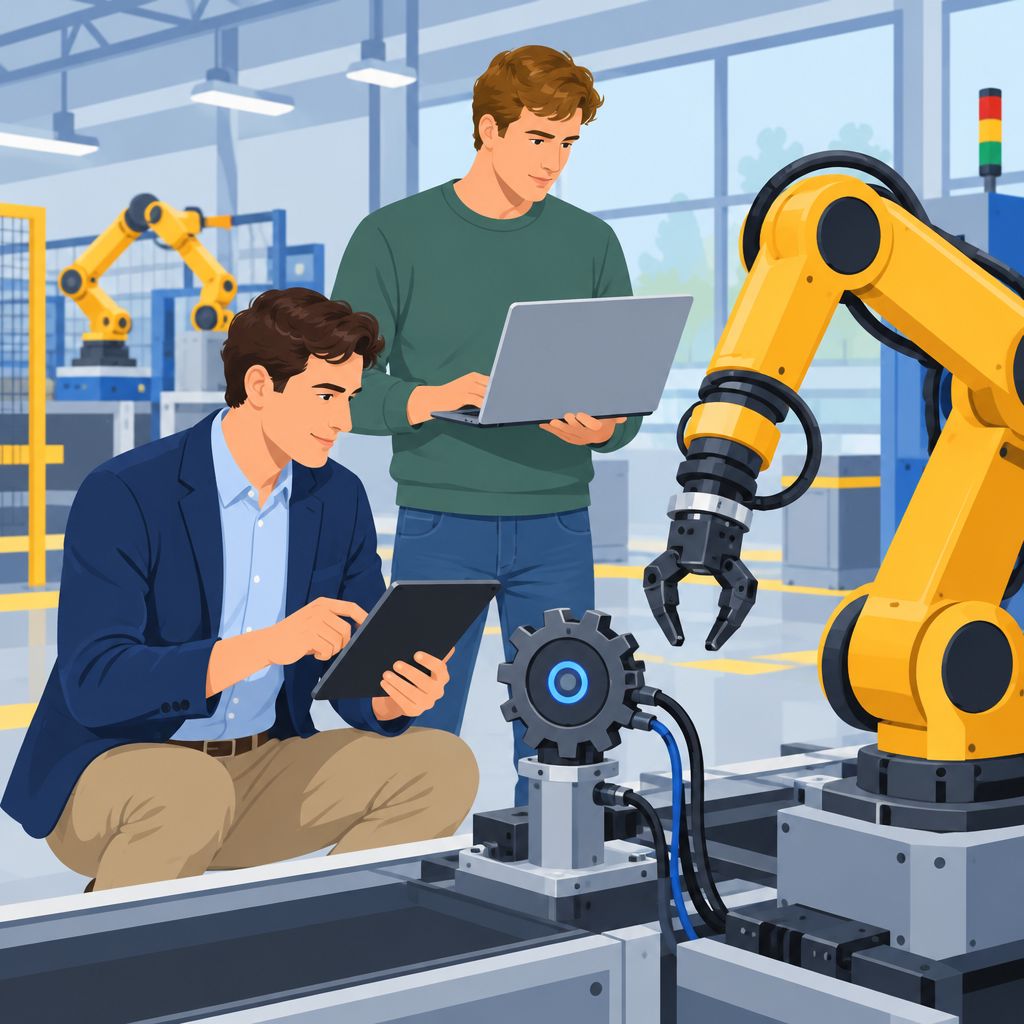
Predictive Maintenance Enabled by IoT
Predictive maintenance uses data analytics to anticipate equipment failures.
This approach shifts maintenance from reactive responses toward proactive planning.
Consequently, industries can reduce unexpected downtime and support more reliable operations.
Understanding Predictive Maintenance
Traditional maintenance follows fixed schedules, regardless of actual equipment condition.
That method can create unnecessary downtime or allow unexpected breakdowns.
Predictive maintenance analyzes current conditions to identify when equipment truly needs attention.
As a result, organizations can reduce maintenance costs and extend machinery lifecycles.
IoT devices support this strategy by recording equipment information over time.
The collected information reveals usage patterns and highlights departures from normal operation.
Equipment Health Monitoring Through IoT
IoT devices monitor industrial equipment through sensors installed within machinery.
These sensors track conditions such as temperature, vibration, and pressure continuously.
They then transmit readings to centralized systems for evaluation.
- Real-Time Monitoring: Sensors continuously record equipment conditions.
- Condition-Based Assessment: Devices evaluate machinery against selected operating parameters.
- Anomaly Detection: Algorithms recognize unusual patterns linked to possible failures.
- Data Visualization: Dashboards present complex equipment information clearly.
- Cloud Connectivity: Systems send information to cloud services for storage and analysis.
Each reading helps organizations understand how equipment performs during operation.
Continuous monitoring helps operators identify developing issues quickly.
For example, rising machine temperature can indicate overheating.
IoT systems can alert operators immediately, allowing them to respond promptly.
Furthermore, machine learning systems can improve predictions by studying historical equipment information.
As these systems process more information, they can refine maintenance timing.
Business Value of Predictive Maintenance
Predictive maintenance provides several operational and financial benefits.
Organizations can align maintenance decisions with equipment conditions and business priorities.
The following benefits demonstrate the practical value of this strategy.
- Cost Reduction: Organizations avoid unnecessary servicing and limit repair expenses.
- Longer Equipment Lifespan: Timely servicing helps machinery remain useful longer.
- Improved Availability: Planned interventions help organizations preserve machine uptime.
- Better Resource Allocation: Maintenance teams can prioritize the most urgent repairs.
- Improved Safety: Early intervention reduces risks associated with equipment failure.
These advantages support more streamlined and cost-effective industrial operations.
Moreover, predictive maintenance helps organizations adjust schedules when manufacturing demands change.
Flexible maintenance planning supports businesses as operating conditions continue to evolve.
Transform Your Career Today
Unlock a personalized career strategy that drives real results. Get tailored advice and a roadmap designed just for you.
Start NowIntegrated information also helps managers make better decisions about equipment and maintenance resources.
By combining IoT with predictive maintenance, organizations strengthen equipment management and long-term performance.
Learn More: Importance of Monitoring in DevOps
Enhancing Safety and Compliance
Safety protects workers, assets, and surrounding communities in industrial environments.
Effective safety systems reduce accidents and support proactive risk management.
Workers in hazardous conditions need robust measures that address potential dangers.
Proper safety protocols can reduce workplace accidents significantly.
Additionally, safe practices encourage responsibility among employees.
Companies also benefit from stronger productivity and employee morale.
Safety Monitoring in Industrial Environments
IoT devices strengthen safety by providing real-time information about workplace conditions.
These technologies help organizations identify hazards and respond before conditions worsen.
Furthermore, continuous monitoring supports safer decisions throughout industrial operations.
- Wearable Safety Devices: Workers wear devices that track heart rate, fatigue, and exposure to harmful substances.
- Environmental Sensors: Sensors monitor air quality, temperature, and humidity, then trigger alarms during hazardous conditions.
- Predictive Maintenance Tools: IoT solutions identify possible equipment failures before malfunctions create additional risks.
- Location Tracking Systems: These systems track employee locations and support faster rescue operations during emergencies.
- Emergency Response Systems: Automated systems notify authorities during emergencies and help reduce response times.
Organizations can monitor safety conditions continuously by adopting these IoT solutions.
They can analyze collected information to identify trends and adjust procedures proactively.
Consequently, IoT-supported monitoring creates safer workplaces for everyone involved.
Regulatory Compliance Through IoT Solutions
Safety regulations protect workers from potential hazards during industrial operations.
Noncompliance can cause serious penalties and damage an organization’s reputation.
IoT solutions help organizations address regulatory requirements more effectively.
- Equipment Maintenance: IoT technologies automate maintenance schedules and support required equipment checks.
- Workplace Exposure Limits: Sensors monitor harmful substances and alert managers when levels exceed established thresholds.
- Incident Reporting: IoT systems streamline accident reporting and preserve records for accountability and audits.
- Training and Certifications: IoT platforms track completed training and send reminders when compliance requirements need attention.
- Documentation Management: IoT solutions organize safety records and keep required documentation accessible and current.
Organizations strengthen compliance efforts when they implement IoT solutions.
These systems support adherence to safety regulations and industry standards.
Moreover, proactive compliance measures protect employees and the organization.
IoT developers help integrate these safety technologies into industrial environments.
Real-time monitoring and data-driven insights support safer working conditions.
Organizations that adopt these innovations can strengthen their position in competitive industries.
Investing in safety and compliance supports the workforce’s future.
Learn More: Latest Trends in Video Game Design and Development
Scalability and Flexibility of IoT Solutions
Industrial automation requires systems that can expand as production needs change.
Scalable IoT solutions help manufacturers increase capacity without major infrastructure changes.
Flexible architectures also help companies adjust operations while preserving existing investments.
Importance of Scalability in Industrial Automation
Manufacturers need scalable systems that support growing production loads.
As operations expand, these systems accommodate additional machines, sensors, and connected processes.
Consequently, companies can increase output without replacing their entire infrastructure.
- Cost Efficiency: Scalable systems avoid complete overhauls, so businesses can add components incrementally.
- Resource Optimization: Companies can use existing investments while expanding their capabilities.
- Improved Responsiveness: Scalable systems help businesses adjust quickly when customer demands change.
- Growth Potential: Companies can expand operations while maintaining system performance.
IoT supports scalability by allowing connected devices to communicate across industrial operations.
Therefore, manufacturers can add machines and sensors with less disruption.
Moreover, IoT helps production lines accommodate changes with reduced downtime.
How IoT Enables Flexible and Adaptable Systems
IoT-enabled systems allow manufacturers to modify processes without extensive disruption.
These systems respond to changing demands by adjusting resources and workflows.
As a result, manufacturers can pursue operational changes with greater confidence.
- Dynamic Resource Allocation: IoT devices assess resource needs and allocate support during demand spikes.
- Real-Time Data Analysis: Current information helps decision-makers adjust processes quickly.
- Modular Design: Modular architectures let manufacturers integrate or remove components as needed.
- Customizable Workflows: IoT frameworks let businesses align workflows with specific production requirements.
Furthermore, IoT encourages companies to test new technologies with limited initial commitments.
Pilot projects become easier to deploy when businesses use adaptable connected systems.
Transform Your Career Today
Unlock a personalized career strategy that drives real results. Get tailored advice and a roadmap designed just for you.
Start NowThis approach supports experimentation and strengthens innovation across industrial operations.
Future-Proofing Industrial Processes Through IoT
Industrial companies need systems that can evolve with technological and market changes.
IoT provides a foundation for continuous improvement and future system integration.
In addition, adaptable systems help manufacturers respond to changing operating conditions.
- Continuous Improvement: IoT systems support updates that introduce new functions over time.
- Emerging Technology Integration: IoT solutions can connect with artificial intelligence, machine learning, and robotics.
- Environmental Adaptability: IoT systems respond to environmental variables during industrial operations.
- Regulatory Compliance: IoT solutions can adjust as industry requirements and standards evolve.
IoT also strengthens maintenance planning by capturing equipment performance data continuously.
Analytics can identify potential equipment issues before they interrupt production.
Consequently, companies can organize maintenance schedules and reduce avoidable downtime.
Business Value of Adaptable Industrial Systems
Scalable IoT systems help manufacturers control costs while expanding industrial capabilities.
Flexible architectures also help companies respond to operational and market changes.
By combining scalability with adaptability, businesses can strengthen long-term industrial performance.
Challenges Faced by IoT Developers in Industrial Automation
IoT developers play a crucial role in enhancing industrial automation.
However, they face significant challenges when creating efficient systems.
Three major issues include security concerns, legacy integration, and device interoperability.
Each challenge presents unique hurdles that developers must overcome.
Security and Data Privacy Challenges
Security concerns and data privacy issues represent major challenges for IoT developers.
As industries adopt more IoT systems, data breach risks increase considerably.
Therefore, developers must address several important security requirements.
- Vulnerability to Cyber Attacks: IoT devices often feature limited security measures, making them frequent hacking targets.
- Data Encryption: Developers must use robust encryption methods to protect transmitted data from unauthorized access.
- Regulatory Compliance: Companies must follow data privacy regulations, including GDPR and CCPA.
- Secure Software Development: Developers should prioritize security throughout design, deployment, and software updates.
- Regular Security Audits: Regular audits can identify vulnerabilities and strengthen the overall security posture.
These risks require developers to take a proactive approach.
They must protect both hardware and software throughout each development stage.
This approach can reduce risks and protect industrial operations from malicious activity.
Integration with Legacy Systems
Many industries still rely on legacy systems that have operated for decades.
Integrating modern IoT solutions with older technologies creates several development challenges.
Consequently, developers must balance modernization with existing operational requirements.
- Compatibility Issues: Legacy systems often use outdated protocols, which complicate integration and increase development costs.
- Data Silos: Legacy systems may produce inaccessible data, preventing seamless information flow across platforms.
- Resistance to Change: Employees and managers may resist new technologies, requiring communication and training.
- Incremental Upgrades: Gradual changes can create synchronization and data consistency challenges.
- Resource Allocation: IoT integration requires sufficient time, funding, and skilled personnel.
Despite these obstacles, developers can achieve successful integration.
For example, middleware and application programming interfaces can connect older and newer technologies.
These strategies help organizations create more connected industrial environments.
Interoperability Between IoT Devices
Interoperability allows devices to communicate and work together effectively.
However, developers often encounter technical and organizational barriers.
They must support reliable communication across diverse devices and systems.
- Diverse Standards: Competing standards can fragment the IoT environment and hinder device communication.
- Vendor Lock-in: Proprietary systems can make devices from different manufacturers difficult to integrate.
- Protocol Compatibility: Developers must connect devices that use different communication protocols.
- Scalability Issues: Expanding networks can make interoperability increasingly difficult to maintain.
- Testing and Validation: Comprehensive testing confirms that all components interact correctly.
Addressing interoperability requires cooperation among developers, manufacturers, and industry stakeholders.
Moreover, open standards and protocols can support a more integrated IoT ecosystem.
These practices help developers design systems that remain compatible as networks expand.
These challenges shape industrial automation projects in different ways.
Therefore, developers need coordinated strategies for secure integration and reliable device communication.
By addressing these barriers proactively, they can build robust and efficient industrial IoT solutions.
Such solutions can support productivity and growth across industrial operations.
Industrial Automation and IoT Development
IoT developers play a pivotal role in transforming industrial automation.
They design and implement advanced solutions that enhance operational efficiency.
By integrating smart sensors and devices, they enable real-time data collection and analysis.
This connectivity empowers companies to make informed decisions quickly.
Transform Your Career Today
Unlock a personalized career strategy that drives real results. Get tailored advice and a roadmap designed just for you.
Start NowThrough their expertise, IoT developers shape the future of industrial processes.
Ultimately, they bridge the gap between machines and human oversight.
Future Trends in IoT and Industrial Automation
The landscape of IoT and industrial automation continues to evolve rapidly.
Emerging trends include the integration of artificial intelligence (AI) and machine learning (ML).
These technologies support predictive maintenance and improve process optimization.
Furthermore, cybersecurity advancements will strengthen the safety of IoT systems.
As 5G networks expand, IoT devices will achieve lower latency and stronger connectivity.
Consequently, automation solutions will become more responsive and agile.
Therefore, companies must track these trends to remain competitive.
Business Value of IoT Adoption
Businesses should consider adopting IoT solutions to improve efficiency.
These technologies can streamline operations and significantly reduce costs.
Moreover, IoT applications provide data-driven insights that support better decisions.
IoT can also improve customer experiences through personalized services.
By investing in IoT, companies position themselves as industry leaders.
Thus, businesses that innovate now can strengthen their future competitiveness.
Additional Resources
Google search results for How IoT Developers Improve Industrial Automation Information Technology
Bing search results for How IoT Developers Improve Industrial Automation Information Technology


