




AI and IoT for Modern Developers
AI simulates human intelligence in machines.
IoT connects everyday devices to the internet and enables data exchange.
Together, these technologies create opportunities for developers.
Understanding AI and IoT Convergence
AI gives IoT devices smart functionality, allowing them to learn and adapt.
As developers combine both technologies, systems can respond intelligently to incoming data.
Consequently, automation, efficiency, and decision-making improve across many applications.
For instance, smart home devices can learn user preferences over time.
They can adjust settings according to habits, improving comfort and energy efficiency.
Developers can analyze device data and refine automated actions.
Smart cities also use AI and IoT to manage resources effectively.
Traffic lights can adapt in real time to improve traffic flow.
Meanwhile, developers build applications that analyze data from connected devices.
Applications Across Industries
AI analyzes sensor data to predict equipment failures.
Developers can create robust systems that reduce downtime and maintenance costs.
Therefore, industries can improve operational efficiency.
Healthcare also benefits from this integration.
Wearable devices collect patient data, while AI analyzes it for medical insights.
Developers can create healthcare solutions that support timely, personalized care.
Developers Shaping Intelligent Connected Systems
Developers who understand this convergence can build smarter applications.
These applications can improve user experiences and operational efficiency.
As both technologies evolve, developers will help shape future solutions.
Overview of AI and IoT Technologies
Artificial Intelligence (AI) and the Internet of Things (IoT) are transformative technologies.
Together, they reshape industries through greater efficiency, smarter systems, and actionable insights.
Their convergence supports innovation across many sectors.
Artificial Intelligence Capabilities
Artificial Intelligence simulates human intelligence through machines, especially computer systems.
AI includes several technologies that support analysis, interpretation, and autonomous action.
Businesses use these capabilities to optimize processes, improve customer experiences, and support informed decisions.
- Machine Learning: Algorithms let computers learn from data and improve over time.
- Natural Language Processing (NLP): Machines understand and interpret human language.
- Computer Vision: Techniques help machines interpret visual information from the world.
- Robotics: AI-powered robots perform tasks autonomously or with minimal human intervention.
AI analyzes large amounts of data quickly.
For example, AI can predict maintenance needs within manufacturing processes.
It can identify issues before they become critical problems.
Internet of Things Components
The Internet of Things connects physical devices through internet-based networks.
These devices communicate and share data, creating a continuous flow of information.
IoT helps businesses monitor and control processes more effectively.
- Smart Devices: Connected objects use sensors, software, and technology to exchange data.
- Connectivity: Internet protocols and platforms link devices and support communication.
- Data Processing: Analysis turns device data into meaningful insights.
- User Interfaces: Applications and dashboards give users access to devices and data.
IoT collects real-time data from connected devices.
For example, smart homes can monitor energy consumption and optimize utilities.
This monitoring can also produce significant cost savings.
Industry Transformation Through AI and IoT
The convergence of AI and IoT drives innovation across many sectors.
Their combined capabilities improve operational efficiency and customer engagement.
Industries use their synergy to strengthen forecasts and decision-making.
- Healthcare: AI analyzes patient data from fitness trackers and diagnostic equipment.
- Healthcare: This analysis supports personalized treatment plans and early disease detection.
- Manufacturing: IoT devices monitor production lines and equipment.
- Manufacturing: AI uses this data for predictive maintenance and asset management.
- Transportation: IoT sensors track vehicles and traffic patterns.
- Transportation: AI optimizes routes, delivery times, and fuel consumption.
- Smart Homes: IoT devices control lighting, temperature, and security remotely.
- Smart Homes: AI personalizes settings according to user preferences and habits.
- Agriculture: Sensors collect soil, weather, and crop health data.
- Agriculture: AI supports precision farming while minimizing resource use.
AI analyzes the extensive data generated by IoT devices.
Transform Your Career Today
Unlock a personalized career strategy that drives real results. Get tailored advice and a roadmap designed just for you.
Start NowThis analysis provides businesses with actionable insights.
AI also identifies patterns in IoT data for predictive analytics.
- Data-Driven Insights: AI converts IoT data into useful business guidance.
- Enhanced Automation: AI improves automated workflows by learning from sensor data.
- Improved User Experience: AI personalizes services using device information.
- Predictive Analytics: AI anticipates trends and behaviors through detected data patterns.
Companies using these technologies can gain a competitive edge.
The combination can improve productivity and profitability.
Connected devices can also improve responsiveness to market demands.
Developer Priorities for Connected Intelligence
Developers need to understand how AI and IoT work together.
They must design systems that support communication, security, growth, and timely decisions.
User-focused applications also help people interact smoothly with connected devices.
- Interoperability: Developers should connect devices that use different protocols.
- Data Privacy and Security: Robust protections must secure sensitive information.
- Scalability: Solutions should accommodate growing device numbers and data flows.
- Real-Time Processing: Systems must process data quickly for immediate decisions.
- User-Centric Design: Interfaces should support intuitive interactions with connected devices.
The convergence of AI and IoT continues to shape technological progress.
Developers play a critical role in shaping this technological future.
Those who embrace these technologies can drive innovation across various industries.
The Intersection of AI and IoT
AI and IoT together create new capabilities for developers.
This relationship improves functionality and increases efficiency across multiple industries.
Therefore, developers benefit from understanding how AI strengthens connected devices.
Ways AI Enhances IoT Capabilities
AI gives IoT devices greater intelligence and supports autonomous decision-making.
It also processes the large volumes of data that connected devices produce.
These capabilities help developers create smarter applications with less manual intervention.
- Real-Time Data Analysis: AI examines data streams immediately, enabling faster insights and decisions.
- Predictive Maintenance: AI identifies possible equipment failures before they cause serious disruptions.
- Smart Automation: AI manages connected devices across homes, factories, and cities.
- Enhanced Security: AI detects unusual device behavior and helps identify potential threats.
- Improved User Experience: AI personalizes interactions and increases user satisfaction.
As a result, these enhancements improve efficiency and help applications use resources more effectively.
How IoT Devices Supply Data for AI
IoT devices generate the data that AI algorithms use to produce insights and recommendations.
Continuous collection allows developers to refine algorithms and improve their accuracy over time.
Furthermore, varied data sources help AI understand changing conditions and user behavior.
- Continuous Monitoring: Devices track temperature, humidity, usage patterns, and other conditions.
- Diverse Data Sources: Different sensors provide varied information for broader analysis.
- Location-Based Data: Devices provide geographic information that reveals trends and behavior.
- Real-Time Inputs: Live data helps AI respond quickly when conditions change.
- Contextual Information: Devices provide details that help AI produce better predictions.
Examples of AI-Powered IoT Applications
AI-powered IoT applications deliver practical benefits across several sectors.
Each application combines connected devices with intelligent analysis or automated responses.
Consequently, organizations can improve convenience, monitoring, productivity, and resource management.
- Smart Homes: AI assistants manage appliances and learn user preferences.
- Healthcare Monitoring: Wearable devices collect health data and identify unusual measurements.
- Smart Agriculture: Sensors track soil moisture and weather conditions for better planning.
- Smart Cities: Connected devices monitor traffic patterns and energy consumption.
- Industrial IoT: AI evaluates manufacturing equipment data and supports maintenance planning.
Future Potential of Connected Intelligence
The AI and IoT relationship continues to transform how people interact with technology.
AI improves device capabilities, while IoT supplies the data necessary for intelligent operation.
Although developers may face challenges, this convergence offers significant opportunities for smarter applications.
Uncover the Details: Technology Evangelist: Key Industry Trends in 2025
AI and IoT integration creates valuable opportunities for developers.
However, combining these technologies also introduces obstacles that can slow progress and limit innovation.
Protecting Data in Connected AI Systems
Data security and privacy represent major concerns for developers.
IoT devices generate large amounts of information that may contain sensitive details.
Developers must protect that information throughout storage, transmission, and processing.
- Data Storage: Developers need secure platforms for storing sensitive information.
- Data Transmission: Strong encryption helps protect information transferred across networks.
- User Consent: Developers must obtain consent before gathering personal data.
- Vulnerability to Attacks: Weak IoT security can expose devices and compromise privacy.
Therefore, teams should include security features during the earliest design stages.
Regular updates and continuous monitoring can strengthen protection against emerging vulnerabilities.
Developers should also track current security trends and regulatory requirements.
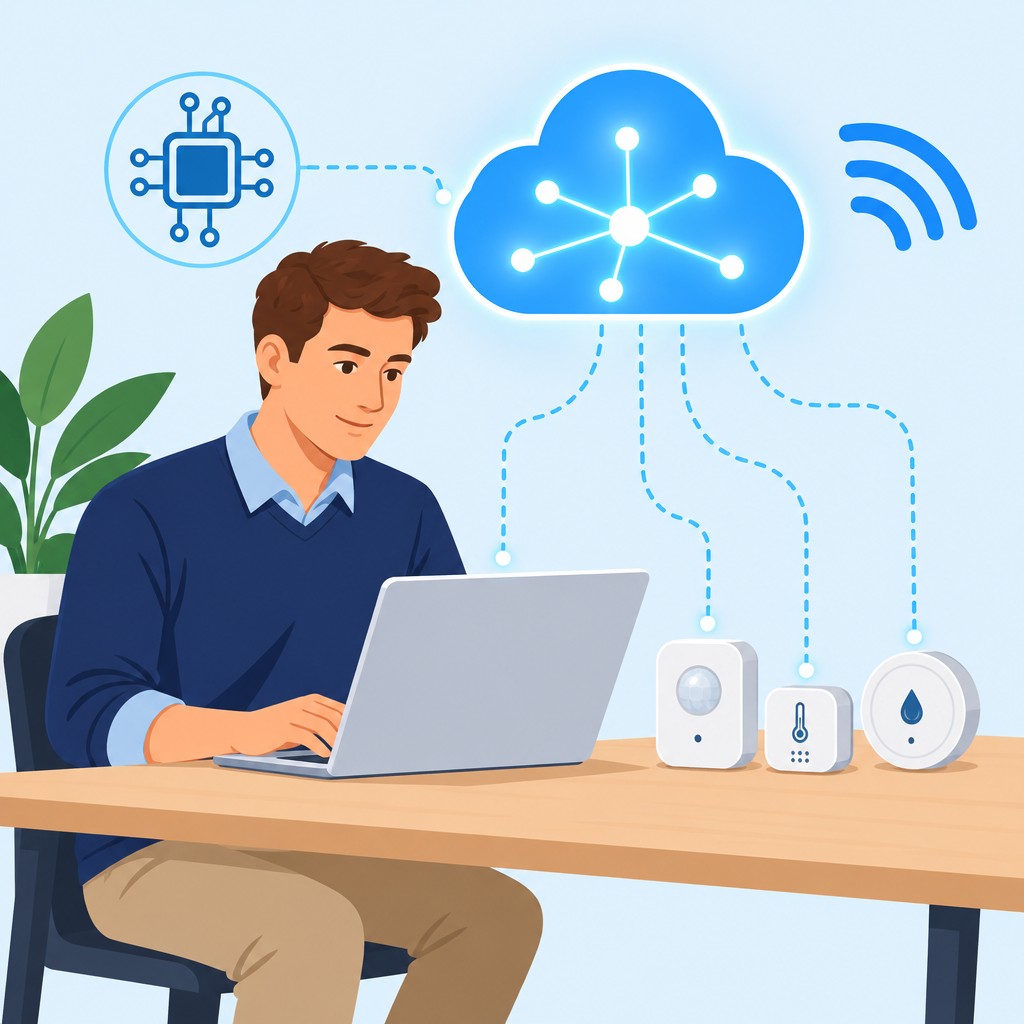
Improving Compatibility Across AI and IoT Devices
Compatibility remains a persistent challenge as AI and IoT systems continue evolving.
Different devices and platforms often use distinct methods for communication.
Consequently, developers must connect systems without reducing performance or functionality.
- Diverse Protocols: Multiple communication protocols can complicate connections between IoT devices and AI systems.
- Hardware Limitations: Limited processing power can restrict advanced AI functionality on IoT devices.
- Standardization: Missing universal standards can hinder reliable interoperability.
- Vendor Lock-In: Proprietary solutions can limit custom development and system flexibility.
To reduce these difficulties, developers should prioritize open standards whenever possible.
Transform Your Career Today
Unlock a personalized career strategy that drives real results. Get tailored advice and a roadmap designed just for you.
Start NowIndustry collaboration can also encourage more consistent protocols.
Additionally, modular designs allow teams to integrate different devices more easily.
Managing Large Datasets Efficiently
AI and IoT convergence produces datasets that require careful processing, analysis, and storage.
Developers must design systems that handle changing demands without losing efficiency.
These demands increase as connected devices become more numerous and diverse.
- Data Volume: IoT devices can produce immense amounts of information.
- Data Variety: Heterogeneous formats require advanced algorithms and suitable processing frameworks.
- Real-Time Processing: Some applications require immediate analysis for timely decisions.
- Scalability: Systems must expand smoothly as connected devices increase.
Cloud solutions can provide the flexibility and capacity required for growing datasets.
Machine learning algorithms can automate important processing and analysis tasks.
Big data technologies can help developers manage complex IoT environments.
Strategies for Addressing Integration Challenges
Developers can use several strategies to manage the difficulties associated with AI and IoT integration.
These approaches support flexibility, knowledge sharing, and faster responses to changing requirements.
Teams can also combine technical improvements with stronger collaboration.
- Continuous Learning: Ongoing education helps developers understand new tools, trends, and vulnerabilities.
- Agile Development: Agile methods help teams respond quickly when requirements change.
- Collaboration: Cooperation between teams encourages innovation and shared problem-solving.
- Community Engagement: Developer communities provide opportunities for knowledge sharing and collaboration.
By applying these practices, developers can navigate complex integration requirements more effectively.
They can also use advanced tools to create solutions that address practical challenges.
Shared expertise further supports innovation across development teams.
Creating More Capable Connected Solutions
AI and IoT integration offers developers many opportunities to build useful applications.
However, security, compatibility, and dataset management require deliberate planning.
Developers can address these concerns through sound practices, suitable tools, and active collaboration.
These efforts can help teams use AI and IoT more effectively.
As a result, integrated solutions can support innovation across industries and everyday experiences.
Delve into the Subject: Quantum Computing Researcher Salary Expectations
Developers use various tools and technologies to create AI-powered IoT solutions.
These tools support model development, device management, data collection, and analytics.
The right combination helps developers process IoT data and create responsive applications.
Machine Learning Frameworks for IoT Development
Machine learning frameworks help developers train and deploy models for IoT systems.
They also support data processing, experimentation, and model deployment across different environments.
TensorFlow and PyTorch provide two prominent options for developing AI-powered IoT applications.
- TensorFlow
- Google developed TensorFlow to support many machine learning tasks.
- Its flexible architecture supports large-scale data processing.
- Its active developer community contributes resources and tutorials.
- TensorFlow supports CPUs and GPUs for faster training.
- TensorFlow Lite helps developers deploy models on edge devices.
- Google developed TensorFlow to support many machine learning tasks.
- PyTorch
- Facebook backed PyTorch as a flexible machine learning framework.
- Its dynamic computational graphs support research and iterative development.
- TorchScript helps developers optimize code for different platforms.
- Libraries such as torchvision support image data processing.
- PyTorch integrates with other libraries for versatile IoT applications.
- Facebook backed PyTorch as a flexible machine learning framework.
TensorFlow may suit large-scale projects that require extensive processing capabilities.
PyTorch may better support rapid development, experimentation, and prototyping.
IoT Platforms for Connected AI Solutions
IoT platforms provide services for device management, data collection, and AI model integration.
They help developers connect devices, manage communications, and process information.
AWS IoT and Azure IoT Hub offer widely used options for building connected solutions.
- AWS IoT
- AWS IoT provides tools for connecting devices to the cloud.
- It supports secure communication, device authentication, and data privacy.
- AWS IoT Greengrass extends services to edge devices.
- Its analytics capabilities help developers process device data.
- Integration with AWS SageMaker supports machine learning model deployment.
- AWS IoT provides tools for connecting devices to the cloud.
- Azure IoT Hub
- Azure IoT Hub integrates with Microsoft’s cloud services.
- It supports communication between devices and the cloud.
- Its device management features support diagnostics and monitoring.
- Azure Machine Learning supports streamlined model deployment.
- Azure Functions supports serverless applications for event-driven scenarios.
- Azure IoT Hub integrates with Microsoft’s cloud services.
Both platforms help developers connect, monitor, and analyze IoT devices efficiently.
The choice depends on existing infrastructure, budget, and specific project requirements.
Data Analytics Tools for IoT Processing
Data analytics tools help developers extract meaningful insights from IoT data.
These tools process large datasets and support real-time analysis.
Apache Kafka, Apache Spark, and Splunk provide different capabilities for IoT data processing.
- Apache Kafka
- Kafka operates as a distributed event streaming platform.
- It handles real-time data feeds from connected devices.
- Developers can publish and subscribe to record streams.
- Its durability and scalability support high-volume IoT data.
- Kafka Streams helps developers create real-time analytics applications.
- Kafka operates as a distributed event streaming platform.
- Apache Spark
- Spark is an open-source distributed computing system.
- It supports batch processing, stream processing, and machine learning.
- Spark MLlib helps developers build scalable machine learning models.
- Spark integrates with HDFS and S3 storage solutions.
- Its SQL and graph libraries support varied IoT analysis.
- Spark is an open-source distributed computing system.
- Splunk
- Splunk provides analytics for operational intelligence.
- It supports log analysis and real-time device monitoring.
- Its indexing, visualization, and alerting features improve insights.
- Its machine learning toolkit supports predictive model development.
- Splunk dashboards help users visualize data in real time.
- Splunk provides analytics for operational intelligence.
These analytics tools help developers gain insights from large IoT datasets.
Effective analytics can improve the functionality and effectiveness of IoT solutions.
Developers can combine machine learning frameworks with IoT platforms and analytics tools.
This combination supports data processing, model deployment, device management, and real-time insights.
Transform Your Career Today
Unlock a personalized career strategy that drives real results. Get tailored advice and a roadmap designed just for you.
Start NowLearn More: Professional Organizations for IT Strategy Consultants
Best Practices for Building AI-Powered IoT Applications
AI-enabled IoT applications require reliable development practices.
These practices improve application performance and user experience.
Therefore, teams should prioritize scalability, real-time processing, and data integrity.
Designing Scalable and Flexible Architectures
Scalability strongly influences IoT application success.
A well-structured architecture manages increased traffic and device connections.
Additionally, flexible designs help teams update applications as requirements change.
- Microservices Architecture: A microservices approach promotes flexibility.
- Each component operates independently, which supports easier updates and scalability.
- Cloud-Based Solutions: Cloud platforms provide elastic scalability.
- They adjust resources dynamically according to application demand.
- API-First Design: An API-first approach helps devices communicate efficiently.
- This practice also simplifies integration with other systems.
- Containerization: Containers encapsulate the application environment.
- This technology supports consistent performance across different environments.
- Load Balancing: Load balancers distribute traffic evenly.
- Consequently, applications perform better during periods of peak demand.
Implementing Real-Time Data Processing
Real-time processing helps IoT applications deliver responsive experiences.
Developers can use immediate data to support timely insights and actions.
Moreover, efficient processing reduces delays between incoming data and application responses.
- Stream Processing Frameworks: Apache Kafka and Apache Flink manage real-time data streams.
- These frameworks help applications process streaming information efficiently.
- Edge Computing: Edge processing handles data closer to connected devices.
- This approach reduces latency and conserves bandwidth.
- Event-Driven Architecture: Event-driven systems react to events immediately.
- They support prompt data handling and application responses.
- Data Aggregation Techniques: Aggregation algorithms combine information from numerous devices.
- This process reduces noise and improves actionable insights.
- Monitoring and Analytics: Real-time dashboards present broad views of system performance.
- Monitoring enables prompt insights and corrective actions.
Ensuring Data Integrity and Security
Data integrity and security remain essential for IoT applications.
Connected devices can accumulate sensitive information that requires protection.
Accordingly, developers should protect information while maintaining its accuracy.
- Data Encryption: Strong encryption protects data in transit and at rest.
- This practice limits unauthorized access to sensitive information.
- Access Control Mechanisms: Role-based access control restricts data access.
- It assigns permissions according to user roles and privileges.
- Regular Security Audits: Periodic audits identify potential security risks.
- Vulnerability assessments help teams mitigate those risks.
- Firmware Updates: Regular firmware updates address security vulnerabilities.
- They can also improve device functionality.
- Data Validation: Validation techniques help maintain data accuracy.
- Consistency checks prevent erroneous information from entering the system.
Building Reliable AI-Powered IoT Applications
These practices help developers build capable AI-powered IoT applications.
Scalable architectures support growth, while real-time processing strengthens responsiveness.
Meanwhile, strong security and validation improve application reliability.
See Related Content: Role of IoT Developers in Enhancing Cybersecurity
Use Cases of AI and IoT Convergence
AI and IoT convergence reshapes industries through connected systems and intelligent decision-making.
Many practical applications demonstrate how these technologies improve efficiency, convenience, safety, and responsiveness.
Smart homes, industrial operations, and healthcare services show this convergence clearly.
Smart Homes and Intelligent Appliances
Smart homes provide one of the most accessible applications of AI and IoT convergence.
Connected devices improve convenience while helping households manage energy and security.
Over time, intelligent systems learn preferences and personalize household experiences.
- Energy Management: Smart thermostats such as Nest adjust heating and cooling according to user habits.
- Security Systems: Connected cameras and sensors identify unusual activity, while AI analyzes behavior and sends alerts.
- Voice Assistants: Devices such as Amazon Alexa respond to commands for lighting, music, and other functions.
- Smart Refrigerators: These appliances track food inventory and suggest recipes using available ingredients.
- Automated Lighting: Smart bulbs adjust brightness and color according to preferences and situational context.
Industrial IoT Applications for Predictive Maintenance
Industrial organizations use AI and IoT to support predictive maintenance programs.
Sensors continuously monitor equipment and send operational data to central systems.
AI then identifies patterns that may signal failures before they occur.
- Real-Time Monitoring: Sensors continuously assess equipment health and transmit information for analysis.
- Data Analysis: AI examines historical performance data and identifies potential failure patterns.
- Reduced Maintenance Costs: Predictive maintenance limits unnecessary repairs and focuses attention on emerging issues.
- Increased Equipment Lifespan: Regular assessments and timely interventions help machinery operate longer.
- Enhanced Safety: Early alerts help prevent dangerous situations during complex machinery operations.
Healthcare Applications for Remote Patient Monitoring
Healthcare providers use AI and IoT to monitor patients beyond traditional care settings.
Wearable devices collect vital signs and transmit information continuously.
AI processes this information and helps doctors make faster, informed decisions.
- Continuous Monitoring: Wearable devices track vital signs and send alerts when deviations appear.
- Data-Driven Insights: AI evaluates collected patient data and supports rapid clinical decisions.
- Improved Patient Engagement: Telehealth platforms help patients communicate with doctors from home.
- Chronic Disease Management: Remote tools support patients managing diabetes, hypertension, and similar conditions.
- Cost Reduction: Preventive remote monitoring can reduce hospital admissions and healthcare expenses.
Industry-Wide Benefits of AI and IoT Convergence
AI and IoT convergence creates opportunities across homes, industrial environments, and healthcare services.
Connected systems improve comfort, operational efficiency, patient engagement, and safety.
As these technologies advance, developers can create solutions that address emerging needs across multiple sectors.
Edge Computing Strengthens AI and IoT Applications
Edge computing processes data closer to its source.
This approach reduces latency and improves application performance.
Developers can combine edge computing with AI and IoT to support faster, safer, and more responsive systems.
- Data Processing Efficiency: By processing data on devices, edge computing reduces cloud traffic, speeds responses, and lowers operating costs.
- Improved Security: Keeping sensitive information near its source reduces vulnerabilities during data transmission.
- Real-time Data Analysis: AI can analyze IoT data immediately and support timely operational decisions.
- Resource Optimization: Edge computing reduces bandwidth demands for applications operating with limited network resources.
Explainable AI Builds Trust in IoT Systems
Explainable AI gives users understandable information about how systems reach decisions.
As AI interacts with IoT applications, developers must make automated decisions easier to interpret.
Clear explanations can support trust, responsible use, and wider adoption of intelligent connected systems.
- Transparent Decisions: Explainable models show how algorithms produce results and help users evaluate those outcomes.
- Regulatory Compliance: Understandable models can help organizations address requirements for responsible AI deployment.
- Easier Troubleshooting: Developers can examine decision paths, identify problems, and improve system performance.
- Enhanced User Interaction: Clear explanations help users interact with connected systems more confidently.
Autonomous Systems Expand AI and IoT Capabilities
AI-driven autonomous systems allow devices to operate independently and make decisions in real time.
This development will create new responsibilities and opportunities for developers across multiple industries.
Transform Your Career Today
Unlock a personalized career strategy that drives real results. Get tailored advice and a roadmap designed just for you.
Start NowDevelopers must design reliable systems that operate safely while connecting with established workflows.
- Smart Home Automation: Devices can learn user preferences and create more personalized, comfortable, and efficient environments.
- Industrial Automation: Autonomous robots can perform manufacturing tasks with greater efficiency and accuracy.
- Autonomous Vehicles: AI and IoT support navigation systems that developers must make safe and efficient.
- Healthcare Innovations: Connected AI devices can monitor patients remotely and alert healthcare providers when necessary.
Developer Priorities for the Connected Future
Edge computing, explainable AI, and autonomous systems will shape the next stage of AI and IoT development.
Each trend offers practical opportunities while introducing new technical and design challenges.
Developers who continue learning can create impactful solutions for an increasingly interconnected future.
Proactive skill development will help teams use these technologies responsibly and effectively.
Developer Opportunities in Intelligent Connected Systems
The convergence of AI and IoT creates significant opportunities for developers across industries.
AI provides analytical power, while IoT devices collect data for smarter solutions.
Together, these technologies improve automation, efficiency, and decision-making across industries.
Furthermore, developers can use AI algorithms to analyze data from IoT devices.
This analysis supports predictive maintenance, smarter energy management, and enhanced customer experiences.
Consequently, businesses can reduce costs and improve their operations.
As demand for intelligent systems grows, developers must continually adapt their skills.
They should study AI and IoT technologies to create advanced applications.
Additionally, cross-disciplinary knowledge can distinguish developers in the job market.
Because these fields advance rapidly, developers should monitor new tools and frameworks.
Workshops, online courses, and hackathons can strengthen their practical skills.
Developers who embrace these changes can pursue innovative applications in this expanding field.
Therefore, now is a suitable time to explore AI and IoT development.
Additional Resources
Google search results for How AI and IoT Are Converging for Developers Information Technology
Bing search results for How AI and IoT Are Converging for Developers Information Technology


