




Introduction
Artificial Intelligence (AI) refers to computer systems that simulate human intelligence.
These systems analyze data, learn patterns, and make decisions.
AI has transformed healthcare, finance, entertainment, and video editing.
The Role of AI in Video Editing
AI tools streamline many aspects of video editing.
They automate repetitive tasks and improve productivity.
AI algorithms organize large amounts of footage quickly.
Efficiency and Speed
AI-driven software analyzes content and offers smart editing suggestions.
These suggestions help editors make informed decisions faster.
AI can generate previews and help projects reach completion sooner.
Enhancing Creativity
AI improves efficiency while also supporting the creative process.
It provides insights that help editors craft compelling stories.
Editors can use viewer engagement metrics to identify impactful scenes.
Accessibility for New Editors
AI tools make video editing more accessible to beginners.
Intuitive software with built-in AI features reduces training requirements.
New editors can produce professional-quality videos with greater confidence.
Challenges and Considerations
AI offers numerous benefits, but it also presents important challenges.
Automation raises concerns about potential job displacement.
Editors must adapt to new tools and methodologies.
The Future of Video Editing
AI profoundly impacts the video editing profession.
It enhances efficiency, creativity, and accessibility.
Editors can embrace AI to support future success in their work.
Overview of AI in Video Editing
AI has changed video editing by streamlining production workflows.
It improves several production tasks while supporting final video quality.
As a result, editors can focus more attention on creative decisions.
AI Applications in Video Editing
AI supports video editors through several practical applications.
- Automated Editing: AI analyzes footage and creates edits according to predefined styles.
- Content Recognition: AI identifies faces, objects, and actions within video footage.
- Color Grading: AI analyzes scenes and recommends suitable color adjustments.
- Audio Enhancement: AI reduces background noise and balances sound levels automatically.
- Transcription and Subtitle Generation: AI transcribes speech and creates subtitles for greater accessibility.
AI Tools Used in Video Editing
Several editing platforms use AI to simplify complex production tasks.
- Adobe Premiere Pro: Adobe Sensei provides smart editing suggestions and automates repetitive tasks.
- Filmora: AI features support motion tracking and audio syncing.
- Magisto: This platform analyzes uploaded footage and automatically creates engaging videos.
- DaVinci Resolve: Its AI tools provide smart reframing and facial recognition.
- Descript: Users can edit video by changing the text transcript.
Benefits of AI-Assisted Video Editing
AI offers several benefits that improve the video editing experience.
- Time Efficiency: AI shortens editing tasks and helps editors finish projects faster.
- Increased Productivity: Automation allows editors to focus on creative decisions and storytelling.
- Improved Editing Capabilities: AI suggests effective cuts, transitions, and effects.
- Consistency: AI applies styles and effects consistently across projects.
- Accessibility for Beginners: Beginners can create polished videos without extensive training.
AI continues to reshape video editing by combining automation with creative opportunities.
Editors who use these tools can manage workflows more easily and explore their artistic vision.
Therefore, staying informed about AI advancements can help editors maintain a competitive edge.
Automation of Tedious Video Editing Tasks
As video production grows, professionals face increasing demands.
Video editors need to work faster while producing high-quality content.
AI helps editors meet these demands.
It automates repetitive tasks and lets editors focus on creative decisions.
This support streamlines the entire editing process.
Repetitive Tasks in Video Editing
Video editing includes many repetitive tasks.
These activities can consume valuable time and resources.
AI automation can improve workflows across several editing areas.
- Color Correction: Editors can spend hours adjusting color levels, contrast, and saturation.
AI analyzes footage and suggests suitable settings, which speeds up correction. - Audio Editing: Editors must align soundtracks, remove background noise, and adjust audio levels.
AI can sync audio with video and identify unwanted sounds. - Transitions: Editors often choose visual or auditory transitions for each mood and style.
AI can learn from previous edits and apply suitable transitions. - Tagging and Organizing Footage: Editors may spend hours browsing and tagging clips.
AI can recognize themes and tag content, making footage easier to find. - Highlight Extraction: Editors need time to identify important moments in raw footage.
AI can extract highlights for sports edits and event recaps.
Benefits of Automated Editing Workflows
AI integration offers significant benefits for video editing teams.
Automation helps editors save time and allocate resources more effectively.
Transform Your Career Today
Unlock a personalized career strategy that drives real results. Get tailored advice and a roadmap designed just for you.
Start NowIt also allows professionals to concentrate on creative responsibilities.
- Time Efficiency: AI reduces time spent on routine tasks.
Editors can finish projects faster and accept more work. - Enhanced Creativity: Automation gives editors more time for brainstorming and innovative ideas.
They can focus less on technical repetition. - Consistency: AI can support consistent quality across multiple projects.
It also helps reduce human errors during production. - Cost-Effectiveness: Time savings can reduce production costs.
Smaller teams may manage larger projects through automation. - Learning Curve: User-friendly AI tools can help editors learn assisted editing workflows.
Editors may adapt quickly to these systems. - Improved Client Satisfaction: Faster delivery can improve client experiences.
Prompt service may encourage clients to return.
Considerations for Video Editors
AI can transform video editing, but editors must consider several important factors.
Technology cannot replace human creativity and judgment.
Human intuition combined with AI efficiency can produce stronger results.
- Embrace AI Tools: Editors should learn how AI-assisted software supports their workflows.
These tools can expand their editing capabilities. - Quality Control: Editors must review AI-generated edits carefully.
Human oversight helps the final product meet quality standards. - Staying Updated: AI editing technology continues to evolve.
Editors should follow new software and emerging trends. - Balancing Workloads: Automation should support, not replace, editing practice.
Editors should continue developing their creative and technical skills. - Ethical Considerations: AI raises questions about originality and content ownership.
Editors should consider ethical standards and copyright issues before using these tools.
Future Directions for AI-Assisted Video Editing
AI automation represents a major shift in the video editing profession.
By handling repetitive tasks, AI improves efficiency and supports creative work.
Editors can strengthen their workflows by using these tools thoughtfully.
As editing technology advances, professionals must adapt to remain competitive.
Find Out More: Understanding Social Media Analytics and Metrics
AI Supports Creative Video Editing
AI supports creative work by reducing the time editors spend on routine production tasks.
As a result, editors can devote more attention to storytelling, experimentation, and artistic choices.
Additionally, AI can reveal content patterns that help editors make more informed creative decisions.
- Automated Tasks: AI handles repetitive work, giving editors more time for creative development.
- Efficient Workflows: AI organizes multiple editing tasks and helps editors manage production efficiently.
- Content Insights: AI analyzes footage and supplies information that can strengthen visual storytelling.
- Team Collaboration: AI tools help creative teams share ideas and suggestions during the editing process.
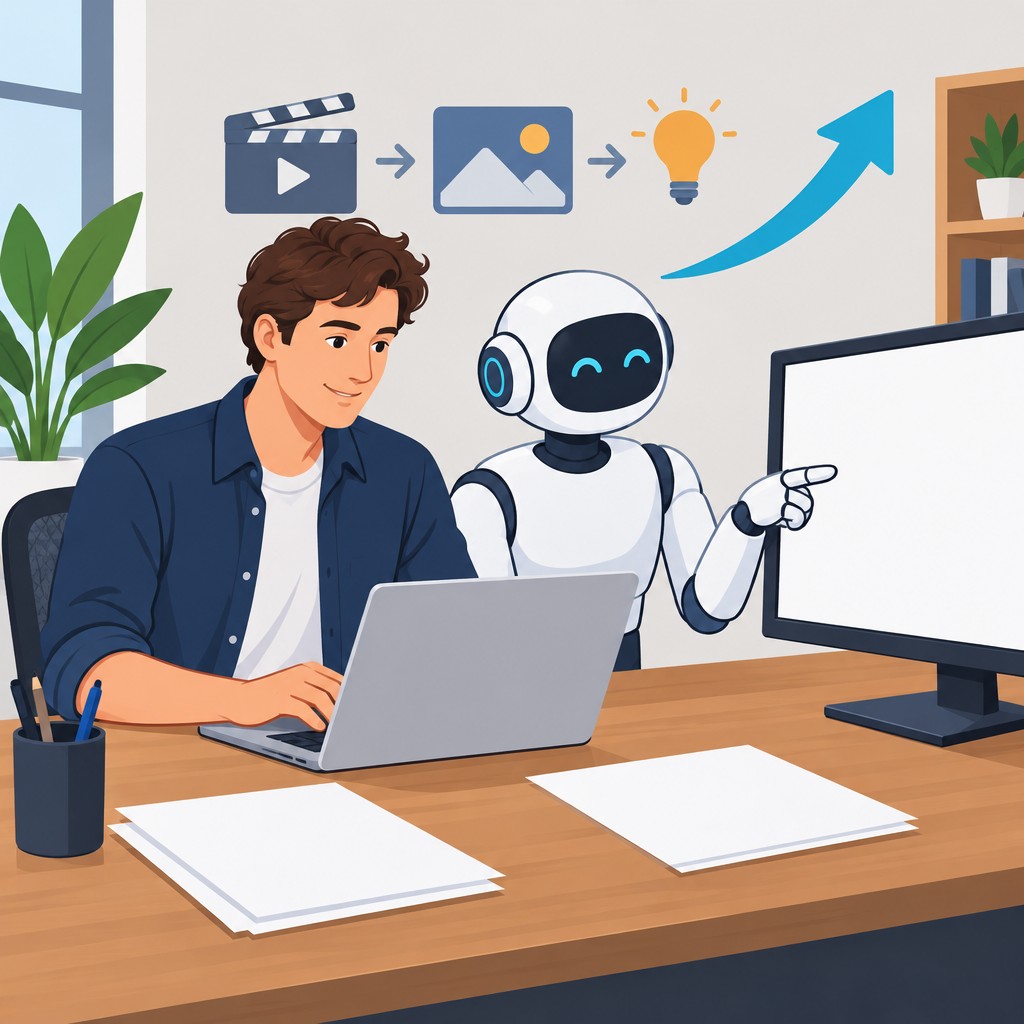
AI Tools Guide Creative Decisions
Several AI-powered tools help editors evaluate footage and select suitable edits, effects, and production adjustments.
These tools support creative judgment without removing the editor’s responsibility for the final result.
Furthermore, each platform offers different capabilities that can expand the range of available editing options.
- Adobe Sensei: Adobe Sensei automates tasks such as color matching and audio syncing within Creative Cloud.
- Magisto: Magisto analyzes footage and suggests edits, music, and effects for quick video creation.
- PicoVico: PicoVico uses AI to create personalized videos with limited user input.
- Filmora: Filmora uses smart scene detection to help editors locate suitable clips.
- Descript: Descript combines audio transcription with text-based video editing to simplify workflow management.
AI Expands Creative Possibilities
AI gives editors more ways to test visual styles and combine techniques during production.
Consequently, editors can explore creative directions that might otherwise require considerable time and effort.
Real-time data and advanced effects also support more dynamic approaches to visual storytelling.
- Style Experimentation: AI helps editors test different formats, genres, and visual approaches.
- Visual Effects: Advanced algorithms create effects that can deepen narrative impact and audience engagement.
- Dynamic Content: AI supports content that responds to real-time data during production.
- Creative Collaboration: AI tools help teams exchange ideas and develop richer visual concepts.
Practical AI Enhancements in Editing
Specific AI features show how technology can improve both organization and creative control.
For example, automated analysis helps editors navigate large amounts of raw footage more efficiently.
Meanwhile, intelligent recommendations can strengthen visual consistency and support audience-focused editing choices.
- Scene Detection: AI identifies separate scenes and helps editors locate specific footage quickly.
- Color Grading: AI suggests color treatments that improve cohesion and reinforce emotional tone.
- Facial Recognition: AI tags and organizes footage by identifying people within recorded scenes.
- Content Personalization: AI analyzes viewer data to support editing choices that increase audience relevance.
Creative Opportunities in AI-Assisted Editing
AI changes how editors approach both technical preparation and artistic development.
Rather than replacing human creativity, these tools give editors more possibilities to evaluate and refine.
As editors adopt these capabilities, video storytelling can become more flexible, efficient, and visually engaging.
Explore Further: Effective Use of White Space in Web Design
Improving Workflow Efficiency
AI improves video editing workflows by reducing repetitive work.
Editors can redirect saved time toward creative decisions and storytelling.
Consequently, teams can increase productivity and complete projects faster.
AI Tools for More Efficient Editing
Several AI tools target different needs within the video editing process.
These platforms handle selected tasks that traditionally require substantial manual effort.
Therefore, editors can choose tools that match their workflow requirements.
- Adobe Sensei: Adobe’s AI platform automates color correction and audio leveling.
- Magisto: This tool analyzes footage and quickly generates edited videos.
- Descript: Descript uses transcription so editors can modify videos through text.
- Pinnacle Studio: Its AI features accelerate effects and transition work.
- Filmora: Filmora includes motion tracking and scene detection tools.
Together, these tools reduce delays caused by repetitive editing activities.
Automating Routine Editing Processes
AI can organize footage and identify useful content within large collections.
It can also improve visual and audio consistency across a project.
Additionally, automated language tools support captions, translations, and text-based editing.
- Footage Sorting: AI analyzes and categorizes footage based on its content.
- Color Correction: AI algorithms adjust colors for consistent results.
- Sound Editing: AI identifies background noise and improves audio clarity.
- Transcription: Automated services convert spoken words into editable text.
- Subtitles and Translation: AI creates subtitles and translations for broader access.
By assigning these processes to AI, editors can spend more time refining the final narrative.
Meeting Deadlines with AI Support
AI helps editors respond to demanding schedules without abandoning quality.
It processes extensive footage quickly and supports faster revision cycles.
Meanwhile, project management features help teams monitor progress and deadlines.
- Rapid Editing: AI analyzes footage and identifies strong clips quickly.
- Template Utilization: Templates reduce time spent designing common edits.
- Instant Feedback: AI provides immediate suggestions during revision work.
- Project Management: AI tools track progress and support deadline management.
As a result, editors can deliver polished videos within shorter production windows.
Transform Your Career Today
Unlock a personalized career strategy that drives real results. Get tailored advice and a roadmap designed just for you.
Start NowSupporting Creative Decision-Making
Efficient processes give editors more time to develop stories and refine pacing.
Editors can also explore visual ideas without constant routine-task interruptions.
Furthermore, some AI tools analyze audience engagement and suggest possible edits.
This feedback can guide editing choices and support stronger audience responses.
Examples of AI in Professional Workflows
Several production organizations use AI to accelerate video-related work.
Their examples show how organizations can combine automation with audience-focused production.
However, each organization applies AI according to its particular content needs.
- BuzzFeed: BuzzFeed uses AI to create engaging videos quickly.
- The Washington Post: The organization uses AI to edit breaking-news videos promptly.
- Netflix: Netflix uses AI for recommendations and genre-related editing decisions.
These examples demonstrate how AI can support faster content production across different organizations.
Skills for the AI-Assisted Editing Workforce
AI changes editing roles by shifting attention toward higher-value creative responsibilities.
Editors who learn these tools can develop more specialized production skills.
Creative judgment, adaptability, and problem-solving will continue to support effective editing work.
Rather than removing every editing role, AI can assist professionals who use it thoughtfully.
AI’s Role in More Effective Video Production
AI improves workflow efficiency by handling selected tasks with speed and consistency.
Editors can then devote more attention to storytelling, experimentation, and communication.
As editors adopt these tools, video production can become faster and more manageable.
Learn More: Content Strategy for Lead Generation
Challenges and Limitations of AI Video Editing
AI brings efficiency to video editing, but it also introduces important limitations.
As technology develops, it continues to reshape how professionals approach their craft.
Editors must consider these challenges while adopting AI tools.
Potential Challenges of Using AI
AI tools improve efficiency, yet professionals still encounter several significant concerns.
These concerns can affect creativity, judgment, costs, and workflow stability.
Therefore, editors should evaluate each tool carefully before relying on it.
- Limited Creativity: AI handles repetitive tasks well but often struggles with original artistic decisions.
- Reduced Emotional Depth: Automated edits may lack the emotional depth and storytelling that human editors provide.
- Over-Reliance on AI: Excessive dependence can weaken traditional editing skills and reduce critical thinking.
- Limited Contextual Understanding: AI may misinterpret subtle cues and produce inappropriate or misleading edits.
- High Initial Costs: Advanced AI software, training, and integration can create substantial financial demands.
- Maintenance Requirements: Frequent updates and ongoing support can complicate established editing workflows.
Employment Changes in Video Editing
AI raises legitimate concerns about job security across the video editing field.
Automation may affect traditional roles, especially positions designed for entry-level professionals.
As companies pursue lower costs, they may reduce team sizes and restructure responsibilities.
- Fewer Entry-Level Opportunities: Automated tools may reduce the need for junior editors.
- Changing Skill Requirements: New professionals may need stronger technical abilities alongside editing knowledge.
- Increased Competition: Accessible AI tools may encourage more people to enter the field.
- Wage Pressure: Greater competition can pressure wages and challenge established professionals.
- Redefined Roles: Editors may shift toward responsibilities involving design, storytelling, and creative direction.
Ethical Responsibilities in AI-Assisted Editing
AI-assisted editing also creates ethical questions that professionals must address.
These questions involve ownership, public trust, representation, and human oversight.
Responsible editors should examine how each tool affects audiences and creative work.
- Intellectual Property: AI-generated content may draw from existing media and raise copyright concerns.
- Ownership Questions: AI-created material can make responsibility for creative rights difficult to determine.
- Manipulated Reality: AI can alter footage in ways that mislead audiences.
- Deepfake Risks: Altered likenesses can spread misinformation or damage reputations.
- Transparency: Viewers may deserve disclosure when producers use AI during editing.
- Algorithmic Bias: Training data can influence edits and reinforce harmful stereotypes.
- Human Oversight: Editors should question AI decisions and retain control over content quality.
Balancing Technology with Editorial Judgment
AI will continue influencing the video editing profession.
Professionals can benefit from new technology without abandoning creative judgment or ethical responsibility.
A balanced approach helps editors protect artistic quality, public trust, and meaningful career opportunities.
Discover More: Copy Editing in the Book Publishing Industry
Future Trends and Developments in AI Video Editing
AI will continue transforming video editing through faster workflows and more responsive creative tools.
Emerging technologies will help editors manage footage, refine visuals, and respond to audience preferences.
These developments will support creative decisions while changing how teams produce and share video content.
- AI will automate repetitive tasks, allowing editors to focus on creative decisions.
- Intelligent recommendations will suggest cuts, transitions, and effects during editing.
- Cloud platforms will use AI to support real-time collaboration between editing teams.
- Intelligent tagging will help editors organize and retrieve media assets quickly.
- Deep learning will simplify the creation of realistic and complex visual effects.
- AI will support real-time editing during live broadcasts and streaming events.
- Viewer preference analysis will help editors create more personalized video content.
AI’s Continued Influence on Video Editing
As AI develops, it will influence both editing workflows and professional responsibilities.
Editors will increasingly combine technical knowledge with creative judgment and strategic thinking.
At the same time, professionals will need to address ethical questions surrounding AI-generated content.
- Editors will shift from tedious production tasks toward strategic creative decisions.
- Professionals will learn AI tools to remain effective in changing production environments.
- Editors will collaborate with AI systems to expand creative possibilities.
- AI capabilities will encourage experimentation with new styles and storytelling techniques.
- Automated processes will reduce production costs and increase output efficiency.
- Editors will evaluate authenticity and trust when using AI-generated material.
- User-friendly AI tools will make video editing more accessible to aspiring creators.
Predictions for AI’s Role in the Video Editing Industry
Future industry changes will depend on technological progress and evolving viewer behavior.
AI will become more closely connected to established editing practices and production decisions.
Transform Your Career Today
Unlock a personalized career strategy that drives real results. Get tailored advice and a roadmap designed just for you.
Start NowMeanwhile, creators will balance automation with personal style, authorship, and audience expectations.
- More intuitive AI software will encourage broader participation in video editing.
- AI systems may eventually generate video content with limited human direction.
- Industry standards may improve compatibility between AI editing tools.
- Larger training datasets may improve the accuracy of AI editing decisions.
- Editors will integrate AI into traditional workflows without abandoning personal styles.
- Audience insights will help editors respond to viewer preferences and engagement patterns.
- Regulatory frameworks may guide ethical AI use in video production.
AI will reshape video production by expanding creative options and changing professional expectations.
Editors who remain curious and adaptable can work effectively within this evolving landscape.
AI’s Evolving Role in Video Editing
AI connects faster production with broader creative possibilities in video editing.
Editors can automate scene detection, smart slicing, color suggestions, and audio cleanup.
Consequently, these capabilities help editors complete projects efficiently without sacrificing quality.
At the same time, real-time feedback can guide decisions during the editing process.
Personalized suggestions can also support an editor’s established style and encourage experimentation.
However, human editors remain essential because they shape narratives and emotional arcs.
They must balance technological assistance with artistic judgment throughout each project.
As AI develops, editors who understand these tools can adapt to changing video production demands.
Staying informed can help editors use emerging capabilities while preserving their creative identity.
Additional Resources
Google search results for The Impact of AI on the Video Editing Profession Media and Communication
Bing search results for The Impact of AI on the Video Editing Profession Media and Communication


