




Introduction
The Internet of Things (IoT) connects devices to the internet and enables data exchange.
This network of interconnected devices transforms industries by improving efficiency and productivity.
Industries such as manufacturing, agriculture, and transportation already benefit from IoT.
The Impact of IoT on Healthcare
Healthcare organizations use IoT to improve patient care and operational efficiency.
Connected devices monitor vital signs in real time, supporting timely interventions.
Wearable health monitors track physical activity, heart rate, and other health metrics.
Healthcare providers use this information to make informed treatment decisions.
Furthermore, IoT supports remote patient monitoring and reduces hospital visits.
Patients receive consistent care while remaining in their homes.
Medical staff can access crucial data remotely, which streamlines healthcare delivery.
The Role of IoT Developers
IoT developers support this healthcare transformation through specialized software development.
They design and implement software that powers connected medical devices.
Their expertise enables seamless integration between medical devices and healthcare systems.
Additionally, developers prioritize security because healthcare IoT handles sensitive patient data.
They protect that information from cyber threats through advanced encryption and secure communication protocols.
Developers also improve usability and user experience for healthcare providers.
They make device-generated data easier to manage and interpret.
This user-friendly design increases efficiency in healthcare settings.
Together, these solutions help providers apply connected data throughout healthcare delivery.
As a result, IoT enables more responsive care and smoother operations.
Patients benefit when healthcare teams use timely information to guide support.
Healthcare organizations use connected technologies to improve patient care and streamline daily operations.
These systems support smarter practices by providing timely information to patients, clinicians, and administrators.
They also encourage innovation across patient monitoring, treatment planning, and healthcare resource management.
IoT Applications in Healthcare
Healthcare IoT connects devices and applications that collect, analyze, and share health information.
These tools monitor important health metrics and provide clinicians with real-time insights.
Consequently, healthcare professionals can track patients remotely and manage resources more efficiently.
Connected Devices Supporting Patient Care
Healthcare facilities use several connected devices to support monitoring, communication, and treatment management.
Each device addresses specific needs while helping patients and professionals access useful health information.
Together, these applications create more responsive healthcare processes.
- Wearable Health Trackers: Fitness bands and smartwatches monitor heart rates, activity levels, and sleep patterns.
- Users can set health goals and track their progress through these wearable devices.
- Smart Pill Bottles: These bottles remind patients to take medications and track dosage information.
- They can alert healthcare providers when patients miss scheduled doses.
- Remote Patient Monitoring Systems: Hospitals use these systems to monitor vital signs outside clinical settings.
- These devices transmit patient data to healthcare providers for ongoing assessment.
- Connected Thermometers: Connected thermometers provide real-time temperature readings and reveal fever patterns.
- Associated applications can alert healthcare professionals when patients require attention.
- IoT-Enabled Imaging Devices: MRI and CT scanners can share images quickly between hospitals and specialists.
- Smart Hospital Beds: Sensors monitor patient movement and vital signs while supporting emergency alerts.
These devices collect information continuously and make that information available to authorized healthcare teams.
As a result, clinicians can observe changes and respond more promptly.
Patients also gain practical tools for participating in their own health management.
Benefits of IoT in Healthcare
IoT solutions provide benefits that improve patient experiences and healthcare operations.
They help providers gather information, coordinate services, and respond to changing patient needs.
Furthermore, connected systems support more individualized care decisions.
- Remote Patient Monitoring: Providers can monitor patients outside clinical settings and identify changes earlier.
- Improved Patient Engagement: Wearables encourage patients to participate actively in managing their health.
- Data Analytics: Connected devices collect information that providers can analyze for patterns and treatment planning.
- Enhanced Efficiency: Automation reduces time spent on routine tasks and supports greater attention to patient care.
- Better Resource Management: Hospitals can track equipment availability and usage more effectively.
- Personalized Treatments: Device data helps providers create treatment plans suited to individual patients.
- Emergency Response: Connected devices can alert healthcare teams during emergencies and support faster responses.
These advantages extend beyond simple device connectivity.
They help healthcare professionals gain valuable insights into patient conditions and operational needs.
Therefore, more healthcare facilities are adopting IoT solutions to strengthen care delivery.
Security and Clinical Integration Requirements
Healthcare IoT developers must understand the sector’s unique technical and clinical requirements.
Transform Your Career Today
Unlock a personalized career strategy that drives real results. Get tailored advice and a roadmap designed just for you.
Start NowThey must design systems that protect patient privacy and secure sensitive health information.
Compliance with regulations such as HIPAA helps organizations maintain confidentiality.
Additionally, developers should work closely with healthcare professionals during solution development.
This collaboration helps connected tools fit existing clinical workflows.
It also allows development teams to address practical needs within healthcare settings.
Developers Shaping Connected Healthcare
IoT developers play an important role in improving how healthcare organizations deliver services.
They combine technical knowledge with an understanding of patient care requirements.
As healthcare technology advances, skilled developers will support more effective and efficient solutions.
Their work can expand remote monitoring, patient engagement, and health management capabilities.
Meanwhile, medical collaboration can help ensure that innovation remains practical and clinically relevant.
Through this partnership, healthcare organizations can continue developing smarter approaches to patient care.
IoT Developers in Healthcare
IoT developers create healthcare solutions that support medical professionals and patients.
They design systems that collect, transmit, and analyze health data efficiently.
Moreover, their work addresses challenges involving monitoring, security, usability, and timely clinical decisions.
- Developers design robust IoT systems for specific healthcare applications.
- They build sensor networks that monitor patients’ vital signs in real time.
- They integrate medical devices to support seamless communication between connected systems.
- They protect sensitive patient information with encryption and other security protocols.
- Developers create intuitive interfaces that help healthcare professionals use applications effectively.
- They conduct rigorous testing to confirm that solutions function correctly and meet healthcare standards.
- They apply real-time analytics to identify actionable insights from patient data.
- They monitor and maintain systems while troubleshooting performance issues.
Skills Required for Healthcare IoT Development
Healthcare IoT development requires technical knowledge and an understanding of healthcare operations.
Developers must also address security, interoperability, compliance, and data analysis throughout development.
Additionally, strong problem-solving skills help them manage unexpected technical and implementation challenges.
- Developers use Python, Java, and C++ to create efficient IoT software.
- They understand MQTT, CoAP, and HTTP for communication between connected devices.
- They analyze large datasets to extract meaningful healthcare insights.
- They use cloud technologies, including AWS, Azure, or Google Cloud, to support scalability.
- They apply cybersecurity principles during every stage of software development.
- They use APIs to connect different systems and devices.
- They understand healthcare regulations, including HIPAA, to support compliant solutions.
- They solve problems that emerge during development and implementation.
Collaboration Between Developers and Healthcare Professionals
Developers collaborate with healthcare professionals to create practical and effective IoT solutions.
Healthcare professionals explain clinical needs, while developers translate those needs into usable technology.
Furthermore, continuous cooperation improves usability, compliance, adoption, and support within clinical environments.
- Teams identify specific healthcare needs before designing a solution.
- Healthcare professionals provide feedback throughout the development process.
- Both groups develop realistic use cases for IoT applications.
- They conduct pilot testing to assess practical functionality and user experience.
- Developers provide training and support for healthcare professionals.
- Regular engagement helps developers understand changes in medical practices and trends.
- Collaboration helps teams align technology with legal and ethical requirements.
Healthcare Improvements Enabled by IoT Development
IoT developers help healthcare organizations improve patient monitoring and clinical decision-making.
Their systems can provide timely information for professionals managing patient care.
By combining secure technology with clinical expertise, teams can address healthcare challenges more effectively.
Gain More Insights: What Is an Incident Responder? Key Roles and Responsibilities
IoT revolutionizes healthcare by enhancing patient care through several approaches.
IoT applications empower healthcare providers and patients alike.
This section examines improved outcomes, stronger engagement, and reduced costs.
Improved Patient Outcomes Through Real-Time Monitoring and Data Analysis
IoT devices continuously monitor patients’ health metrics.
These devices transmit health data to healthcare providers in real time.
Consequently, providers can intervene promptly when health issues arise.
- Remote Monitoring: Wearable devices track vital signs, including heart rate and blood pressure.
- Continuous data streams help providers identify irregularities early.
- Predictive Analytics: IoT systems gather large volumes of health data.
- Advanced algorithms analyze this information and predict potential health issues.
- Chronic Disease Management: Patients with chronic conditions receive regular monitoring.
- Alerts and reminders help patients follow their medication schedules.
- Enhanced Emergency Response: Real-time data helps responders assess emergencies quickly.
- Quick access to vital information can save lives.
IoT integration produces measurable improvements in patient outcomes.
Data-driven insights give healthcare professionals valuable information.
Therefore, providers can make better decisions and deliver more effective treatments.
Enhanced Patient Engagement Through Personalized Healthcare Solutions
IoT technologies encourage patients to participate actively in their healthcare journeys.
Patients can access personalized health data and better understand their conditions.
As a result, individuals can take greater responsibility for their health.
- Personal Health Monitoring: Wearable devices help patients track important health information.
- This access helps individuals make informed healthcare decisions.
- Access to Health Information: Connected mobile apps provide convenient access to health data.
- Patients can review treatment plans, medication schedules, and laboratory results.
- Telehealth Opportunities: IoT supports telemedicine consultations from patients’ homes.
- Patients can consult healthcare providers without traveling for every appointment.
- Enhanced Communication: IoT improves communication between patients and healthcare providers.
- Secure messaging services simplify the exchange of health-related questions and insights.
Greater engagement can improve patient satisfaction and treatment adherence.
Engaged patients are more likely to follow medical advice.
Furthermore, empowered patients may experience better health outcomes and quality of life.
Reduced Healthcare Costs and More Efficient Medical Treatment
IoT technologies can reduce healthcare costs while improving treatment efficiency.
Transform Your Career Today
Unlock a personalized career strategy that drives real results. Get tailored advice and a roadmap designed just for you.
Start NowThese systems streamline processes and reduce unnecessary duplication.
Consequently, healthcare organizations can allocate resources more effectively.
- Remote Care Services: Telehealth services reduce the need for in-person visits.
- This approach saves time and money for providers and patients.
- Prevention Through Monitoring: Continuous monitoring can reduce severe health crises.
- Preventive care may lower hospitalization rates and overall costs.
- Data-Driven Decision-Making: IoT analytics can inform treatment strategies.
- Providers can review historical data and adjust treatments when necessary.
- Resource Optimization: IoT technologies can streamline healthcare facility operations.
- Better coordination can improve staff productivity and patient flow.
Lower costs can improve access to care for underserved populations.
Improved efficiency also allows providers to focus on quality patient care.
Thus, IoT integration can benefit both healthcare systems and the people they serve.
Future Directions for IoT in Healthcare
IoT continues to influence patient care through monitoring, engagement, and operational improvements.
Future advancements may create more innovative healthcare solutions and better patient experiences.
Healthcare stakeholders should integrate IoT into everyday practices to realize its potential.
These efforts can support the broader goal of building a healthier society.
Find Out More: Key Challenges Facing Release Managers Today
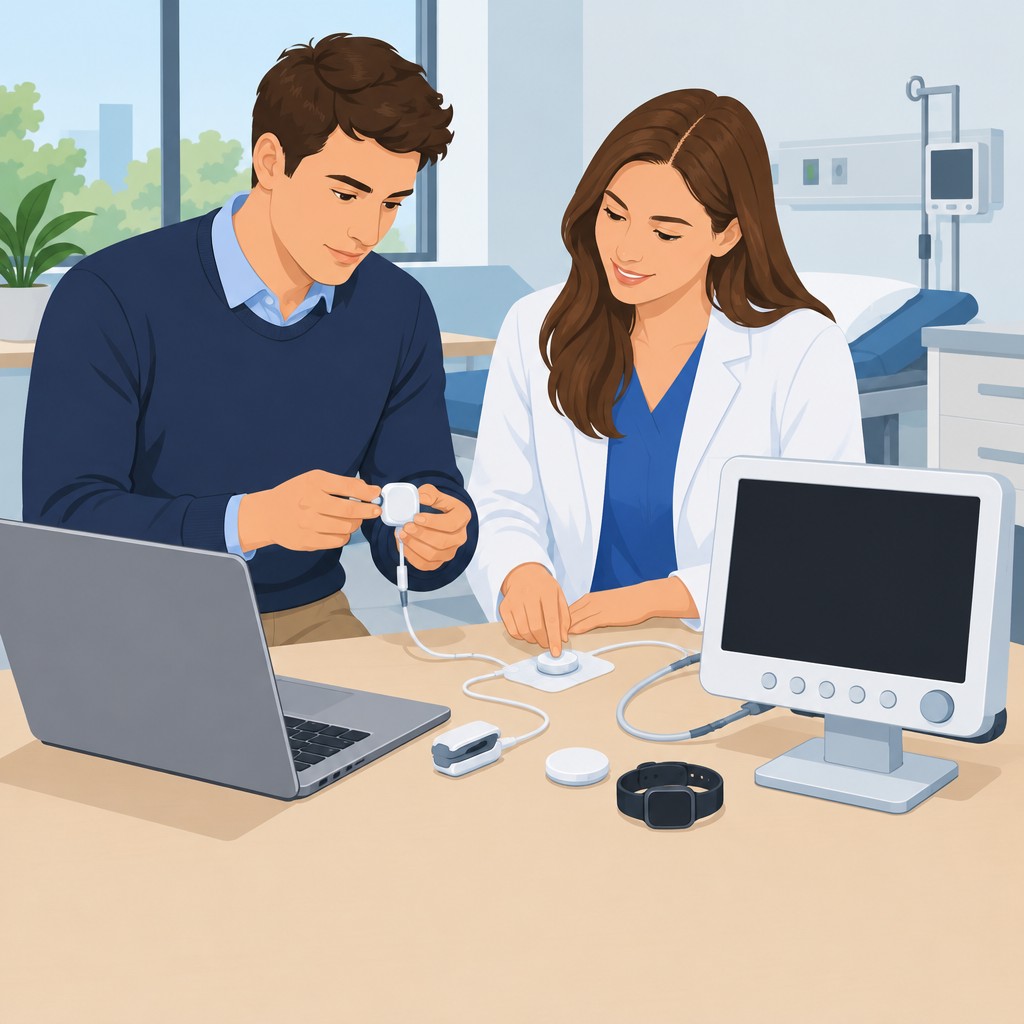
Data Security and Privacy in Healthcare IoT
Healthcare IoT developers must protect sensitive patient information from unauthorized access.
Because regulations govern this information, security failures can create serious consequences.
Therefore, developers need proactive safeguards throughout each stage of data management.
- Data Encryption: Developers should encrypt data at rest and during transmission to preserve confidentiality.
- Access Control: Strict access controls should limit sensitive information to authorized personnel.
- Regular Audits: Regular security audits can reveal vulnerabilities before attackers exploit them.
- Secure Communication: Devices should exchange data through secure communication channels.
- User Education: Developers should teach users to protect personal data and identify suspicious activity.
Privacy also depends on how systems collect, store, and share personal information.
Developers should explain data practices clearly before patients provide consent.
Additionally, anonymization can support analysis without directly identifying individual patients.
- Consents and Permissions: Patients should provide informed consent before systems collect their data.
- Anonymization Techniques: Anonymization can reduce privacy risks during data analysis.
- Compliance with Laws: Developers must follow requirements such as HIPAA in the United States.
Regulatory Compliance for Healthcare IoT Solutions
Healthcare IoT developers must satisfy regulatory requirements that protect patients and preserve data integrity.
These requirements influence how developers design, document, and operate connected healthcare solutions.
Because regulations vary by region, teams should obtain guidance from regulatory experts.
- Understanding Regulations: Developers should monitor healthcare laws and regulations before designing solutions.
- Secure Data Handling: Devices must handle personal health information according to applicable requirements.
- Documentation Standards: Teams should document processes thoroughly to demonstrate compliance during audits.
- Interoperability Standards: Devices should follow interoperability standards to support communication across systems.
Regulatory knowledge helps developers identify obligations before deployment.
Moreover, careful documentation gives organizations evidence during compliance reviews.
Teams can therefore reduce legal complications by addressing requirements early.
Integrating IoT Devices with Existing Healthcare Systems
Healthcare providers often rely on legacy systems that complicate IoT integration.
Developers must connect new devices without disrupting established clinical processes.
Successful integration requires compatible interfaces, consistent data, and careful validation.
- Compatibility Issues: New devices must communicate effectively with existing healthcare systems.
- Data Standardization: Standardized formats can support seamless exchanges between systems and devices.
- Workflow Integration: IoT solutions should improve efficiency without interrupting established workflows.
- Testing and Validation: Developers should test integrated systems thoroughly before deployment.
Interoperable solutions require cooperation among providers, manufacturers, and standardization bodies.
Furthermore, developers should evaluate how each device supports existing healthcare workflows.
Collaborative testing can reveal integration problems before organizations deploy connected systems.
Building Resilient Healthcare IoT Solutions
Healthcare IoT developers must address security, compliance, and integration challenges together.
Robust safeguards and regulatory awareness can support safer, more reliable solutions.
Meanwhile, interoperable designs can help organizations introduce connected technologies responsibly.
Developers should continue adapting their methods as technologies, regulations, and user expectations evolve.
This ongoing attention can help IoT solutions support patient care while protecting privacy and data security.
Explore Further: Roles and Responsibilities of an IT Security Manager
Healthcare continues to evolve through innovation and technology.
The Internet of Things significantly transforms patient care and medical practices.
This section examines emerging devices, telemedicine expansion, and artificial intelligence applications.
Development of New IoT Devices and Technologies
New IoT devices address various healthcare challenges.
These devices improve diagnostics, monitoring, and treatment efficiency.
They also strengthen patient engagement and support improved clinical outcomes.
Transform Your Career Today
Unlock a personalized career strategy that drives real results. Get tailored advice and a roadmap designed just for you.
Start Now- Wearable Health Monitors: Smartwatches and fitness bands track vital signs and provide real-time information.
- Smart Inhalers: These devices support asthma and COPD patients while tracking medication use and inhaler technique.
- Connected Pill Bottles: These bottles remind patients to take medications and reduce non-adherence risks.
- Remote Patient Monitoring Systems: These systems monitor patients outside traditional settings and support earlier interventions.
- Smart Medical Devices: Connected glucose meters help patients and doctors share diabetes data in real time.
Healthcare providers must integrate these devices with existing healthcare systems.
Expansion of Telemedicine and Remote Monitoring
Telemedicine has grown significantly, especially after the pandemic.
IoT strengthens telemedicine by supporting remote consultations and real-time health monitoring.
This combination improves access, convenience, and healthcare coordination.
- Real-Time Data Sharing: IoT devices transmit immediate information to healthcare professionals during remote consultations.
- Accessibility: Telemedicine helps patients in remote areas access healthcare services.
- Cost Reduction: Remote monitoring can reduce unnecessary hospital visits and related costs.
- Increased Patient Satisfaction: Remote consultations reduce travel time and improve convenience.
- Integrated Healthcare Systems: Telemedicine encourages facilities to integrate IoT into healthcare workflows.
Developers must create secure and user-friendly platforms for expanding telemedicine services.
These platforms must protect patient privacy and healthcare data.
Potential Impact of AI and Machine Learning
Artificial intelligence and machine learning enhance healthcare IoT solutions.
They improve data analysis, predictive modeling, and clinical decision-making.
Their integration can support better outcomes and more personalized healthcare delivery.
- Advanced Analytics: AI processes complex healthcare data from IoT devices and extracts useful insights.
- Predictive Healthcare: Machine learning can identify potential health issues before they arise.
- Optimized Operations: AI can predict patient inflow and support staff and resource allocation.
- Enhanced Diagnostics: AI algorithms can assist disease diagnosis through IoT-generated data.
- Personalized Medicine: AI can help tailor treatment to individual patient needs.
As these technologies advance, healthcare providers will use them more frequently with IoT systems.
Future Directions for Healthcare IoT
Healthcare IoT will continue developing through device innovation and technological integration.
New devices can address longstanding challenges and support improved patient outcomes.
AI, machine learning, and telemedicine can make healthcare more predictive, accessible, and personalized.
Healthcare developers must create secure, intuitive, and effective solutions for industry needs.
Continued innovation can expand patient care improvements and operational efficiency.
Delve into the Subject: Virtualization in Cloud Computing: Engineer's Perspective
Case Studies of Successful IoT Implementations in Healthcare
Healthcare organizations increasingly adopt IoT technologies to improve patient care and operational efficiency.
These systems support better outcomes, stronger engagement, and meaningful cost reductions.
The following case studies demonstrate practical results and important implementation lessons.
Mount Sinai Health System
Mount Sinai Health System implemented IoT solutions for remote patient monitoring.
Wearable devices tracked vital signs and other health metrics continuously.
Real-time data analysis helped clinicians respond to changing patient conditions.
Results Achieved
- Hospital readmissions decreased by 30 percent.
- Real-time feedback improved patient engagement.
- Remote monitoring strengthened chronic disease management for diabetes and hypertension.
Lessons Learned
- Existing health records systems require careful integration.
- Staff training improves technology usability.
- Continuous monitoring fosters trust and accountability.
University of California, San Francisco
UCSF adopted smart infusion pumps to improve medication delivery.
The pumps communicated with electronic health records and identified potential anomalies.
This approach supported precise medication administration and improved clinical workflows.
- Medication errors decreased by more than 50 percent.
- Timely medication delivery increased patient satisfaction.
- Streamlined workflows gave nurses more time for patient engagement.
- Clear departmental communication supports seamless integration.
- Feedback loops improve functionality and effectiveness.
- Ongoing training helps staff use new technologies proficiently.
Philips Healthcare Remote Patient Monitoring
Philips Healthcare partnered with hospitals to pilot remote patient monitoring systems.
Connected devices measured vital signs and provided real-time health information.
These systems gave care teams a broader view of patient health.
- Earlier issue detection enabled timely interventions.
- Care coordination improved among healthcare providers.
- Reduced hospital stays created cost savings.
- Patient acceptance strongly influences remote monitoring success.
- Devices and systems require effective interoperability.
- Regular maintenance supports reliable and accurate performance.
Mercy Health Asset Tracking
Mercy Health implemented IoT asset tracking for medical equipment.
The organization used RFID technology to monitor equipment locations in real time.
This system reduced search times and improved operational efficiency.
- Equipment search times decreased by 75 percent.
- Higher equipment utilization supported patient care delivery.
- Fewer misplaced items reduced related costs.
- Existing information technology infrastructure requires effective integration.
- Stakeholder support contributes to project success.
- Staff feedback improves system functionality.
Allscripts Population Health Management
Allscripts developed an integrated population health management platform using IoT technology.
The platform targeted improved outcomes for patients with chronic diseases.
It consolidated data from multiple sources and provided actionable caregiver insights.
- Data-driven insights improved chronic disease care.
- Predictive analytics identified patients at risk.
- Care coordination improved between specialists and primary care providers.
- Robust data collection supports reliable insights.
- Organizations must prioritize patient privacy and data security.
- Stakeholder collaboration produces more effective solutions.
Implementation Priorities for Healthcare Organizations
These implementations demonstrate how IoT can improve patient care and healthcare operations.
Successful projects require interoperability, staff training, and strong data security.
Healthcare organizations should monitor technological developments and apply lessons from successful initiatives.
Thoughtful planning can improve patient experiences and support more efficient healthcare delivery.
Transform Your Career Today
Unlock a personalized career strategy that drives real results. Get tailored advice and a roadmap designed just for you.
Start NowHealthcare IoT has created new opportunities for developers across the healthcare sector.
As demand grows, developers need focused training and practical experience.
Educational programs, online courses, and professional collaborations can support this development.
Educational Programs and Certifications
Healthcare IoT developers need technical knowledge and sector-specific skills.
Universities and training organizations offer several pathways for building those capabilities.
These programs combine theoretical learning with practical experience and professional validation.
- University degree programs: Specialized IoT and biomedical engineering degrees combine theory with hands-on experience.
- Certification programs: Organizations such as the International Society of Automation offer certifications that validate relevant knowledge.
- Bootcamps: Intensive coding programs help developers build focused IoT skills quickly.
- Online university courses: Institutions such as MIT and Stanford provide courses covering IoT fundamentals and healthcare applications.
These educational pathways help developers gain relevant knowledge and practical skills.
Consequently, healthcare providers and manufacturers can evaluate developer expertise more confidently.
Focused training also prepares developers to create reliable healthcare IoT solutions.
Online Courses and Practical Workshops
Flexible learning options help developers manage professional responsibilities alongside their education.
Online courses and workshops provide accessible ways to study healthcare IoT topics.
Furthermore, practical sessions can connect technical concepts with healthcare applications.
- Coursera: The platform offers IoT courses from universities, including topics related to healthcare applications.
- edX: University courses on edX often use practical case studies involving healthcare scenarios.
- Udemy: Affordable courses cover IoT subjects such as security and healthcare data analysis.
- Workshops: Hands-on events help developers practice skills and connect with technology professionals.
Developers can study these resources at their own pace.
This flexibility makes ongoing education easier to combine with work commitments.
Meanwhile, workshops can strengthen learning through direct practice and professional interaction.
Collaboration Opportunities in Healthcare Technology
Collaboration helps developers understand healthcare needs more clearly.
Partnerships with healthcare institutions can also guide practical solution development.
Through these relationships, developers receive feedback while professionals explore new technical possibilities.
- Internships: Healthcare companies can provide real-world experience for IoT developers.
- Research projects: Universities may welcome outside partners for innovative healthcare technology research.
- Hackathons: Health technology hackathons encourage creativity, teamwork, and collaboration with healthcare professionals.
- Startup partnerships: Health technology startups often seek developers for rapid application development and testing.
- Health organizations: Partnerships with health-focused organizations can support training and project development.
These opportunities create an ongoing exchange between developers and healthcare professionals.
Developers gain practical insight while improving the usefulness of their solutions.
At the same time, healthcare teams can communicate their operational needs more effectively.
Continuous Learning for Healthcare IoT Developers
Healthcare IoT changes quickly, so developers must continue updating their knowledge.
Regular learning helps professionals respond to emerging technologies and changing industry needs.
Developers can use several activities to maintain current skills and awareness.
- Industry publications: Journals and technology websites can explain recent healthcare IoT developments.
- Conferences: Industry events provide opportunities for networking, learning, and professional discussion.
- Online forums: Communities such as Stack Overflow and Reddit support knowledge sharing and problem solving.
- Newsletters: Organizational newsletters can cover trends, practices, and emerging healthcare technologies.
Continuous learning helps developers remain relevant in a changing field.
It also encourages developers to evaluate new approaches with greater confidence.
Therefore, ongoing education can strengthen their contributions to healthcare technology.
Professional Growth in Healthcare IoT
Healthcare IoT offers developers meaningful opportunities to support evolving medical practices.
Training, flexible education, and collaboration can prepare professionals for this work.
Continuous learning helps developers contribute effectively as healthcare technology advances.
With appropriate preparation, developers can support improvements in patient care and operational efficiency.
Future Directions for Connected Healthcare
IoT continues to shape healthcare by improving patient monitoring and streamlining health data collection.
Meanwhile, developers create devices that support real-time tracking and help professionals respond promptly.
These solutions can strengthen care delivery through timely interventions.
Additionally, IoT systems help providers manage resources and patient information more effectively.
Advanced analytics support decisions based on accurate data.
As a result, healthcare professionals can devote more attention to patients.
Furthermore, connected tools encourage patients to participate actively in managing their health.
Remote monitoring can support chronic disease management and potentially reduce hospital readmissions.
These capabilities may improve quality of life for patients.
Transform Your Career Today
Unlock a personalized career strategy that drives real results. Get tailored advice and a roadmap designed just for you.
Start NowHowever, developers must understand practical healthcare challenges beyond device creation.
They should collaborate closely with healthcare professionals to build relevant solutions.
Such cooperation can address problems that practitioners and patients experience.
In the future, stronger cooperation between IoT and healthcare may support earlier disease detection and prevention.
Continued innovation can create new approaches to connected care.
Developers can help shape this evolving field through creativity and expertise.
The path toward a smarter, more connected healthcare system remains open.
By embracing collaboration, developers can contribute to meaningful improvements in healthcare.
Their work can help transform promising technologies into practical tools.
Additional Resources
Google search results for Impact of IoT on Healthcare: Role of IoT Developers Information Technology
Bing search results for Impact of IoT on Healthcare: Role of IoT Developers Information Technology


