




K-9 units have been a vital part of law enforcement for decades.
These specially trained dogs assist police officers with tasks such as detecting drugs and explosives and tracking suspects.
K-9 units play a crucial role in law enforcement agencies across the country.
They are highly trained to handle dangerous situations and support searches and apprehensions.
Moving forward, K-9 units will continue evolving within law enforcement.
Advancements in training techniques and technology will improve their effectiveness in fighting crime.
New Training Techniques for K-9 Units
Positive reinforcement now shapes many K-9 training programs.
Handlers reward desired behaviors instead of punishing unwanted actions.
For example, clicker training helps dogs learn specific tasks in a supportive environment.
This approach can encourage reliable performance during demanding assignments.
Technological Advances in K-9 Gear
Meanwhile, K-9 equipment has improved substantially in recent years.
Handlers can attach GPS trackers to collars and monitor dogs in real time.
Protective equipment, including bulletproof vests and goggles, can improve safety in the field.
Effects on Law Enforcement Effectiveness
Together, updated training and technology can strengthen K-9 law enforcement operations.
Consequently, trained dogs can perform detection and tracking tasks more reliably.
They can detect drugs and explosives while tracking suspects.
Moreover, GPS technology helps handlers locate dogs quickly during emergencies.
The combined advances support safer and more efficient fieldwork.
Increased Specialization Within K-9 Units
Law enforcement agencies increasingly assign K-9 teams to focused roles, including narcotics detection, search and rescue, and explosives detection.
This specialization aligns canine capabilities with clearly defined operational needs.
Consequently, agencies must balance performance gains with the resources required for sustained support.
Benefits of Specialized K-9 Units
Specialized teams can address specific operational demands with greater effectiveness and precision.
Moreover, focused training can streamline deployment while improving safety for officers and the public.
Handlers and dogs can also develop deeper expertise within their assigned fields.
- Specialized K-9 teams can improve outcomes during focused operations.
- Focused expertise can make training and deployment processes more efficient.
- Specialized teams can address specific threats more safely.
- Targeted training can improve accuracy when detecting narcotics or explosives.
- Specialized roles help handlers and dogs strengthen field-specific skills.
Challenges of Maintaining Specialized K-9 Units
However, specialized teams require continuing investments in training, equipment, and operational support.
Agencies must allocate resources carefully while meeting their other law enforcement responsibilities.
Long-term sustainability also depends on qualified handlers, reliable funding, and ongoing organizational support.
- Specialized training and equipment can increase operating costs.
- Agencies must balance specialized support with other operational needs.
- Specialized assignments require handlers with advanced field expertise.
- Long-term funding remains important for maintaining specialized teams.
Specialization can help agencies match K-9 capabilities with clearly defined law enforcement needs.
At the same time, agencies must provide consistent resources and advanced handler development.
Careful planning can help specialized K-9 units remain effective and sustainable over time.
Gain More Insights: Famous DEA Operations and Their Impact
Collaboration with Other Law Enforcement Agencies
Cooperation connects K-9 units with departments that provide complementary skills and operational support.
Agencies can share resources, expertise, and information while serving their communities.
This coordinated approach helps teams respond more effectively when canine capabilities support broader enforcement efforts.
- Cooperation between K-9 units and other law enforcement departments
- Opportunities for interagency training and joint operations
- Improved effectiveness through collaboration among K-9 units and law enforcement agencies
Cooperation Between K-9 Units and Law Enforcement Departments
K-9 units contribute specialized abilities during operations that require detection, searching, rescue, or apprehension.
Other departments can request this support when canine skills match operational needs.
Coordinated planning allows each team to contribute its strengths without duplicating efforts.
During a missing person search, K-9 teams can work alongside patrol officers and detectives.
Together, they can cover a larger area more efficiently.
Shared information and coordinated efforts can improve the possibility of locating the missing individual.
Transform Your Career Today
Unlock a personalized career strategy that drives real results. Get tailored advice and a roadmap designed just for you.
Start NowInteragency Training and Joint Operations
Interagency training gives K-9 handlers and other personnel opportunities to practice communication.
Joint exercises help participants understand their responsibilities during realistic operational scenarios.
Repeated practice can support smoother coordination when departments work together during critical incidents.
Joint operations can integrate K-9 units with SWAT teams or bomb squads.
These teams can rehearse shared procedures before responding to situations that require their combined capabilities.
Such preparation helps departments coordinate canine support more seamlessly.
How Collaboration Enhances K-9 Unit Effectiveness
Collaboration gives K-9 units access to broader resources and operational support.
Departments can also exchange information and practices that strengthen canine work.
This ongoing exchange encourages continuous learning among participating teams.
Better coordination can contribute to more successful operations involving K-9 units.
Consequently, agencies can improve how they deploy specialized canine capabilities.
These partnerships help K-9 units serve communities more effectively across varied operations.
Delve into the Subject: Correctional Officer Union Membership
Legal Issues Surrounding K-9 Units
Search and seizure concerns represent a primary legal issue involving K-9 units in law enforcement.
Courts have examined whether K-9 searches produce evidence legally under constitutional standards.
The Fourth Amendment protects citizens from unreasonable searches and seizures.
Therefore, officers may violate constitutional rights when they deploy K-9 units without proper justification.
In 2005, the Supreme Court ruled in Illinois v. Caballes that a K-9 sniff during a routine traffic stop did not violate the Fourth Amendment.
However, that decision raised concerns about expanding K-9 use and protecting individual privacy.
Training and certification also affect the legal reliability of K-9 units.
Accordingly, agencies must properly train and certify their K-9 teams to withstand courtroom challenges.
Ethical Concerns in K-9 Training and Handling
Animal welfare remains a central ethical concern involving law enforcement K-9 units.
Agencies must treat these animals humanely and provide proper care throughout training and deployment.
They must also avoid exposing K-9 units to unnecessary risks.
Reports of abuse and neglect raise serious ethical questions about agency practices.
Consequently, agencies should establish clear care and handling protocols that prevent mistreatment.
Use of force creates another ethical concern when K-9 units apprehend suspects.
In some cases, excessive force has caused injuries or death.
Handlers must deploy K-9 units responsibly and match their force to each situation.
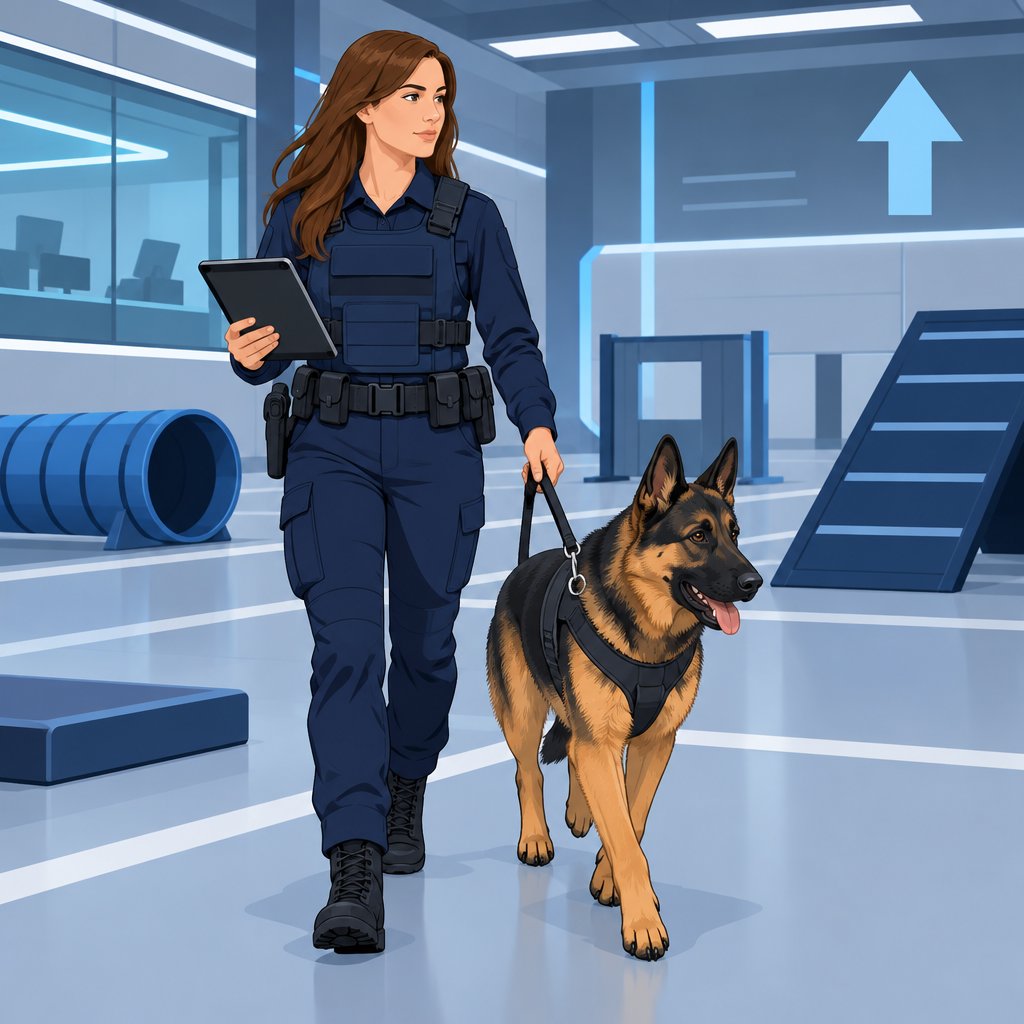
Potential Legal and Regulatory Changes
Several legal and regulatory changes could address concerns surrounding K-9 units.
These measures could strengthen accountability while protecting constitutional rights and animal welfare.
They could also encourage responsible deployment and reduce preventable harm.
- Law enforcement agencies should submit regular reports covering K-9 training, certification, and deployment.
- Handlers should complete mandatory training in animal welfare, proper handling, and ethical force decisions.
- Regulations should define when and how K-9 units may use force.
- Those regulations should emphasize de-escalation and minimizing harm to suspects.
- Laws should protect K-9 units from abuse, neglect, and unnecessary risks.
- Severe penalties should apply when individuals or agencies violate those protections.
Uncover the Details: Daily Duties of a Professional Bodyguard
Incorporating New Breeds Into K-9 Units
Law enforcement agencies can explore different breeds for specialized K-9 roles.
Breed diversity can expand a unit’s skills and operational capabilities.
However, agencies must address integration challenges before changing established K-9 programs.
Benefits of Breed Diversity in K-9 Units
Each breed may offer abilities suited to particular assignments.
Consequently, varied teams can strengthen performance across changing situations.
Specialized assignments may also improve operational efficiency.
- Different breeds can provide unique abilities for specific tasks.
- Varied teams can improve the unit’s overall performance.
- Diverse breeds can help units respond to more situations.
- Specialized roles can support more efficient operations.
Challenges of Integrating New Breeds
New breeds may need additional preparation for specialized responsibilities.
Transform Your Career Today
Unlock a personalized career strategy that drives real results. Get tailored advice and a roadmap designed just for you.
Start NowMeanwhile, compatibility concerns can affect existing teams and working relationships.
Agencies must also consider training and maintenance costs.
- New breeds may require additional training for specialized tasks.
- Compatibility issues may complicate integration with existing K-9 teams.
- Introducing new breeds can change established team dynamics.
- Training and maintenance may create additional expenses.
Agencies should weigh these benefits and challenges before integrating new breeds into existing K-9 units.
Explore Further: Diverse Career Paths Within ICE for Agents
Training and Support for K-9 Handlers
Ongoing training and support help K-9 handlers maintain effective and safe canine operations.
Handlers must continually strengthen skills and knowledge to work effectively with canine partners.
Regular sessions keep handlers and dogs prepared and help them maintain strong performance.
Updated techniques help teams adapt to changing situations and improve detection, tracking, and apprehension skills.
Support also addresses mental health concerns created by demanding law enforcement work.
Agencies should provide resources that sustain handler performance and protect canine welfare.
Mental Health Support for K-9 Handlers
K-9 handlers may experience PTSD, anxiety, depression, emotional strain, and burnout.
Violence, dangerous situations, loss, long hours, and intense pressure can affect their well-being.
Counseling services can help handlers process difficult experiences and manage ongoing stress.
Peer support groups can encourage connection and reduce isolation among colleagues.
Open communication helps agencies identify concerns before they become more serious.
Leaders should destigmatize mental health support and make assistance easy to access.
Well-Being Strategies for Handlers and Canine Partners
A comprehensive wellness program can support the physical, mental, and emotional health of handlers and dogs.
Regular health checkups help identify concerns affecting both members of each K-9 team.
Fitness and nutrition guidance can strengthen daily readiness and support long-term wellness.
Physical therapy, chiropractic care, and occupational health services can help prevent injuries.
Furthermore, supportive teams allow handlers to discuss challenges and concerns openly.
Flexible scheduling, work-life balance, and self-care practices can promote sustainable performance.
Public Perceptions of K-9 Units
Public views of K-9 units vary widely across communities.
Some residents consider these teams necessary tools for protecting public safety.
Others raise concerns about using dogs to apprehend suspects.
Transparent Communication Builds Understanding
Law enforcement agencies should clearly explain the roles and responsibilities of K-9 units.
They can also describe the rigorous training these dogs complete.
Additionally, agencies can share successful apprehensions involving dangerous criminals.
- Public explanations can clarify how K-9 teams support law enforcement operations.
- Training information can help residents understand canine capabilities and responsibilities.
- Success stories can demonstrate how K-9 units assist during dangerous situations.
Community Engagement Initiatives
Ongoing community engagement can strengthen trust and support for K-9 programs.
Police departments can organize open houses and demonstrations for local residents.
Moreover, training activities can help community members develop ownership and pride.
- Open houses can introduce residents to local K-9 teams.
- Demonstrations can showcase canine abilities in an accessible setting.
- Community participation can foster stronger connections with these units.
Public Education About K-9 Benefits
Public awareness campaigns can correct misconceptions about K-9 operations.
They can emphasize tactics that apprehend suspects without using firearms.
Furthermore, agencies can explain how K-9 teams detect explosives, narcotics, and missing persons.
- Educational campaigns can present accurate information about K-9 responsibilities.
- Non-lethal apprehension methods can address concerns about firearm use.
- Detection and search abilities can demonstrate the versatility of K-9 units.
Clear communication and meaningful engagement can build public trust in K-9 programs.
Advancing K-9 Units for Public Safety
K-9 units offer important benefits in law enforcement.
Current practices still present challenges and limitations for agencies.
Advances in training and technology can improve unit performance.
These teams can also strengthen community engagement and support public safety.
Adapting K-9 Operations to Changing Needs
Law enforcement agencies must track evolving technology and tactics to keep K-9 units efficient and effective.
Transform Your Career Today
Unlock a personalized career strategy that drives real results. Get tailored advice and a roadmap designed just for you.
Start NowAgencies should adapt unit practices as circumstances and community needs change.
This evolution helps K-9 teams remain valuable assets in combating crime and protecting the public.
Future Opportunities for K-9 Units
Future K-9 units may offer stronger detection capabilities for drugs, explosives, and missing persons.
Improved training, specialized skills, and advanced technology can expand their value to law enforcement agencies.
Greater efficiency can help agencies solve crimes while building stronger relationships with the communities they serve.
Ultimately, evolving K-9 units can support safer and more secure environments for everyone.
Additional Resources
Google search results for The Future of K-9 Units in Law Enforcement Protective Services
Bing search results for The Future of K-9 Units in Law Enforcement Protective Services


