




Introduction
School resource officers (SROs) are specially trained law enforcement officers who work in schools.
Ensuring school security protects students and staff while supporting a successful educational environment.
Furthermore, SROs improve school security by implementing various measures.
SRO Responsibilities Within Schools
School Resource Officers are certified law enforcement officers who provide security and crime prevention services within schools.
Local police departments or sheriff’s offices typically employ these officers.
They support school safety through a law enforcement presence on campus.
Qualifications and Specialized Training
SROs must hold law enforcement licenses in the states where they work.
Additionally, officers need experience with community policing and youth engagement.
Specialized training covers conflict resolution, crisis intervention, and juvenile law.
Partnerships With Law Enforcement Agencies
SROs collaborate closely with law enforcement agencies to protect students, staff, and faculty.
They often connect schools with local police departments through regular communication.
This partnership supports effective coordination during emergency situations.
Contributions to School Safety
A visible campus presence helps SROs address potential threats and incidents quickly.
Furthermore, officers build relationships with students and strengthen trust within the school community.
Their law enforcement expertise helps maintain a safe and secure learning environment.
School resource officers strengthen campus security through visible patrols, attentive observation, and timely intervention.
They help protect students, teachers, and staff during daily school activities.
Additionally, their presence can discourage harmful behavior before situations escalate.
Maintaining a Safe Learning Environment
Officers patrol school grounds and watch for suspicious activity.
They address potential threats promptly and help preserve a secure learning environment.
Meanwhile, their visible presence reassures people throughout the school community.
Building Relationships Across the School Community
Officers develop constructive relationships with students, teachers, and staff.
Through trust and open communication, they can hear concerns and offer appropriate guidance.
These connections also support an inclusive environment that promotes shared responsibility for safety.
Responding to Emergencies on School Grounds
When an emergency occurs, officers respond quickly and apply their training.
They coordinate with law enforcement agencies, school administrators, and other stakeholders.
Together, these partners manage crises, protect individuals, and restore order.
Consequently, decisive and compassionate action can help minimize harm.
Delve into the Subject: How to Apply for a DEA Agent Position: Step-by-Step Guide
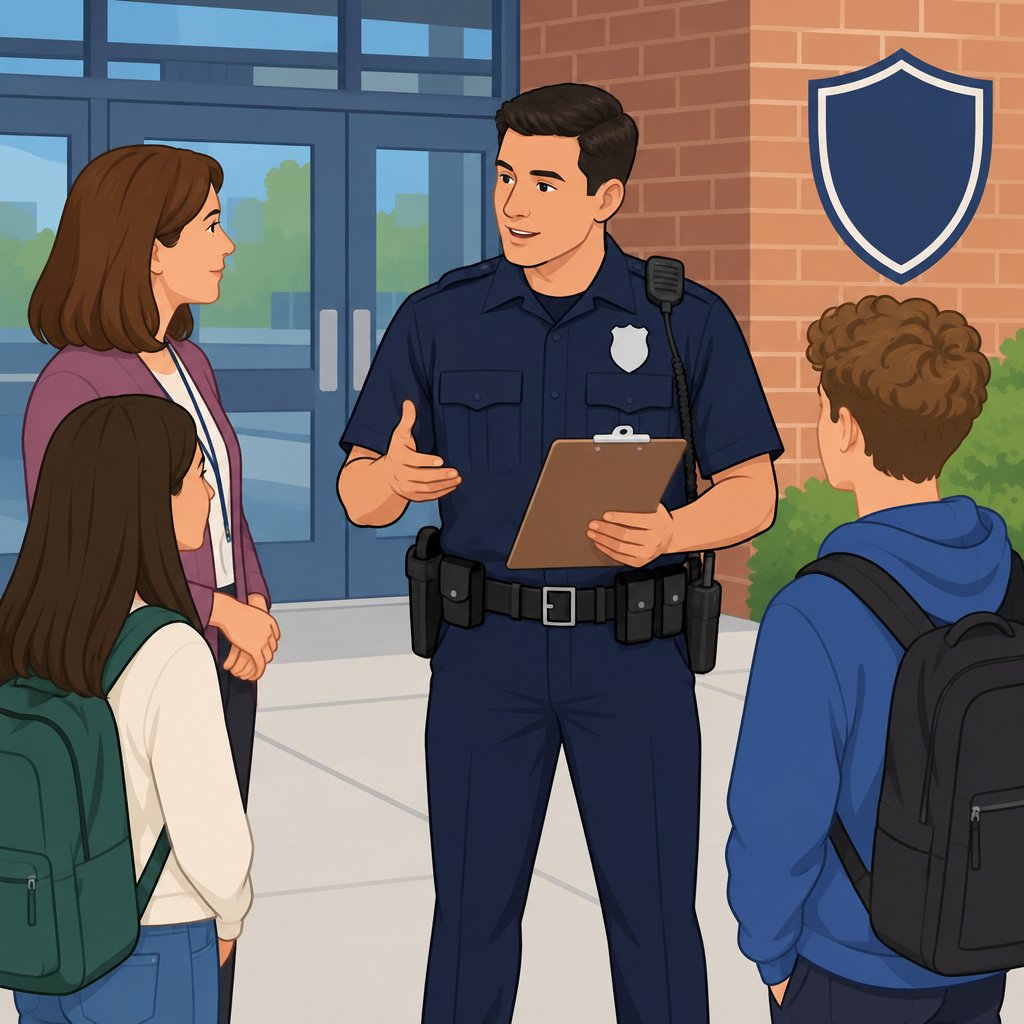
Deterrence of Potential Threats and Crimes
School resource officers help deter potential threats and crimes on school grounds.
Their visible presence can discourage individuals from considering criminal activity or harmful behavior.
Furthermore, knowing a trained law enforcement officer remains on campus may discourage disruptive conduct.
This preventive role supports a safer, more secure environment for students and staff.
Quick Response to Incidents
School resource officers can respond quickly when incidents occur on campus.
During emergencies, including active shooter situations or medical emergencies, they act promptly to protect students and staff.
Their swift actions can minimize casualties and prevent additional harm within the school.
Therefore, an on-site law enforcement professional can address dangers quickly and effectively.
Additional Support for Students and Staff
Beyond physical security, school resource officers provide support to students and staff.
They serve as mentors, educators, and role models while offering guidance when needed.
Meanwhile, positive relationships can foster trust and community within the school.
Transform Your Career Today
Unlock a personalized career strategy that drives real results. Get tailored advice and a roadmap designed just for you.
Start NowThey also collaborate with administrators and counselors on behavioral issues, mental health concerns, and other student challenges.
Uncover the Details: Frequently Asked Questions About DEA Agent Careers
Case Studies of Successful SRO Programs
Several schools have implemented School Resource Officer programs to address specific security concerns.
These programs have supported safer environments through campus presence, communication, and emergency readiness.
The following examples describe reported experiences from schools, families, and students.
Examples of Successful School Resource Officer Programs
Smithville High School in Ohio partnered with its local police department to establish an SRO program.
The SRO maintains a visible campus presence while building relationships with students and staff.
Jackson Middle School in Texas introduced an SRO program after disciplinary issues and safety concerns increased.
- Jackson’s SRO helped reduce incidents and supported a safer school environment.
- Johnson Elementary School in Florida faced challenges involving unauthorized campus entry.
- Its SRO program strengthened security and deterred potential threats.
Positive Outcomes for School Security
SRO programs have produced several reported benefits for students, staff, and families.
Schools have reported fewer violent incidents, including fights and assaults, after implementing these programs.
Additionally, trained SROs can respond quickly during medical crises or active threats.
- SROs can strengthen communication by developing trust with students and staff.
- Open communication can help prevent conflicts from escalating.
- Awareness programs and policy enforcement can discourage drug and alcohol use on campus.
Perspectives From School Communities
School officials, parents, and students have described positive experiences with SRO programs.
Their comments emphasize security, support, and the value of accessible campus personnel.
These perspectives also show how SROs can become part of the broader school community.
- Principal Emily Watson said, “Our SRO has become an integral part of our school community.”
- She added, “The SRO provides a sense of security and support for our students.”
- Parent Sarah Johnson said, “I feel relieved knowing that there is an SRO on campus.”
- Student Lisa Thompson said, “The presence of our SRO makes me feel safer at school.”
These case studies connect SRO presence with improved security and stronger school community support.
Schools can use these experiences to understand how SRO programs address safety concerns.
Gain More Insights: DEA Agent Contribution to Community Safety
Challenges Faced by School Resource Officers
School resource officers help maintain safe learning environments for students and staff.
However, their work involves challenges that require careful judgment each day.
Therefore, SROs must adapt their approach to meet changing school community needs.
- Balancing law enforcement duties with positive relationship building
- Addressing cultural sensitivity and diversity within school communities
- Responding to student mental health and social challenges
Balancing Law Enforcement Duties With Positive Relationships
SROs must enforce laws while building positive relationships with students.
Although school safety remains their primary responsibility, they also need community trust and respect.
Consequently, SROs must remain approachable while preserving their authority as law enforcement officers.
This balance requires strong communication skills and flexibility during different situations.
Addressing Cultural Sensitivity and Diversity
Schools include students from varied backgrounds, cultures, and belief systems.
As a result, SROs must recognize cultural differences within their school communities.
They should respond sensitively to every student’s needs and circumstances.
Additionally, SROs must avoid discriminatory actions and support inclusion among students.
Responding to Student Mental Health and Social Challenges
Mental health concerns and social challenges create significant demands for SROs.
They may need to support students experiencing crises or conflicts.
Therefore, SROs need training and resources for effective mental health crisis responses.
They also work with school counselors and mental health professionals to support students.
By addressing these challenges, SROs can improve safety and support learning environments.
Furthermore, continuous adaptation helps them respond to the evolving needs of school communities.
Explore Further: Emergency Management Director: Job Outlook and Salary
Training and Professional Development for School Resource Officers
- Ongoing training develops conflict resolution, de-escalation, and crisis intervention skills.
- Collaboration with mental health professionals and counselors supports student needs.
- Current training helps officers follow best practices in school security.
School Resource Officers need ongoing professional development to support safe learning environments.
Their preparation combines practical response skills, collaboration, and current knowledge about school security.
These areas help officers respond thoughtfully to changing situations involving students and staff.
Conflict Resolution and Crisis Intervention
SROs learn conflict resolution for disagreements involving students, staff, or visitors.
De-escalation techniques can help prevent tense situations from becoming violent.
Transform Your Career Today
Unlock a personalized career strategy that drives real results. Get tailored advice and a roadmap designed just for you.
Start NowCrisis intervention training prepares officers for emergencies, including active shooter scenarios and natural disasters.
Through continued practice, officers can respond effectively when schools face urgent challenges.
Collaboration with Mental Health Professionals
SROs often work with mental health professionals and school counselors.
This collaboration helps officers understand students who may need additional support.
Together, these professionals can encourage early intervention when concerns arise.
Such partnerships also help schools address security concerns linked to mental health needs.
Current Practices in School Security
School security continues to change as new challenges and threats emerge.
SROs therefore attend training sessions, conferences, and workshops to update their knowledge.
They review current best practices and emerging trends in school security.
Regular learning keeps their skills current and supports timely responses to security incidents.
By maintaining professional readiness, SROs can better protect their school communities.
Community Involvement and Engagement
Working closely with parents, community members, and local organizations strengthens school security.
- Establishing partnerships with local law enforcement agencies and first responders remains essential.
- Additionally, building trust and cooperation within the school community supports safety efforts.
Therefore, school resource officers can address security concerns through collaboration with various stakeholders.
This collaborative approach helps maintain a safe learning environment for everyone.
SRO Support for a Secure Learning Environment
School resource officers help create a safer learning environment for students, teachers, and staff.
Their presence can strengthen feelings of safety across the school community.
Moreover, positive relationships with students help SROs identify and address safety concerns promptly.
These relationships can also support prevention before concerns develop into serious incidents.
Continued support and investment can help schools maintain effective SRO programs.
Therefore, strengthening these programs can promote campus security and a conducive learning environment.
Additional Resources
Google search results for How School Resource Officers Improve School Security Protective Services
Bing search results for How School Resource Officers Improve School Security Protective Services


