




Food Preservation and Food Security
Food preservation methods extend the shelf life of perishable items, reduce waste, and support food safety.
Scientists develop these methods to meet the demands of growing populations and changing food industries.
These efforts help provide safe, nutritious, and high-quality food products.
Scientific Roles in Food Preservation
Scientists research and test techniques that preserve food quality and nutritional value.
They also address spoilage, contamination, and the need for sustainable preservation solutions.
Furthermore, they collaborate with manufacturers, agencies, and other stakeholders.
- Scientists research and test new techniques to preserve food longer without compromising quality or nutritional value.
- They constantly innovate to address spoilage, contamination, and sustainable preservation needs.
- They collaborate with food manufacturers, government agencies, and other stakeholders.
- They study how preservation methods affect texture, flavor, and consumer satisfaction.
- They use advanced technology to create safer, more efficient, and cost-effective processes.
- They educate the public about proper preservation techniques and food safety measures.
- They monitor preservation trends to address consumer preferences and industry regulations.
Innovation for Safer and Sustainable Food Systems
Scientists study how preservation methods affect texture, flavor, and consumer satisfaction.
They use advanced technology to create safer, more efficient, and cost-effective processes.
They also educate the public and monitor trends, preferences, and regulations.
These efforts support food security and sustainability while meeting demand for safe, nutritious, high-quality products.
Food preservation has shaped human civilization throughout history.
People developed methods to protect food from spoilage.
These practices helped communities manage available food supplies.
Traditional Methods of Food Preservation
Ancient civilizations used several methods to preserve food.
These methods removed moisture, limited spoilage, or supported beneficial fermentation.
They also helped people keep food usable for longer periods.
- People exposed food to sunlight or air to remove moisture through drying.
- Salt drew moisture from food and helped prevent spoilage.
- Beneficial bacteria fermented food and extended its shelf life.
- Smoke preserved food when people exposed it to smoking.
The Need for Better Preservation Techniques
Societies later needed more effective preservation techniques.
Increased trade required food to remain usable during long sea journeys.
Growing populations and seasonal changes also increased storage demands.
- Food needed preservation for long journeys across seas.
- Growing populations required more efficient food storage.
- Preservation allowed people to enjoy produce throughout the year.
- Better methods helped reduce waste and support a stable food supply.
Science and technology advanced food preservation techniques.
As a result, modern methods revolutionized how people preserve food.
Common Food Preservation Methods
Food preservation helps maintain food quality, safety, and shelf life.
Scientists have developed several methods to preserve different food items effectively.
Common methods include canning, freezing, drying, and pickling.
Canning
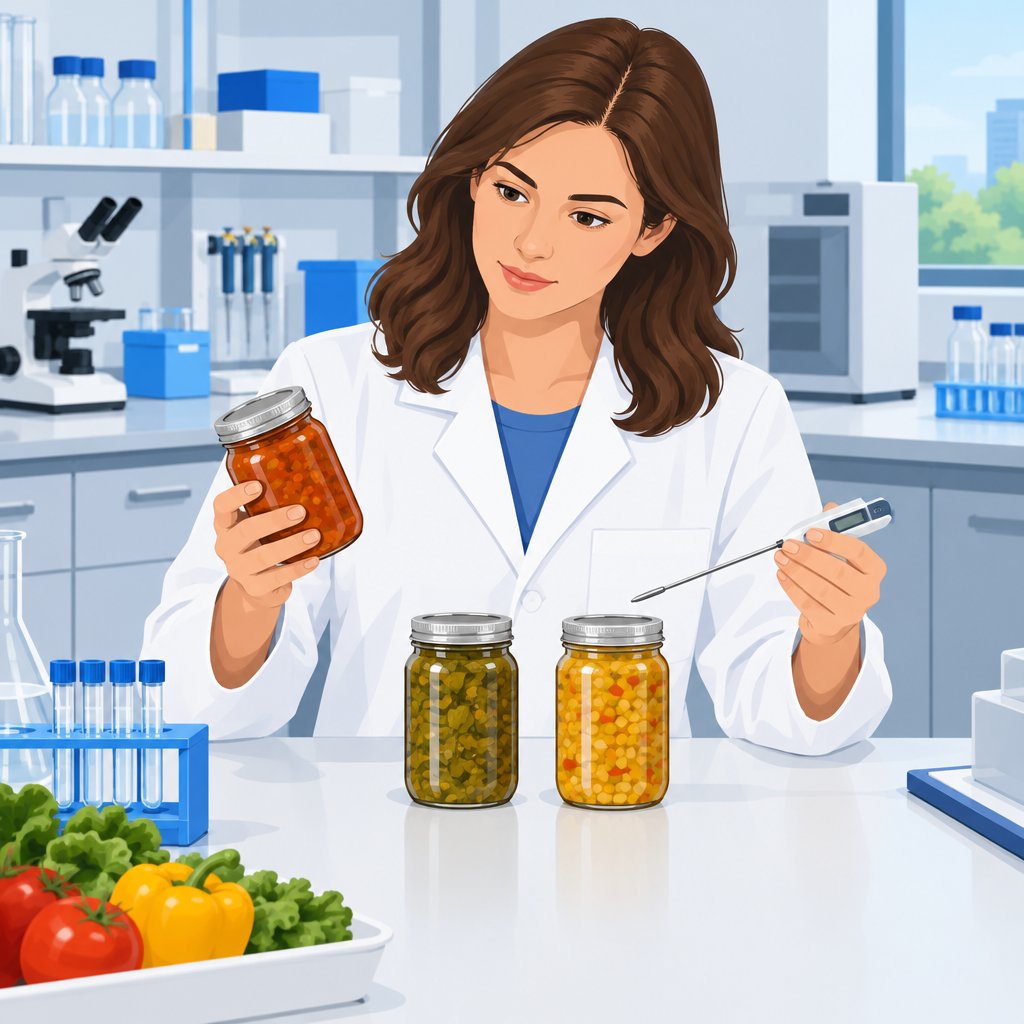
- Canning preserves food by sealing it inside airtight containers.
- Heating destroys spoilage-causing microorganisms and enzymes that cause deterioration.
- After sealing, treated food remains protected from contamination during storage.
Freezing
- Freezing preserves food by lowering its temperature and inhibiting microbial growth.
- Water molecules form ice crystals, which slow spoilage and enzyme activity.
- This method helps preserve the texture, flavor, and nutritional value of perishable foods.
Drying
- Drying removes moisture from food and limits microbial growth.
- Lower moisture levels inhibit bacteria, yeast, and mold from causing spoilage.
- Common dried foods include fruits, vegetables, herbs, and meats.
Pickling
- Pickling preserves food in a solution containing vinegar, salt, and spices.
- Vinegar creates acidic conditions that prevent many microorganisms from thriving.
- Popular pickled foods include cucumbers, onions, carrots, and beets.
Each method extends food shelf life while helping retain quality and nutritional value.
Explore Further: Biotechnology and Precision Agriculture
Scientific Research in Food Preservation
Scientists play a crucial role in food preservation through research and experiments.
They investigate improved methods that protect food from spoilage.
Furthermore, their findings help guide safer and more effective preservation practices.
Research Methods for Food Preservation
Scientists study microbial growth patterns in different food items.
They analyze chemical compositions to understand how compounds affect spoilage.
Additionally, researchers test freezing, drying, canning, and pickling techniques.
- Scientists study microbial growth patterns to determine effective ways to inhibit bacteria.
- Researchers analyze food compounds to understand their effects on spoilage.
- Scientists compare freezing, drying, canning, and pickling techniques.
Scientific Advancements in Preservation
Scientific advancements have produced more effective food preservation methods.
Research has also revealed preservatives that extend the shelf life of perishable foods.
Moreover, technology now supports improved packaging and early spoilage detection.
- Scientists develop preservatives that extend the shelf life of perishable foods.
- Advanced barrier films block oxygen and moisture from reaching food.
- Sophisticated monitoring systems detect spoilage during its early stages.
Scientists continue advancing food preservation through knowledge and innovation.
You Might Also Like: The Role of GIS in Conservation Science
Scientists continue exploring innovative food preservation techniques.
These methods aim to extend shelf life while maintaining nutritional value and quality.
Several emerging approaches use advanced materials, microorganisms, pressure, or electricity.
Transform Your Career Today
Unlock a personalized career strategy that drives real results. Get tailored advice and a roadmap designed just for you.
Start NowNanotechnology in Food Preservation
Nanotechnology is rapidly growing within the food industry.
Scientists manipulate nanoscale particles to create packaging materials that preserve food longer.
For example, nanosensors embedded in packaging can detect spoilage and contamination in real time.
This detection allows timely intervention before harmful bacteria spread.
Furthermore, nanotechnology may enhance nutritional content through targeted nutrient delivery.
Nanoparticles such as silver and titanium dioxide also possess antimicrobial properties.
These properties can inhibit pathogens and reduce foodborne illness risks.
As research advances, scientists may develop additional preservation applications.
Biopreservation Using Beneficial Microorganisms
Biopreservation uses naturally occurring microorganisms to extend food shelf life.
Scientists harness antimicrobial properties from selected bacteria and fungi.
These microorganisms inhibit spoilage organisms and pathogenic microorganisms in food.
For instance, lactic acid bacteria can ferment food and create an acidic environment.
This environment prevents harmful bacteria from growing.
Lactobacillus and Bifidobacterium also produce antimicrobial compounds that strengthen preservation.
Additionally, bacteriophages can selectively target and eliminate pathogenic bacteria.
This targeted approach can reduce chemical preservative use while maintaining food safety and quality.
High Pressure Processing for Quality Retention
High Pressure Processing uses intense pressure to inactivate spoilage and pathogenic microorganisms.
This non-thermal method helps retain food nutrition, flavor, and texture.
During processing, workers place food inside a water-filled high-pressure chamber.
The chamber can apply pressures reaching 600 MPa.
Pressure disrupts microbial cellular structures and renders microorganisms inactive.
The process does not require heat, chemicals, or preservatives.
Food manufacturers use this technology for deli meats, seafood, juices, and sauces.
HPP can eliminate pathogens such as Listeria and Salmonella while preserving sensory qualities.
Pulsed Electric Field Technology for Liquid Foods
Pulsed Electric Field technology applies short, high-voltage pulses to food products.
These pulses disrupt microbial cell membranes and inactivate microorganisms.
Meanwhile, the process helps preserve food quality.
PEF technology works especially well with juices, soups, and dairy products.
It achieves microbial inactivation without heat.
Consequently, the technology helps retain nutritional value and sensory attributes.
Scientists can adjust pulse intensity and duration for different food products.
This precision supports effective preservation while minimizing quality changes.
Researchers continue developing these technologies for safer, healthier, and more sustainable preservation.
Nanotechnology, biopreservation, HPP, and PEF each offer distinct preservation benefits.
You Might Also Like: Food Safety Regulations Every Specialist Should Know
Benefits of Advanced Food Preservation
Advanced food preservation methods use technology and research to improve how food remains usable.
These approaches can reduce waste, support safety, and protect food quality.
Their benefits reach food storage, distribution, nutrition, flavor, and texture.
Reducing Food Waste Through Advanced Preservation
Vacuum packaging, freezing, and dehydration can extend the usable life of food products.
These methods slow microorganism and enzyme activity, which helps minimize spoilage.
Transform Your Career Today
Unlock a personalized career strategy that drives real results. Get tailored advice and a roadmap designed just for you.
Start NowLonger shelf life also supports bulk preservation and wider distribution.
- Advanced preservation methods reduce waste by extending food shelf life.
- Bulk preservation helps manage larger quantities of food more effectively.
- Longer shelf life allows distribution across greater distances with less spoilage risk.
Protecting Food Safety and Quality
Advanced preservation methods can protect nutrients while limiting conditions that support pathogens.
Freeze-drying and low-temperature storage help maintain nutritional value.
Sous vide cooking and modified atmosphere packaging can preserve flavor and texture.
- Controlled conditions help reduce contamination from pathogens and spoilage organisms.
- Some advanced methods reduce the need for artificial preservatives.
Ongoing research can further improve food preservation practices.
You Might Also Like: How to Become a Certified Irrigation Specialist
Challenges in Food Preservation
Food preservation faces challenges involving cost, environmental impact, and consumer acceptance.
These challenges influence how producers adopt advanced techniques and maintain food safety.
Scientists address them through research, process improvements, and consumer education.
Controlling Preservation Costs
Advanced preservation systems often require expensive equipment, materials, and resources.
Consequently, smaller producers may struggle to adopt these techniques.
Scientists therefore research affordable methods that fit existing production processes.
They also optimize resource use and streamline operations to improve accessibility.
Reducing Environmental Impact
Traditional preservation methods can consume substantial energy and generate harmful waste.
For example, canning and freezing can create environmental burdens during production and storage.
Scientists explore vacuum packaging, high-pressure processing, and irradiation as alternatives.
These approaches can reduce energy use and waste generation when producers apply them appropriately.
Building Consumer Acceptance
Consumers may resist some advanced techniques, including irradiation and genetically modified organisms.
Such concerns often involve the perceived safety and quality of preserved foods.
Therefore, scientists share clear information about benefits, safety, and effectiveness.
Thorough research can strengthen consumer trust and support wider acceptance.
Future of Food Preservation
Technology continues to shape the future of food preservation.
Researchers develop innovative methods as food needs and technologies change.
These advances may improve safety, quality, efficiency, and sustainability.
Predictions for Food Preservation
Several emerging technologies may transform how producers preserve food.
Researchers will continue combining biological, digital, and material-based approaches.
These developments may help producers manage freshness and preservation more effectively.
- Nanotechnology and biotechnology may revolutionize food preservation methods.
- Smart packaging may monitor and regulate food freshness actively.
- Artificial intelligence and machine learning may optimize preservation processes for efficiency.
- Genetic crop modification may increase natural resistance to spoilage.
Potential Preservation Advancements
Future methods may protect food while preserving its quality and nutritional value.
Researchers are exploring treatments that reduce pathogens and delay spoilage.
Energy efficiency will also influence the development of new storage systems.
- Edible coatings may extend the shelf life of fruits and vegetables without changing taste.
- Ozone treatment may eliminate pathogens and preserve perishable foods.
- Advanced refrigeration systems may use less energy while maintaining optimal temperatures.
- Improved irradiation techniques may increase safety while minimizing nutrient loss.
Trends Shaping Food Preservation
Current trends connect preservation with sustainability, transparency, and consumer preferences.
Producers increasingly seek natural ingredients and processes that reduce environmental impact.
Digital systems may also improve visibility across the food supply chain.
- Sustainable preservation practices may reduce food waste and environmental impact.
- Natural preservatives from plant extracts and essential oils are gaining interest.
- Blockchain technology may improve food supply chain traceability and transparency.
- Personalized preservation methods may address individual preferences and dietary needs.
Technology and research will continue driving innovation in food preservation.
These developments may strengthen food safety and support more sustainable preservation practices.
Applying Food Preservation Knowledge
Food preservation methods help protect food safety and support reliable food supplies.
Scientists developed canning, freezing, drying, and fermenting to extend shelf life and retain nutritional value.
Understanding these methods helps people choose foods wisely, reduce waste, and save money.
Consumers can evaluate preservation practices when selecting and storing food.
Preservation knowledge helps people enjoy safe, nutritious food throughout the year.
Transform Your Career Today
Unlock a personalized career strategy that drives real results. Get tailored advice and a roadmap designed just for you.
Start NowIt also supports sustainability by minimizing spoilage and improving supply chain efficiency.
Scientists deserve recognition for developing effective food preservation techniques.
Understanding their work supports better decisions for health, the environment, and future generations.
Additional Resources
Google search results for Understanding Food Preservation Methods by Scientists Agricultural
Bing search results for Understanding Food Preservation Methods by Scientists Agricultural


