




Agricultural Biotechnology and Precision Farming
Biotechnology manipulates living organisms or their systems to develop products.
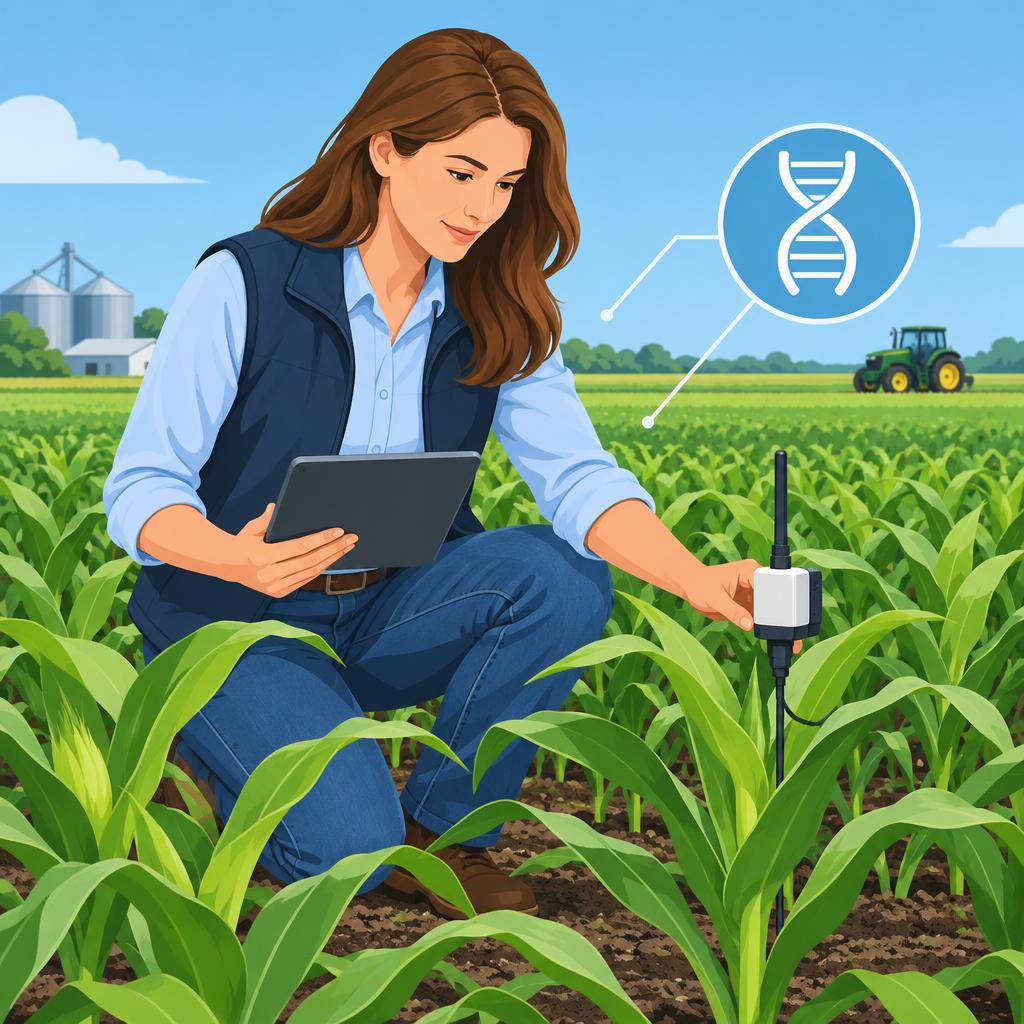
Precision agriculture uses technology to optimize crop yields.
In agriculture, biotechnology provides genetically modified organisms that resist pests and diseases.
Meanwhile, precision agriculture uses biotechnology to improve crop production efficiency.
Tools for Resilient Crop Production
By integrating biotechnology with precision agriculture, farmers can improve crop quality and yield.
Additionally, biotechnology helps identify plant characteristics for precision farming methods.
Precision agriculture uses tools such as DNA markers and genetic engineering.
These tools enable growers to make informed decisions about crop management.
Gene editing and selective breeding also support biotechnology in precision agriculture.
These methods help develop crops with enhanced traits and resilience.
Together, biotechnology and precision agriculture create a symbiotic relationship.
This collaboration helps revolutionize farming through increased productivity and efficiency.
Furthermore, the partnership supports more sustainable agricultural practices.
Agricultural Biotechnology and Crop Improvement
Biotechnology has reshaped production of food, feed, fiber, and fuel.
It helps researchers develop crops with useful traits for changing growing conditions.
These advances can improve productivity while supporting more efficient agricultural systems.
Genetic Improvement and Crop Performance
Scientists can alter plant genes to introduce desirable characteristics.
Precision breeding identifies genes linked with valuable traits.
Breeders then select plants carrying the desired genetic makeup.
These methods can accelerate the development of improved crop varieties.
Researchers also strengthen traits such as photosynthesis, root development, and stress tolerance.
Biotechnology can also improve resistance to diseases and environmental stresses.
Consequently, crops can reach greater yield potential across varied growing conditions.
Nutrition and Food Quality
Biotechnology can increase vitamins, minerals, and proteins in selected crops.
This approach, called biofortification, can improve the nutritional value of food.
It may help address dietary deficiencies through more nutrient-rich food choices.
In addition, improved crop quality can benefit consumers and agricultural markets.
Researchers can therefore connect crop development with broader food security goals.
Environmental Stewardship and Sustainable Production
Biotechnology can reduce reliance on chemical inputs in suitable farming systems.
Higher productivity may help farmers use land and other resources more efficiently.
Sustainable practices can conserve soil, protect water, and reduce greenhouse gas emissions.
Farmers can combine improved varieties with methods that preserve long-term soil health.
These approaches support agricultural production while addressing environmental pressures.
Economic Value and Farm Management
Biotechnology can lower production costs and increase crop yields.
Improved crop quality can also create benefits for farmers and consumers.
Together, these effects can strengthen agricultural efficiency and economic growth.
Data-informed management can complement biological improvements by guiding resource use.
Farmers can combine timely information with improved crops to manage fields more effectively.
Future Directions for Food Security
Researchers continue developing tools for climate change, water scarcity, and food security.
These efforts may produce crops that remain productive under increasing environmental stress.
Transform Your Career Today
Unlock a personalized career strategy that drives real results. Get tailored advice and a roadmap designed just for you.
Start NowThey also aim to enhance food quality while conserving natural resources.
As biotechnology advances, it can help shape a more resilient agricultural future.
Biotechnology and Precision Agriculture
Precision agriculture applies technology to improve farming practices.
Farmers use data analytics, GPS technology, and sensors to manage fields.
These tools support more efficient resource use and field management.
Role of Precision Agriculture
- Precision agriculture utilizes technology for optimized farming practices.
- It involves using data analytics, GPS technology, and sensors.
- Farmers can monitor and manage their fields more efficiently.
Importance of Precision Agriculture
- It promotes sustainability by reducing the use of resources.
- Farmers can precisely apply fertilizers and pesticides as needed.
- It helps minimize waste and environmental impact.
You Might Also Like: The Role of GIS in Conservation Science
Biotechnology Advancements in Precision Agriculture
Biotechnology has revolutionized precision agriculture through innovative tools and techniques.
These advances improve crop yields, minimize environmental impacts, and support sustainable farming practices.
Moreover, biotechnology helps farmers optimize production and increase profitability.
Biotechnological Tools Used in Precision Agriculture
- Genetically Modified Crops: GMOs provide resistance to pests, diseases, and herbicides while supporting crop performance.
- DNA Mapping and Molecular Markers: DNA mapping identifies genes for drought tolerance, nutrient content, and shelf life.
- Drones and Remote Sensing: Sensors monitor crop health, pest infestations, and nutrient deficiencies for informed decisions.
- Precision Irrigation Systems: These systems deliver water and nutrients directly to plant root zones.
Future Impacts of Biotechnology on Precision Agriculture
Precision agriculture has strong potential for further biotechnological integration.
This integration can support sustainable farming and increased food production.
- Increased Crop Productivity: Biotechnology can develop crops resistant to pests, diseases, and environmental stresses.
- Environmental Sustainability: Biotechnological tools can reduce pesticide and fertilizer use.
- Precision Farming Techniques: Biotechnology can improve resource allocation, crop health, and waste reduction.
- Food Security: Biotechnology can support crops resilient to climate change, diseases, and pests.
Biotechnology offers innovative solutions for enhancing crop production and minimizing agriculture’s environmental impact.
Continued integration can strengthen sustainable farming, precision management, and food security.
Learn More: Food Safety Regulations Every Specialist Should Know
Biotechnology and Agricultural Controversies
Biotechnology has advanced crop production, but it also creates environmental, health, and social debates.
Genetically modified organisms remain a central focus of these discussions.
Careful evaluation can help society balance agricultural innovation with responsible decision-making.
Environmental Concerns About GMOs
Critics warn that GMO cultivation may reduce biodiversity in agricultural systems.
They also connect some GMO practices with increased chemical pesticide use.
Additionally, herbicide-resistant weeds may develop when farmers rely heavily on particular herbicides.
Human Health and Consumer Transparency
Some studies raise questions about possible allergic reactions linked to GMO foods.
Other concerns involve antibiotic resistance and potential long-term effects on human health.
Clear labeling would help consumers make informed choices about the food they purchase.
Research, Regulation, and Public Education
Researchers should examine the long-term effects of GMOs on human health and the environment.
Regulatory bodies should require strict testing before approving GMO products for commercial use.
Companies should disclose GMO use clearly, while public education can correct myths and misconceptions.
Ethical Governance and Stakeholder Engagement
A robust regulatory framework should assess scientific evidence, potential risks, and possible benefits.
Ethical policies should respect farmers’ rights and improve access for smallholder farmers.
Policymakers should address economic inequality and engage farmers, consumers, researchers, and policymakers.
Responsible Applications for Food Security
Responsible biotechnology could support global food security when stakeholders manage risks carefully.
Transparent practices can strengthen public trust in agricultural innovation.
Science-based regulation and ethical engagement can guide sustainable applications of biotechnology in agriculture.
Uncover the Details: How to Become a Certified Irrigation Specialist
Biotechnology and Precision Agriculture Case Studies
Biotechnology and precision agriculture now shape how farmers manage crop production.
Together, these approaches can improve productivity while supporting more sustainable practices.
Moreover, farmers can use biological innovations and field data to guide resource decisions.
Gene Editing for Crop Improvement
Gene editing technologies such as CRISPR-Cas9 can enhance selected crop characteristics.
Researchers have used this approach to develop tomato plants with improved disease resistance.
Consequently, farmers may reduce chemical pesticide use and support more sustainable production.
Crop Sensors in Vineyard Management
Crop sensors help farmers monitor plant health and nutrient levels with greater precision.
Transform Your Career Today
Unlock a personalized career strategy that drives real results. Get tailored advice and a roadmap designed just for you.
Start NowVineyards use sensors to measure soil moisture, temperature, and nutrient content.
Therefore, growers can make informed irrigation and fertilization decisions that improve grape quality and yield.
Biodegradable Mulch for Sustainable Fields
Biodegradable agricultural mulch offers an alternative to traditional plastic mulch.
Plant-based materials can control weeds and retain soil moisture while degrading naturally.
Thus, farmers can reduce plastic waste while preserving important field management benefits.
Integrated Benefits for Farm Management
These applications show how biotechnology and precision agriculture can transform farm management.
Farmers can combine biological improvements, sensor data, and biodegradable materials to use resources more efficiently.
In practice, these tools support productive farming while helping mitigate environmental impacts.
Discover More: How to Balance Risk in Agricultural Lending
Future Prospects for Agriculture and Food Production
Biotechnology and precision agriculture will influence how people grow, harvest, and distribute food globally.
Technological progress creates opportunities for more resilient, efficient, and environmentally responsible food production.
These fields can help address changing agricultural needs while supporting food security and public health.
Biotechnological Advances for Agriculture
Biotechnology can help researchers develop crops that withstand pests, diseases, and environmental stressors.
These traits may increase yields and strengthen food security in challenging growing conditions.
Furthermore, biotechnology can improve crop nutrition and support farming practices that conserve resources.
- Genetic modifications can increase crop resistance to pests, diseases, and environmental stressors.
- Enhanced crops can contain more vitamins, minerals, and antioxidants for improved nutritional quality.
- Biotechnological methods can reduce chemical inputs, conserve water, and support soil health.
- Gene editing can create drought-tolerant crops with improved nutrient content and flavor.
Precision Agriculture for Future Challenges
Precision agriculture uses GPS, drones, sensors, and analytics to guide farm management.
These tools help farmers apply water, fertilizers, and pesticides where and when needed.
Real-time information can improve decisions about crop care, disease control, and irrigation scheduling.
- Farmers can reduce greenhouse gas emissions while adapting practices to changing climate conditions.
- Efficient resource management can lower input costs and minimize environmental pollution.
- Data-driven decisions can optimize production practices and maximize yield potential.
- Digital tracking can improve traceability, food safety, quality assurance, and consumer trust.
A More Resilient Food Production System
When combined, these approaches connect biological innovation with precise field management.
Farmers can pursue productive systems that use fewer resources and respond to environmental pressures.
Continued adoption of these technologies can support resilient food production for future generations.
Integrating Technologies for Sustainable Food Production
Biotechnology and precision agriculture together strengthen modern food production.
Biotechnology supports genetically modified crops that resist pests and diseases.
Meanwhile, precision agriculture uses data and technology to optimize yields and conserve resources.
These approaches can reduce environmental impacts while improving farming efficiency.
By combining both technologies, farmers can reduce chemical and water use.
Consequently, healthier crops, lower production costs, and greater profitability may result.
Their continued development can help address population growth and climate change.
Therefore, these tools support food security and more sustainable agricultural systems.
Additional Resources
Google search results for Biotechnology and Precision Agriculture Agricultural
Bing search results for Biotechnology and Precision Agriculture Agricultural


