




Introduction
Extension agents provide valuable information and resources to farmers in the agricultural sector.
Climate change increasingly affects agriculture, making adaptation strategies essential for extension agents.
As frontline educators, extension agents must understand techniques and technologies that support climate change resilience.
The Role of Extension Agents in Educating Farmers About Climate Change
Extension agents play a crucial role in educating farmers about climate change.
They connect researchers with farmers.
They disseminate information about climate change impacts on agriculture.
Connecting Researchers With Farmers
Extension agents translate complex climate research into practical knowledge.
Farmers can understand and implement this knowledge.
This connection helps apply current research in farming communities.
Disseminating Climate Information Through Extension Services
Extension agents explain how climate change affects crops, livestock, and livelihoods.
They provide farmers with strategies for adapting to these changes.
They also promote sustainable agricultural practices that can reduce climate risks.
Soil conservation, water management, and crop diversification can strengthen farm resilience.
These practices help farmers build resilience and support long-term agricultural sustainability.
Examples of Climate Change Extension Programs
Extension agents have supported climate change adaptation programs in drought-prone regions.
They have helped farmers adopt drought-resistant crop varieties.
They have also promoted water-saving irrigation techniques and diversified income sources.
In regions facing more extreme weather, agents have helped farmers prepare disaster plans.
Those plans may include resilient infrastructure and crop insurance schemes.
These programs help farmers adapt and build sustainable farming systems.
Building Resilience in Agriculture
Extension agents remain essential partners in agricultural resilience.
They give farmers knowledge and skills for changing climatic conditions.
Their guidance supports more sustainable farming operations.
Training and Capacity-Building for Extension Agents
Climate change adaptation requires extension agents to update their knowledge and practical skills.
Changing climate patterns and frequent extreme events increase the need for capable agricultural support.
Therefore, structured capacity-building can strengthen their assistance to farmers and rural communities.
- Extension agents need ongoing training on climate change adaptation.
- Training should incorporate climate-smart agriculture practices.
- Agents need resources and tools for updated adaptation guidance.
Ongoing Training Programs
Regular training helps extension agents follow new developments in climate change adaptation.
These programs should explain climate impacts affecting agriculture and rural communities.
Consequently, agents can use current research and best practices when advising farmers.
Climate-Smart Agriculture Practices
Training should include climate-smart agriculture practices that address changing environmental conditions.
Conservation agriculture, agroforestry, and integrated pest management can support resilient farming.
Furthermore, agents need practical knowledge to present these approaches effectively to farmers.
Resources and Tools for Adaptation Support
Extension agents also need accessible resources and tools for adaptation work.
Online databases, publications, and decision-making tools can provide updated guidance.
With these materials, agents can help farmers make informed adaptation decisions.
This support can help communities build resilience and sustainability amid climate change.
Find Out More: Understanding Food Preservation Methods by Scientists
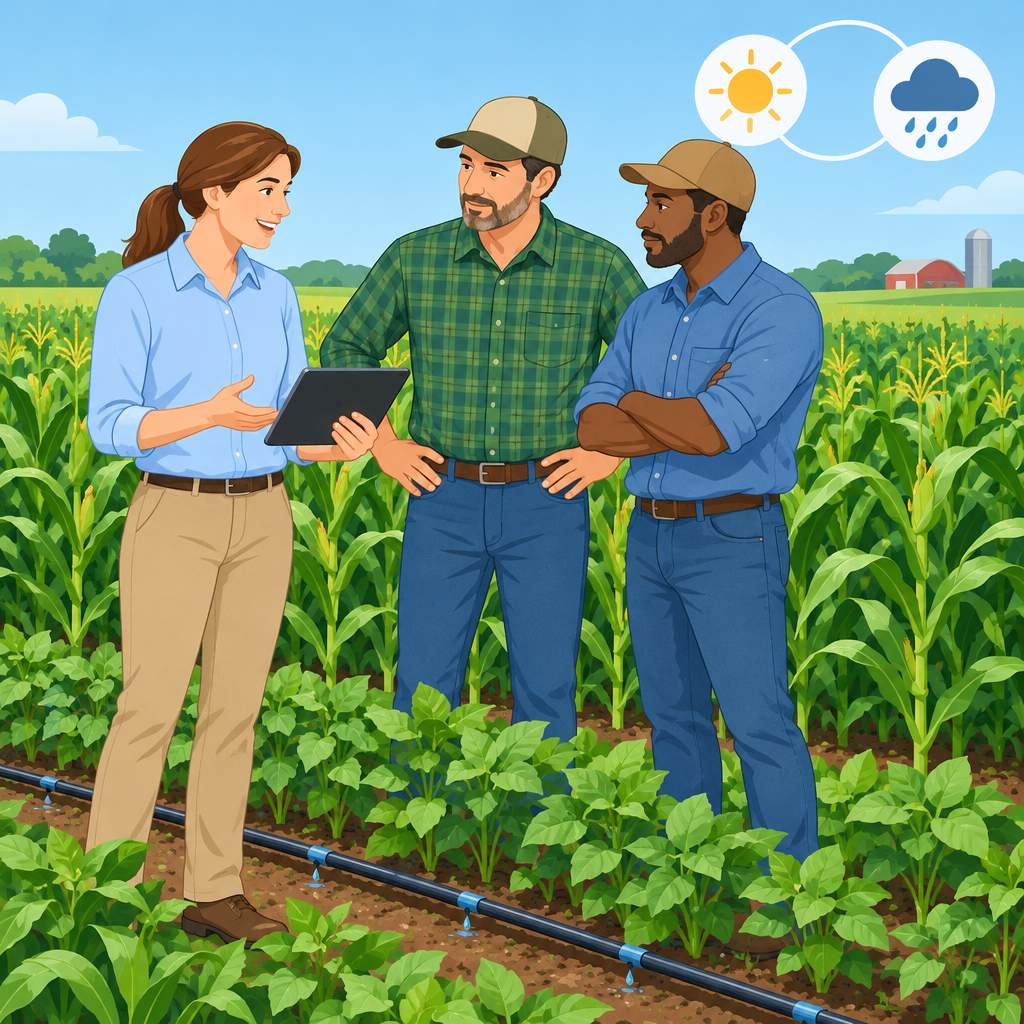
Collaboration for Climate Change Adaptation
Collaboration helps extension agents, farmers, and stakeholders address climate change challenges together.
They share knowledge, resources, and expertise to develop practical adaptation strategies.
Participatory decision-making gives farmers and stakeholders ownership of those strategies.
Transform Your Career Today
Unlock a personalized career strategy that drives real results. Get tailored advice and a roadmap designed just for you.
Start Now- Shared expertise: Working together combines knowledge, resources, and experience.
- Participatory approaches: Involving stakeholders strengthens commitment to adaptation decisions.
- Inclusive solutions: Diverse perspectives support comprehensive and sustainable responses.
- Practical collaboration: Partnerships help farmers implement climate-resilient practices.
Extension agents facilitate collaboration and align adaptation efforts with local farmers’ needs and priorities.
Co-creating knowledge combines stakeholder expertise and experience to produce more effective solutions.
This approach empowers farmers and encourages adoption of suitable practices and technologies.
Moreover, extension agents provide advice that reflects local conditions when they work closely with farmers.
Personalized support builds trust and strengthens relationships among collaborators.
For example, collaborators can promote agroforestry practices and water-saving irrigation techniques.
They can also encourage farmers to use climate-smart crop varieties.
These practices help farmers respond to changing conditions and improve resilience against extreme weather.
Through cooperation, stakeholders can build a more resilient agricultural sector.
Explore Further: Biotechnology and Precision Agriculture
Supporting Farmers with Climate Adaptation Measures
Extension agents provide farmers with technical assistance and practical guidance.
They explain how climate change affects agriculture and identify suitable adaptation measures.
Furthermore, they develop recommendations according to each farm’s specific conditions.
- Extension agents play a crucial role in guiding farmers.
- They help farmers understand climate change impacts on agriculture.
- They suggest practical measures that address climate-related challenges.
- They work directly with farmers to develop customized recommendations.
- Tailored solutions help farmers apply practical and effective strategies.
Importance of Customized Recommendations
Each farm contains different soils, crops, and weather patterns.
Consequently, generic recommendations may not suit every farming operation.
Customized guidance addresses the specific challenges and opportunities on each farm.
- Farm conditions vary because soils, crops, and weather patterns differ.
- Generic recommendations may fail to address individual farm needs.
- Tailored advice considers each farm’s challenges and opportunities.
- Specific guidance increases the likelihood of successful implementation.
Case Studies of Successful Implementation
In Kenya, extension agents helped farmers adopt drought-resistant crops.
These farmers maintained their yields during prolonged dry spells.
Similarly, agents in India promoted irrigation techniques that conserve water.
- Kenyan extension agents supported a shift toward drought-resistant crops.
- Farmers maintained their yields during prolonged dry periods.
- Indian extension agents promoted water-saving irrigation techniques.
- Adopting these techniques reduced water usage without lowering crop productivity.
See Related Content: The Role of GIS in Conservation Science
Monitoring and Evaluation of Climate Change Adaptation Efforts
Monitoring and evaluating climate change adaptation strategies helps ensure efficient and effective resource use.
Continuous evaluation identifies successful approaches and reveals where strategies need adjustment.
Extension agents collect data and feedback from farmers about adaptation program impacts.
They connect farmers with policymakers by sharing information that supports informed decisions.
Tools for Assessing Adaptation Program Impacts
Surveys, field visits, discussions, remote sensing, and impact assessments support program evaluation.
These methods provide a comprehensive understanding of adaptation strategy effectiveness.
Consequently, evaluation findings inform decisions and shape future interventions supporting farmer adaptation.
- Surveys gather farmers’ feedback about the effectiveness of adaptation strategies.
- Field visits allow extension agents to observe climate change impacts on farming practices.
- Focus group discussions reveal challenges that farmers face while adapting to climate change.
- Remote sensing technology tracks changes in land use and agricultural practices linked to climate change.
- Impact assessments measure tangible program outcomes affecting farmers’ livelihoods.
Delve into the Subject: Food Safety Regulations Every Specialist Should Know
Advocacy and Policy Engagement
Extension agents advocate for policy changes that support climate adaptation in agriculture.
They connect farmers with policymakers and communicate practical concerns from agricultural communities.
Moreover, they help stakeholders discuss climate resilience and develop relevant strategies.
During these discussions, agents provide field-based insights and data.
Their advocacy campaigns have promoted climate-smart agriculture and increased awareness of sustainable practices.
Consequently, policymakers can better understand the value of climate-resilient approaches.
In one rural community, agents helped farmers implement drought-resistant crop varieties.
They then advocated for funding to support wider adoption of these practices.
That funding supported farmers who adopted approaches designed to withstand drought conditions.
In another instance, agents collaborated with government officials on a comprehensive agricultural climate adaptation plan.
The plan included incentives for farmers who adopted sustainable practices.
It also addressed ways to mitigate climate-related risks in agriculture.
Transform Your Career Today
Unlock a personalized career strategy that drives real results. Get tailored advice and a roadmap designed just for you.
Start NowThrough policy engagement, extension agents bring practical experience into public decision-making.
Their expertise helps shape policies that address agricultural challenges caused by climate change.
As a result, farmers’ needs receive attention during resilience planning.
Building Agricultural Resilience Through Extension Services
Extension agents help farmers adapt to climate change through practical education.
They share sustainable practices and technologies that help reduce climate-related risks.
Additionally, they connect researchers, policymakers, and farmers while adaptation strategies move into practice.
Their field-based guidance prepares farmers to respond to changing conditions.
Consequently, extension agents strengthen agricultural resilience and support sustainability for future generations.
Continued collaboration and support can improve climate adaptation efforts.
By working together, stakeholders can help agriculture remain resilient as the climate changes.
Therefore, resources and empowerment enable extension agents to serve farmers effectively.
Additional Resources
Google search results for Extension Agents and Climate Change Adaptation Agricultural
Bing search results for Extension Agents and Climate Change Adaptation Agricultural


