




Innovations in Agricultural Science and Tech
Agricultural science supports food security and sustainability globally.
Technology transforms traditional farming practices through innovative applications.
These developments continue to shape modern agriculture.
Introduction
Agricultural science and technology play a vital role in ensuring food security globally.
They also support sustainable practices across modern agriculture.
Furthermore, innovative advancements have transformed traditional farming practices.
These advancements have elevated modern agriculture to new heights.
History of Agricultural Science and Technology
Agriculture has supported human sustenance and survival throughout history.
Agricultural science and technology have improved farming practices and increased crop yields.
These developments have also helped address food security for growing populations.
Key Milestones in Agricultural Development
Several milestones have shaped the development of agricultural science and technology.
These changes moved communities from traditional survival practices toward more organized farming systems.
Later advances combined scientific research with tools that improved production and resource use.
- The Neolithic Revolution began the transition from nomadic hunting to settled farming around 10,000 BC.
- The Green Revolution used intensive twentieth-century research to increase crop yields rapidly.
- Biotechnology introduced genetic engineering techniques that transformed crop breeding.
- Precision agriculture integrated GPS and sensors to optimize farming practices.
Effects of Technology on Agricultural Practices
Technological advancements have changed how farmers produce food and manage agricultural resources.
These innovations have increased productivity while supporting more sustainable farming practices.
They have also improved environmental outcomes through more precise resource management.
- Improved seed varieties, fertilizers, and pesticides have increased crop production levels.
- Drip irrigation and soil sensors help farmers optimize water and nutrient use.
- Precision agriculture reduces chemical use and minimizes runoff into waterways.
- Remote monitoring tools help farmers track animal health and optimize feeding practices.
The integration of science and technology has transformed food production.
These tools have encouraged more efficient and sustainable farming practices.
Further advancements will help meet growing food demand while preserving the environment for future generations.
Role of Biotechnology in Modern Agriculture
Biotechnology plays a crucial role in modern agriculture by changing how farmers develop and grow crops.
It uses living organisms or their derivatives to improve plants, animals, and microorganisms for agriculture.
It enhances crop yields, strengthens pest resistance, and improves nutritional content.
Biotechnology and Crop Development
Biotechnology has accelerated breeding and crop development by targeting desired traits.
Traditional breeding can be time-consuming and unpredictable.
In contrast, scientists can insert or modify genes to achieve specific characteristics.
Genetically Modified Organisms and Their Benefits
Genetic modification inserts genes from one organism into another organism’s DNA.
This process creates genetically modified organisms, commonly called GMOs.
Farmers use several GMO traits to address weeds, pests, nutrition, and disease.
- Herbicide-Resistant Crops: Roundup Ready soybeans resist herbicides, helping farmers control weeds, increase yields, and reduce labor costs.
- Pest-Resistant Crops: Bt cotton produces a protein toxic to specific pests, reducing chemical pesticide use and improving yield and quality.
- Nutrition-Enhanced Crops: Golden Rice contains beta-carotene, a Vitamin A precursor, and aims to address deficiency in developing countries.
- Disease-Resistant Crops: Virus-resistant papaya protects crops from devastating disease, supporting a more stable and secure food supply.
Agricultural Benefits and Considerations
These applications help farmers address pest infestations, crop diseases, and nutrient deficiencies.
Biotechnology also offers potential benefits for food security, sustainability, and nutrition.
However, the technology raises ethical and environmental concerns that require careful consideration.
Find Out More: Steps to Start Your Career as an Agricultural Consultant
Precision Farming Techniques
Precision farming uses technology to optimize crop yields while minimizing water, fertilizer, and pesticide use.
This approach helps farmers manage differences in crops, soils, and weather conditions across individual fields.
Farmers can tailor their practices to specific field conditions and make better production decisions.
- Precision farming increases crop yields through targeted management practices.
- It reduces input use and supports environmental sustainability.
- It also improves decision-making by providing detailed field information.
Technologies Used in Precision Farming
Several technologies help farmers monitor, analyze, and manage agricultural activities efficiently.
These tools support accurate field operations and help farmers use resources where crops need them most.
Furthermore, timely data helps farmers identify problems and adjust crop management practices.
- Global Positioning System (GPS): GPS maps fields and guides planting, fertilizing, and harvesting activities accurately.
- Drones: Drones capture detailed images that reveal crop stress, pests, diseases, and areas requiring attention.
- Variable Rate Technology (VRT): VRT adjusts fertilizer and pesticide applications according to field-specific requirements.
- Automated Steering Systems: Automated steering reduces equipment overlaps and skips during planting, spraying, and harvesting.
- Remote Sensing: Satellite imagery and sensors provide information about crop health, moisture, and nutrient levels.
These technologies help farmers improve efficiency, sustainability, and profitability.
They also strengthen resource management and support adaptation to changing agricultural conditions.
Transform Your Career Today
Unlock a personalized career strategy that drives real results. Get tailored advice and a roadmap designed just for you.
Start NowGain More Insights: How Dairy Scientists Improve Animal Welfare
Sustainable Agriculture Practices
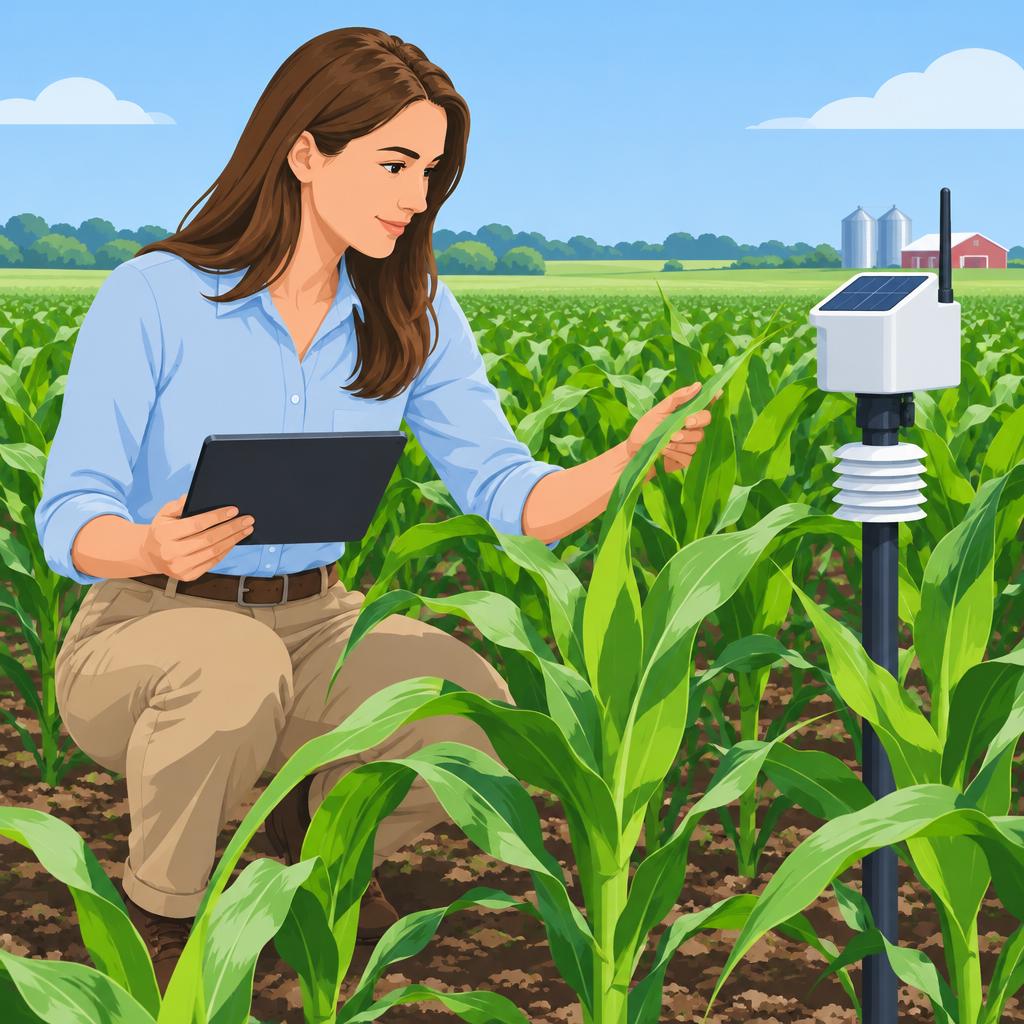
One key aspect of sustainable agriculture involves environmentally friendly farming practices.
These practices maintain soil fertility, conserve water, and minimize pollution.
Examples include crop rotation, cover cropping, and integrated pest management.
Importance of Sustainable Farming Methods
Sustainable farming methods support the long-term viability of food production systems.
By using these methods, farmers protect the environment, preserve resources, and safeguard public health.
Furthermore, sustainable methods can mitigate climate change and reduce reliance on harmful agricultural chemicals.
Innovations Supporting Sustainable Agriculture
Advancements in agricultural science have strengthened sustainable farming practices.
Scientists have developed genetically modified crops with greater resistance to pests and diseases.
These crops can resist pests and diseases more effectively.
Consequently, farmers may need fewer chemical inputs, reducing farming’s environmental impact.
Additionally, GPS-guided tractors and drones help farmers optimize resource use.
This efficiency can lower costs and reduce the environmental footprint of production.
Soil science has also strengthened understanding of soil health and fertility.
Through soil testing and nutrient management, farmers can optimize nutrient use.
These practices also reduce nutrient runoff.
Meanwhile, drip irrigation and moisture sensors help farmers conserve water.
These technologies improve water-use efficiency.
Together, these advances support sustainable agriculture and long-term food production.
See Related Content: Farm Manager's Role in Biodiversity Conservation
Innovations in Agricultural Science and Technology
Agricultural innovation continues to reshape farming methods and improve operational efficiency.
Modern technologies help farmers manage crops, livestock, resources, and daily field activities.
Automation represents one important development within this changing agricultural landscape.
Automation in Agriculture
Automation plays a crucial role in modern agriculture by transforming farming practices and supporting productivity.
Farmers use automated equipment and digital systems to complete tasks more efficiently.
Furthermore, these technologies can reduce labor costs and minimize environmental effects.
Automated Applications Across Agriculture
Automation supports planting, watering, harvesting, and other field operations while saving time and reducing labor demands.
Precision tools help farmers optimize water, fertilizer, and pesticide applications across their fields.
Drones and satellite imagery deliver timely information about crop health and environmental conditions.
- Automation supports planting, watering, harvesting, and other field operations while saving time and reducing labor demands.
- Precision tools help farmers optimize water, fertilizer, and pesticide applications across their fields.
- Drones and satellite imagery deliver timely information about crop health and environmental conditions.
- Automated livestock systems track animal health, feeding, and milking activities.
Robotic Technology in Farming Operations
Robotic technology extends automation into harvesting, weeding, milking, and planting.
These machines can improve accuracy, efficiency, and consistency during routine farming operations.
Additionally, automated systems can support animal welfare and reduce reliance on herbicides.
- Strawberry-picking robots can harvest crops faster and with greater accuracy than human labor.
- Weeding robots use cameras and artificial intelligence to remove weeds without harming crops.
- Robotic milking systems allow cows to receive milking services multiple times each day.
- Planting drones distribute seeds across large areas quickly and accurately.
As technology advances, farmers can expect further automated tools to influence the future of farming.
Explore Further: Impact of Nutrition on Livestock Productivity
Future Trends in Agricultural Science and Technology
Agricultural science and technology continue evolving to meet the needs of a growing population.
Researchers are developing tools that can improve farming efficiency, productivity, and resilience.
These changes will influence how farmers manage crops, resources, labor, and environmental challenges.
Predictions for Upcoming Agricultural Innovations
Several technologies will shape agricultural production during the coming years.
Farmers will combine digital systems, biological research, controlled environments, and automated equipment.
Together, these developments can support reliable food production while reducing resource demands.
Transform Your Career Today
Unlock a personalized career strategy that drives real results. Get tailored advice and a roadmap designed just for you.
Start Now- Precision agriculture will combine sensors, GPS technology, and drones to improve crop monitoring and resource management.
- Plant biotechnology will produce crops with stronger resistance to pests, diseases, and extreme weather.
- Vertical farming will expand food production in urban areas while using less space and fewer resources.
- Robotics and automation will support planting, weeding, and harvesting while reducing labor demands.
How Emerging Technologies Will Shape Farming
These technologies can make farming more sustainable, productive, and resilient.
Precision tools will help farmers control water, fertilizers, and pesticides more carefully.
Consequently, farms can lower costs and reduce agriculture’s environmental effects.
Meanwhile, biotechnology can help farmers maintain production during droughts, floods, and disease outbreaks.
As the population approaches 9 billion by 2050, vertical farming may gain wider adoption.
Urban farms can bring fresh produce closer to consumers and reduce transportation needs.
Finally, automated equipment can handle repetitive work while farmers manage higher-level decisions.
These changes can also help address labor shortages and improve efficiency across farms.
Significance of Agricultural Innovation
Reflecting on agricultural science and technology innovations reveals a promising future for sustainable food production.
These advances can help address global challenges, including the need to feed a growing population.
Therefore, continued research and development can strengthen food security for future generations.
Impact of Agricultural Technology Advancements
Recent innovations have transformed food production by improving efficiency and sustainability.
Furthermore, these advances can help agriculture withstand climate change and other environmental challenges.
By embracing innovation, communities can improve yields, reduce environmental impact, and strengthen food security worldwide.
Staying Informed About Agricultural Developments
Readers can follow reputable sources to stay informed about agricultural science and technology.
They can also attend conferences and engage with industry experts.
Consequently, informed communities can support positive change and promote a more sustainable food future.
Additional Resources
Google search results for Innovations in Agricultural Science and Tech Agricultural
Bing search results for Innovations in Agricultural Science and Tech Agricultural


