




A Day in the Life of a Transportation Planner
As a transportation planner, I help create efficient transportation systems in urban areas.
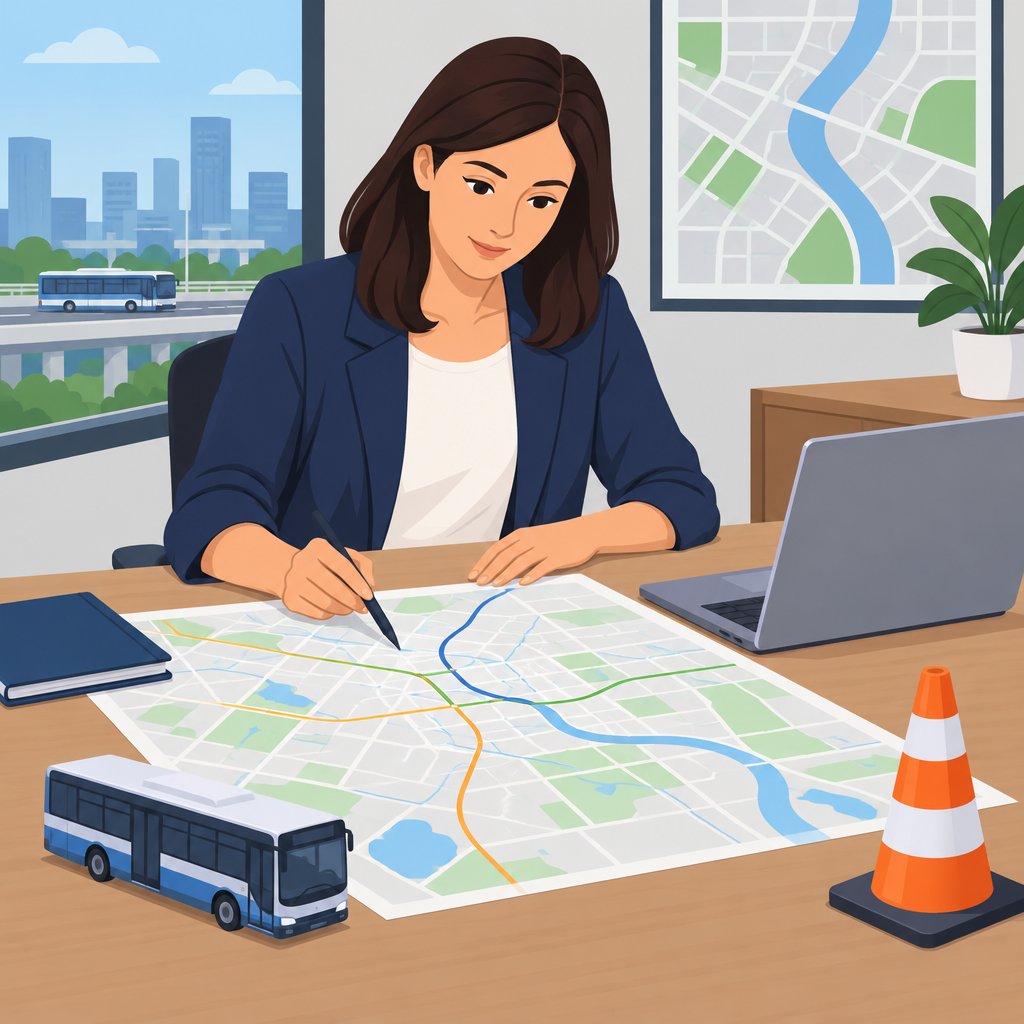
Each day, I analyze traffic patterns and design public transportation routes.
Additionally, I collaborate with stakeholders to improve the transportation network.
Morning Transportation Review
I begin my day by reviewing traffic data and recent transportation developments.
This review keeps me informed about current trends in urban transportation planning.
It also helps me recognize challenges that may affect transportation systems.
Meetings and Professional Collaboration
Throughout the day, I meet with city officials, engineers, and community members.
During these meetings, we discuss upcoming projects and transportation infrastructure concerns.
Through collaboration, we develop responses that support effective transportation planning.
Data Analysis and Transportation Planning
I spend significant time analyzing traffic flow and public transit ridership.
I also examine other relevant data to identify areas needing improvement.
As a result, data helps me make informed decisions about transportation systems.
Site Visits and Project Inspections
I regularly visit construction sites and transportation hubs during project development.
These inspections help me confirm that projects follow plans and city regulations.
When issues arise, I address them during the construction phase.
Community Engagement and Public Feedback
Community engagement forms an essential part of my transportation planning responsibilities.
I organize public forums and workshops to gather feedback about transportation projects.
Consequently, community input helps ensure that projects address local needs.
Continued Education and Professional Development
I dedicate time to expanding my knowledge of transportation planning.
For example, I attend conferences, participate in workshops, and complete online courses.
These activities help me stay informed about industry best practices.
Daily Reflection and Preparation
At the end of each day, I reflect on the progress achieved.
Then, I prepare for the tasks scheduled for the following day.
Although transportation planning demands consistent effort, improving sustainable systems makes the work worthwhile.
Morning Routine
I wake early and begin the day feeling refreshed and energized.
After rising, I review previous updates and emails to stay informed.
Next, I plan the day’s tasks and prioritize important assignments.
Before leaving, I eat a hearty breakfast that fuels my body and mind.
Commute to Work
I gather my laptop, planner, and other belongings before leaving home.
As a transportation planner, I observe traffic patterns and consider alternate routes.
Whenever possible, I use public transportation or carpooling to reduce my carbon footprint.
Upon arrival, I appreciate the city’s infrastructure and transportation systems.
Morning Meetings and Planning
I join morning meetings with colleagues to discuss projects and deadlines.
During these discussions, we brainstorm ideas and develop solutions for transportation challenges.
Meanwhile, I update project timelines and milestones to keep our work progressing.
Throughout the morning, I conduct research and analysis that supports our planning efforts.
Site Visits and Field Work
In the afternoon, I visit potential locations for transportation projects.
At each site, I record notes, measurements, and photographs of important features.
This field work helps me assess each proposed initiative’s feasibility and impact.
Back at the office, I prepare detailed reports and presentations from my findings.
Transform Your Career Today
Unlock a personalized career strategy that drives real results. Get tailored advice and a roadmap designed just for you.
Start NowCollaboration and Communication
I communicate with government officials and community members to gather valuable feedback.
Through collaboration, we design and implement sustainable transportation solutions.
I also engage local residents to understand their transportation needs and preferences.
Open communication helps us build community trust and support for our projects.
Project Development and Implementation
Late in the afternoon, I develop project proposals and client presentations.
I incorporate stakeholder feedback and adjust plans to meet expectations and requirements.
As a transportation planner, I create innovative and cost-effective solutions for clients.
Before leaving, I review project budgets and timelines to maintain steady progress.
Reflecting on the Day
As the workday ends, I consider the day’s accomplishments and challenges.
I review my task list and prioritize responsibilities for the following day.
This reflection reveals opportunities for improvement and professional growth.
Before heading home, I check with colleagues about updates and tomorrow’s tasks.
By following a structured routine, I contribute effectively to transportation planning and development.
My work supports transportation systems that benefit communities and the environment.
Each day requires analytical thinking, creativity, and collaboration to achieve successful outcomes.
As I leave the office, I feel fulfilled by helping people move and connect.
Meeting with the Transportation Planning Team
- As a transportation planner, the day typically starts with a meeting with the transportation planning team.
- We gather together to discuss ongoing projects and upcoming deadlines to stay on track.
- During the meeting, we collaborate on strategies and solutions for transportation issues that have arisen.
- Tasks and responsibilities are assigned to each team member to move projects forward efficiently.
Learn More: Professional Organizations for Transportation Planners
Transportation Data Analysis
Transportation planners analyze data to identify important trends and patterns.
This work involves reviewing traffic flow, public transportation usage, and infrastructure data.
These datasets reveal the current state of transportation systems.
Additionally, Geographic Information Systems software helps planners map transportation networks.
These maps reveal potential improvements for optimizing efficiency and addressing congestion.
After completing the analysis, planners compile reports and presentations that highlight key findings.
They also provide recommendations for improving transportation systems.
Consequently, decision-makers and stakeholders can better understand transportation challenges and opportunities.
Data-driven insights communicate the need for infrastructure upgrades and improved traffic flow management.
Furthermore, these insights support enhancements to public transportation services.
Ultimately, data analysis informs decisions and shapes transportation planning within the community.
Learn More: Port Operations Manager: Enhancing Port Security
Stakeholder Meetings
Transportation planners engage stakeholders to align projects with community needs and priorities.
These conversations connect transportation proposals with public concerns and practical priorities.
Moreover, planners use them to build relationships and encourage collaboration.
- Meet with city officials, developers, and community members
- Discuss transportation plans and projects
- Address concerns and gather feedback on proposed solutions
- Negotiate with stakeholders to reach consensus on transportation initiatives
Stakeholder meetings support successful transportation outcomes through open dialogue and shared ideas.
Planners may present bike lanes, discuss road expansions, or propose public transit enhancements.
These meetings provide a platform for stakeholders to exchange ideas.
During discussions, planners address concerns about traffic congestion, pedestrian safety, and environmental impacts.
Active listening helps planners understand stakeholder perspectives.
Empathy enables planners to tailor solutions to community needs.
Consequently, stakeholders may provide stronger support for proposed projects.
Planners also negotiate with stakeholders to find common ground.
Transform Your Career Today
Unlock a personalized career strategy that drives real results. Get tailored advice and a roadmap designed just for you.
Start NowThrough negotiation, they seek consensus on transportation initiatives.
By engaging diverse stakeholders, planners promote inclusive, equitable, and sustainable transportation plans.
These plans can serve community needs now and in the future.
Learn More: Understanding Distribution Manager Job Descriptions
Site Visits
As a transportation planner, I conduct site visits at various locations.
These visits help me monitor transportation projects and assess their progress.
They also provide practical insights that support efficient transportation systems.
Construction Sites and Transportation Hubs
During site visits, I inspect construction sites where infrastructure projects are underway.
This direct observation helps me understand project developments and transportation impacts.
I also visit bus terminals, train stations, and airports to observe movement patterns.
Furthermore, I identify bottlenecks and inefficiencies by watching people and vehicles move through these hubs.
Infrastructure Project Progress
At construction sites, I examine infrastructure work against approved plans and timelines.
These inspections show whether project teams follow the intended designs and schedules.
Meanwhile, I monitor progress to support completion within the planned budget.
Regular reviews also reveal potential delays before they affect the wider project.
Potential Implementation Obstacles
During each visit, I look for obstacles that could hinder transportation project implementation.
These challenges may include land acquisition concerns or environmental issues.
By recognizing problems early, I can help develop suitable responses.
Depending on the issue, I collaborate with stakeholders or support public consultations.
In some cases, I reevaluate project designs to improve implementation.
Recommendations Based on Site Visits
After each visit, I analyze the information collected from the location.
Then, I recommend improvements that address observed conditions and project needs.
These recommendations may revise project plans, reallocate resources, or adjust timelines.
Such proactive decisions help resolve issues before they become more difficult.
Ultimately, site visits support successful project implementation and more efficient transportation systems.
Explore Further: Career Path: Becoming an Inventory Control Specialist
Public Engagement
Public engagement plays a crucial role in my work as a transportation planner.
It connects me with community members, gathers feedback, and clarifies their concerns.
Therefore, I can help transportation projects meet local needs and gain public support.
Community Workshops and Town Hall Meetings
- I regularly organize community workshops and town hall meetings for residents.
- These events explain transportation plans and create opportunities for residents to share opinions.
- Furthermore, community gatherings provide valuable input for shaping transportation projects.
Transportation Plans and Resident Input
- During these meetings, I present transportation plans to residents.
- I explain project goals, potential benefits, and possible challenges.
- Residents can ask questions, provide feedback, and suggest improvements.
Community Concerns and Proposed Solutions
- I address concerns and issues raised by community members.
- First, I listen carefully to understand their perspectives and needs.
- Then, I use their feedback to develop responsive transportation solutions.
Public Support for Transportation Initiatives
- I advocate for public support of transportation initiatives and projects.
- Additionally, I communicate project benefits to residents and stakeholders.
- Building public support can help secure funding and project approval.
Public engagement remains a dynamic and essential part of transportation planning.
By involving the community, I help ensure that transportation projects address residents’ needs.
This collaborative approach can create positive effects throughout the community.
Transportation Policy Development
Transportation policy development shapes future transportation systems and infrastructure.
Transportation planners research policies and regulations at local, state, and federal levels.
These efforts support safe, efficient, and sustainable transportation networks.
Transportation Policy Research and Analysis
Planners examine existing transportation policies and regulations.
They assess how policies affect traffic flow, public transit, pedestrian safety, and transportation efficiency.
Furthermore, this analysis helps planners identify opportunities for policy improvements.
Monitoring Transportation Legislation
Transportation planners monitor state and federal transportation legislation.
They track new laws and regulations that may influence transportation planning.
Transform Your Career Today
Unlock a personalized career strategy that drives real results. Get tailored advice and a roadmap designed just for you.
Start NowConsequently, planners can adjust strategies and maintain compliance with relevant requirements.
Recommendations for Local Transportation Policies
Planners develop local policy recommendations from their research and analysis.
These recommendations address transportation challenges and improve traffic flow.
They also expand public transit options and encourage sustainable transportation practices.
Collaboration with Government Agencies
Transportation planners collaborate with government agencies to implement policy changes.
They work with local, state, and federal officials to advocate for transportation improvements.
Additionally, planners help secure infrastructure funding and streamline planning processes.
Community Benefits of Transportation Policies
Planners work with stakeholders to align recommendations with community needs.
This collaboration helps policymakers address local priorities through practical transportation initiatives.
Effective policy development supports safer, more efficient, and more sustainable communities.
Transportation Planning and Urban Quality of Life
Transportation planners help shape urban mobility, efficient systems, and sustainable development.
They analyze data, design infrastructure, and implement policies that improve transportation networks.
Moreover, transportation planning influences urban development in several important ways.
It can reduce traffic congestion and improve air quality.
It also promotes accessibility for all residents.
Consequently, cities can become more vibrant and livable.
Planners prioritize public transportation, cycling infrastructure, and pedestrian-friendly spaces.
People who enjoy problem-solving and critical thinking may find this field rewarding.
A transportation planning career can help professionals create positive community change.
Additionally, planners can influence how people move through cities.
Their work can reduce carbon emissions and enhance overall quality of life.
Aspiring transportation planners can explore several resources about this field.
Relevant organizations include the American Planning Association, the Institute of Transportation Engineers, and the Urban Land Institute.
These organizations provide valuable information and networking opportunities.
They also offer professional development resources for aspiring transportation planners.
Additional Resources
Google search results for Day in the Life of a Transportation Planner Transportation and Logistics
Bing search results for Day in the Life of a Transportation Planner Transportation and Logistics


