




Introduction
Power line technicians play a crucial role in ensuring electrical grid safety and reliability.
They install power lines carrying electricity from power plants to homes and businesses.
They maintain and repair those power lines.
Brief Overview of Power Line Technicians
Power line technicians are also known as lineworkers or line workers.
They work outdoors in various weather conditions.
Additionally, they ensure electrical systems function properly.
They train to work at great heights.
They use specialized equipment to complete tasks safely.
Importance of the Work Environment
The work environment matters greatly because of the job’s demanding nature.
Technicians work with electricity at extreme heights.
These conditions require focus, precision, and teamwork to protect everyone nearby.
A supportive work environment can enhance productivity and efficiency.
It can also improve overall job satisfaction.
Educational Requirements for Power Line Technicians
Power line technicians need education that supports safe and effective work.
These requirements help candidates develop essential knowledge and practical skills.
They also prepare aspiring technicians for specialized electrical work.
High School Diploma or Equivalent
A high school diploma or equivalent provides a basic educational foundation.
Students develop math, reading, and problem-solving skills through this education.
These skills support the daily responsibilities of power line technicians.
Technical Training or Apprenticeship Programs
Aspiring technicians typically complete technical training or an apprenticeship program.
These programs provide hands-on experience with electrical systems and safety procedures.
They also teach specialized knowledge relevant to the power line industry.
Additional Certifications or Licenses
Some positions require additional certifications or licenses.
Requirements can vary according to the job or state.
These credentials show that technicians meet required standards for safe, effective work.
Meeting these educational requirements can help aspiring technicians pursue this specialized career.
Physical Demands of Power Line Technician Work
Power line technicians need physical strength and endurance because their work involves demanding environments.
They climb poles and towers to install, repair, and maintain power lines.
This work requires balance, coordination, agility, and careful movement.
Additionally, technicians work outdoors in extreme heat, cold, rain, and snow.
These conditions can make their duties physically challenging and exhausting.
Technicians also lift heavy equipment and tools during installation, repair, and maintenance tasks.
Furthermore, they carry materials up poles and perform other manual labor.
Therefore, technicians must maintain good physical condition to work safely and effectively.
Their duties demand strength, agility, and endurance in challenging environments.
Uncover the Details: Agricultural Worker Rights and Labor Laws Explained
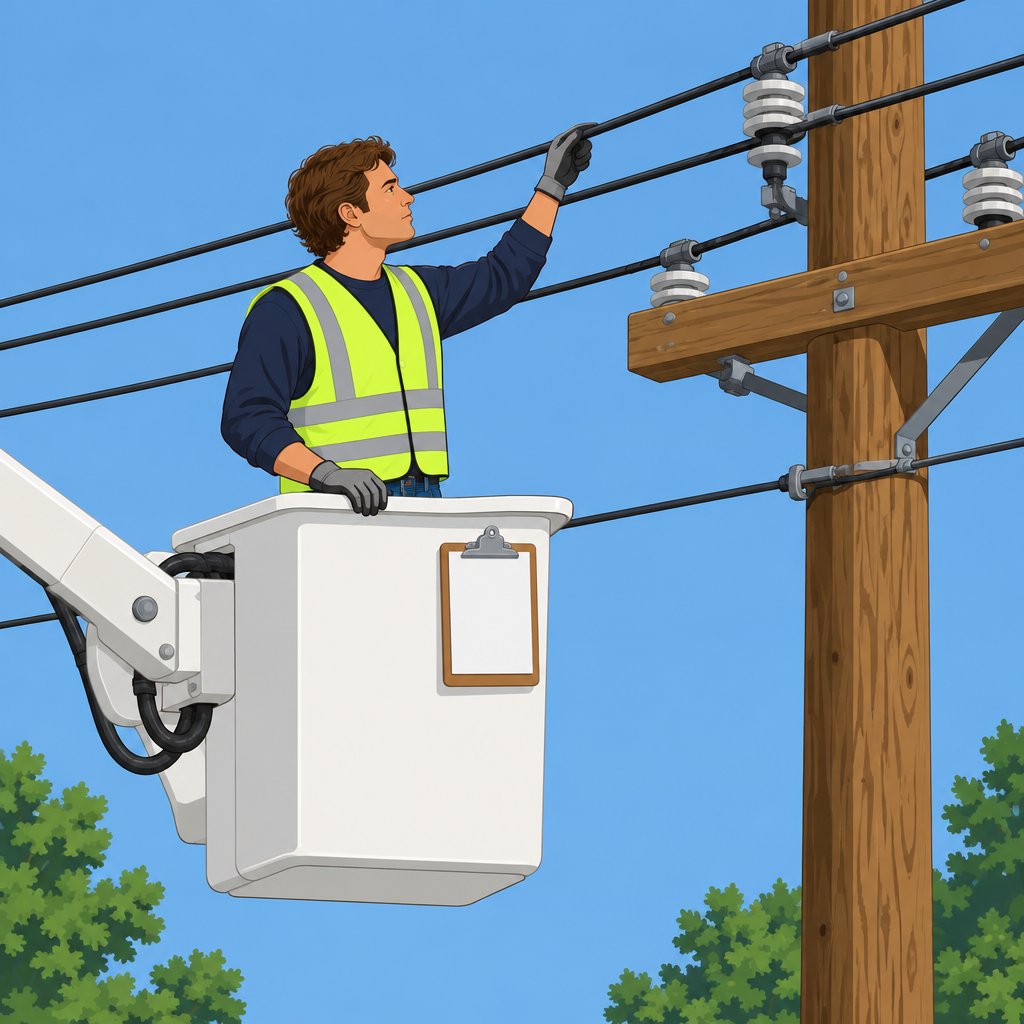
Safety Precautions and Procedures
Power line technicians follow safety procedures whenever they work on electrical lines.
These measures reduce exposure to electrical shock, arc flashes, falls, fires, and other hazards.
Furthermore, proper preparation helps technicians protect themselves and others during routine work and emergencies.
Use of Personal Protective Equipment
Technicians must wear appropriate personal protective equipment while working on electrical lines.
Transform Your Career Today
Unlock a personalized career strategy that drives real results. Get tailored advice and a roadmap designed just for you.
Start NowThis equipment includes hard hats, gloves, safety glasses, and flame-resistant clothing.
Together, these items help protect technicians from electrical shock, arc flashes, and falls.
Technicians should inspect their PPE regularly for signs of wear and tear.
They must replace damaged equipment immediately to maintain maximum protection on the job.
Training on Electrical Safety
Before working on power lines, technicians must complete thorough electrical safety training.
The training covers electrical hazards, safe work practices, and emergency procedures.
Technicians also learn to work safely around energized lines and use insulated tools properly.
Additionally, they learn how to handle electrical equipment correctly.
These lessons help prevent accidents and support technician well-being.
Emergency Response Protocols
In an emergency, power line technicians must follow specific protocols that protect everyone involved.
These protocols address electrical shocks, fires, and other hazardous situations.
Technicians assess risks, communicate with team members, and evacuate the area safely.
Clear emergency procedures help minimize accident impacts and maintain safety during urgent situations.
You Might Also Like: How Masons Contribute to Sustainable Building Practices
Tools and Equipment Used by Power Line Technicians
Power line technicians use specialized equipment to work safely and efficiently.
These tools help technicians reach elevated worksites and manage electrical hazards.
They also support maintenance, repairs, and other demanding tasks.
Bucket Trucks
- Bucket trucks help technicians reach elevated worksites safely and efficiently.
- Each truck has an extendable bucket that reaches the required working height.
- Technicians use bucket controls to move in different directions and reach various angles.
- These trucks withstand demanding work conditions and support technician safety.
Safety Harnesses and Ladders
- Safety harnesses help prevent falls when technicians work at height.
- These harnesses distribute fall forces across the body and reduce injury risks.
- Ladders provide another way for technicians to access elevated worksites securely.
- Technicians need proper training to use harnesses and ladders safely.
Voltage Testers and Lineman’s Tools
- Voltage testers help technicians confirm that electrical current is absent before work begins.
- These testers identify live wires and help prevent electrical shock accidents.
- Pliers, cutters, and wrenches help technicians complete maintenance and repair tasks.
- These tools provide the strength and precision required for various tasks.
Power line technicians depend on varied equipment to perform demanding work safely.
By using suitable tools, they complete tasks effectively while protecting themselves in challenging environments.
You Might Also Like: Power Line Installation: A Step-by-Step Guide
Work Schedule and Flexibility
- Power line technicians often work irregular hours because their duties can change quickly.
- They may also remain on call, which requires availability at any time.
- During emergencies or outages, technicians commonly work overtime and adjust their schedules.
- Technicians must travel between urban areas and remote work locations.
- They also work in different climates, including extreme heat and cold winters.
- Therefore, technicians need adaptability because work environments can change rapidly.
Gain More Insights: Essential Skills Needed for a Pipelayer Career
Teamwork and Communication Skills
Power line technicians work closely with other technicians to keep electrical systems reliable.
Effective teamwork helps them complete tasks efficiently while protecting everyone involved.
Clear communication also helps technicians coordinate responsibilities and respond to changing conditions.
- Technicians collaborate with team members to complete tasks efficiently and safely.
- They coordinate their efforts to support reliable electrical system operation.
- Technicians communicate clearly with coworkers and supervisors.
- Furthermore, effective communication keeps everyone informed about ongoing work.
- Clear instructions can help prevent accidents and mistakes.
- Power line technicians often encounter unexpected challenges during their work.
- They use quick thinking and problem-solving skills to address those challenges.
- Under pressure, technicians make decisions that resolve issues and protect the work environment.
Work Environment and Safety for Power Line Technicians
Power line technicians handle high-voltage power lines.
They work in various weather conditions and climb utility poles.
The job requires physical strength, technical skills, and a strong commitment to safety.
A safe work environment protects these professionals and supports successful job performance.
It reduces accidents, injuries, and fatalities on the job.
An efficient workplace helps technicians complete tasks accurately and promptly.
This efficiency reduces downtime and maximizes productivity.
Companies can support technicians by implementing safety protocols and providing ongoing training.
They can also invest in quality equipment that helps technicians work safely and effectively.
Additional Resources
Google search results for Work Environment of Power Line Technicians Construction and Manual Labor
Bing search results for Work Environment of Power Line Technicians Construction and Manual Labor


