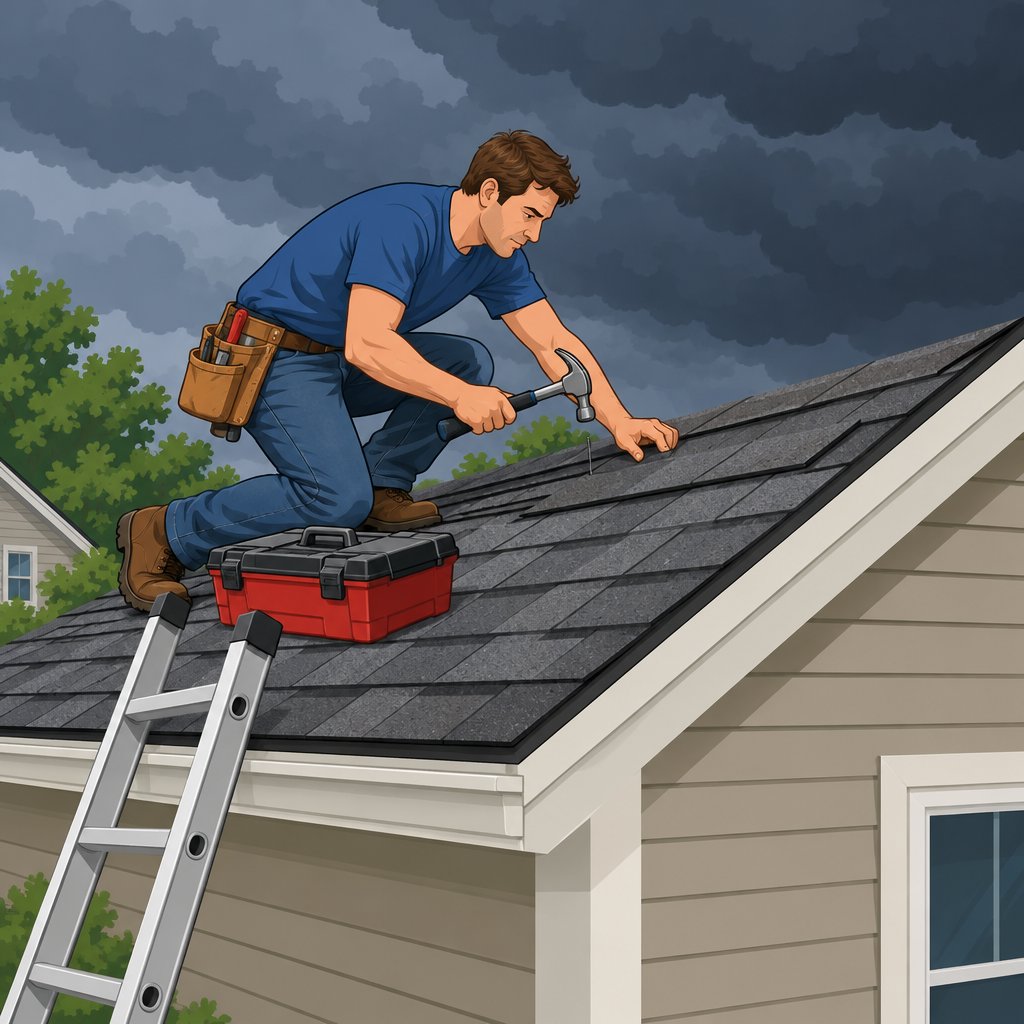
During storm season, protect your roof from potential damage.
Ignoring roof maintenance can cause costly repairs or require complete roof replacement.
Strong winds, heavy rain, and hail can damage an unprotected roof.
Inspect Your Roof Regularly
- Schedule routine inspections to check for any signs of damage
- Look for missing or damaged shingles, leaks, or cracks in the roof
- Attend to minor repairs promptly to prevent larger issues during storms
Regular roof inspections help protect your home from storm damage.
By checking for wear and tear, you can address minor issues before they become major problems.
During inspections, look for missing or damaged shingles.
These problems can weaken your roof and cause leaks during heavy rain or strong winds.
Additionally, check the roof for cracks that could worsen after exposure to the elements.
Therefore, repair minor damage promptly to prevent larger problems during storms.
Even a small leak can cause significant water damage to your home.
Timely repairs can help you avoid costly repairs and potential hazards during storm season.
Finally, schedule inspections throughout the year, especially before storm season begins.
This proactive approach helps you identify and address issues before severe weather arrives.
Managing Tree Branches Above the Roof
- Trim branches that extend over the roof.
- Falling branches can cause significant damage during storms.
- Keep trees maintained to help prevent roof punctures or other damage.
Overhanging branches create a serious risk for your roof, particularly during storms.
Therefore, inspect nearby trees and identify branches that could reach the roof.
Strong winds can break these branches and send them onto the roof.
Such impacts can cause punctures, tears, or structural issues.
By trimming risky branches beforehand, you can reduce the chance of this damage.
Additionally, maintained trees improve safety across your property.
Make tree inspections and necessary trimming part of your roof care routine.
Gain More Insights: Day in the Life of a Professional Groundskeeper
Reinforcing Roof Flashing During Storms
Storm season can test every roof’s ability to keep water outside your home.
Roof flashing protects vulnerable joints around several roof features.
Therefore, reinforce these areas before severe weather threatens your home.
Flashing Inspection
Start by examining flashing around vents, chimneys, and skylights.
Look for loose sealant or visible damage around each joint.
Prompt repairs can limit water infiltration through worn flashing.
- Inspect flashing around vents, chimneys, and skylights for loose or damaged sealant.
- Address visible wear promptly to help prevent water infiltration.
Replacing Worn Flashing
Worn flashing can create openings that allow water into your home.
Replace damaged sections to maintain a reliable barrier during storms.
Proper installation helps flashing direct water away from vulnerable roof joints.
- Replace worn-out flashing to help prevent water from entering your home.
- Use properly installed flashing to reduce leak risks during heavy storms.
Reinforcing Roof Flashing
Reinforced flashing adds protection around roof openings during stormy weather.
A professional roofer can evaluate the work and provide added protection.
This step supports the roof’s overall integrity and helps minimize leak risks.
- Reinforce flashing to help protect your roof from leaks and water damage.
- Consider hiring a professional roofer for additional flashing protection.
Learn More: Effective Communication Skills for Janitors and Custodians
Clean Gutters and Downspouts
Clean gutters and downspouts help stormwater leave your roof safely.
Regular maintenance also reduces the chance of water backing up beneath roof shingles.
Therefore, this simple task helps limit leaks and protect your home’s structure.
- Clear debris from gutters and downspouts to prevent water backup.
- Clogged gutters can overflow onto your roof and cause potential water damage.
- Ensure proper drainage away from your home to help prevent roof leaks.
Leaves, twigs, and dirt can collect inside gutters and restrict water flow.
When water cannot drain, it may pool and move beneath shingles.
This moisture can damage ceilings and walls, while severe cases may weaken the roof structure.
Transform Your Career Today
Unlock a personalized career strategy that drives real results. Get tailored advice and a roadmap designed just for you.
Start NowClean gutters at least twice each year, during spring and fall.
However, properties with overhanging trees or frequent storms may require more frequent cleaning.
Use a trowel or gutter scoop to remove debris from the channels.
Then rinse the gutters with a hose to confirm that water flows freely.
Next, check each downspout for clogs and confirm that it redirects water away from the foundation.
Extend downspouts five to ten feet from the house to keep water away from the foundation.
Finally, gutter guards can reduce debris entry while allowing water to pass through.
Choose a guard type that fits your needs and budget.
These steps can help reduce storm-related water problems around your roof and home.
Learn More: The Importance of Roof Ventilation and Insulation
Securing Loose Materials Before Storms
Storm preparation includes securing loose materials that could move during high winds.
Satellite dishes and antennas can lift or become dislodged when strong winds strike.
Therefore, anchor each item securely to help prevent roof damage.
Use anchor points or brackets to add support and improve stability.
These supports can help keep roof-mounted objects in place during strong winds.
Also, secure every attachment carefully before storm conditions develop.
Inspect anchor points and brackets regularly to confirm they remain effective.
Replace damaged or worn parts promptly to maintain dependable support.
Additionally, remove unnecessary roof items before storm season begins.
Fewer objects can reduce risks and simplify the securing process.
Finally, keep essential items secured and regularly maintained throughout the season.
Uncover the Details: Training and Development for Construction Managers
Protecting Your Roof During Storm Season
Storm season brings harsh weather conditions that can threaten your roof.
Proper preparation helps your roof withstand severe weather.
Proactive measures can reduce the risk of storm-related roof damage.
Storm-Resistant Roofing Materials
- Consider upgrading to storm-resistant roofing materials.
- Metal, asphalt, and concrete tiles provide durable roofing options.
- Quality roofing materials can help protect your roof during storms.
Attic Ventilation and Roof Protection
- Proper attic ventilation helps prevent moisture buildup within the roof structure.
- Ensure that attic vents remain clear and function properly before storm season.
- Poor ventilation can contribute to mold growth and structural roof damage.
Proactive Storm Preparation
These measures help minimize the risk of roof damage during storm season.
They also support the long-term condition of your roof.
Prevention remains essential when protecting your home from the elements.
Storm preparation should include an assessment of your roof structure.
A strong structure can better withstand high winds and severe weather conditions.
Professional Roof Assessment
First, contact a professional roofer to evaluate your roof structure.
The roofer can determine whether the structure needs reinforcement or additional support.
This assessment can reveal weak areas that require attention before severe weather arrives.
- Reach out to a professional roofer to assess the strength of your roof structure.
- Ask for expert advice about reinforcement or additional structural support.
- Use the assessment to identify weak areas that need strengthening.
Strengthening Weak Roof Areas
Next, address any weak areas that the roofer identifies.
Repair existing damage and correct vulnerabilities within the roof structure.
These improvements can reduce the chance that weak points will fail during a storm.
- Take action when your roofer identifies weak areas.
- Address existing damage or vulnerabilities in the roof structure.
- Reinforce weak areas to help prevent structural failure during a storm.
Additional Roof Support
If the assessment requires more stability, consider adding support to the roof structure.
Braces and anchors can strengthen the structure and improve its stability.
Additionally, extra support can distribute the roof’s weight more evenly.
- Consider adding extra support when the roof requires greater stability.
- Install braces or anchors to enhance the stability of the roof.
- Use additional support to distribute the roof’s weight more evenly.
Reinforcing the roof structure can reduce the risk of storm damage.
Transform Your Career Today
Unlock a personalized career strategy that drives real results. Get tailored advice and a roadmap designed just for you.
Start NowConsult a professional roofer to choose the right approach for your specific roof.
Long Term Roof Protection
Consistent roof maintenance helps prevent storm damage and expensive repairs.
Cleaning gutters, trimming trees, and inspecting the roof support proactive protection.
These actions help homeowners address potential problems before severe weather arrives.
Furthermore, timely maintenance can reduce long term costs and support household safety.
Take action now to protect the roof and extend its service life.
Additional Resources
Google search results for How to Protect Your Roof During Storm Season Construction and Manual Labor
Bing search results for How to Protect Your Roof During Storm Season Construction and Manual Labor