




Sustainable Building Practices for Masons
Masons play a crucial role in promoting sustainable building practices.
Sustainability uses materials and techniques that minimize environmental impact and support long-term construction viability.
Additionally, masons use bricks, stones, and concrete to create durable structures.
History of Masonry
- Masonry has supported construction for centuries, beginning with ancient civilizations.
- Traditional techniques using stone and clay bricks have evolved alongside modern technology.
- Meanwhile, masons have influenced sustainable building practices through skilled craftsmanship.
Role of Masons in Sustainable Building Practices
- Masons work with bricks, stones, and concrete to create durable structures.
- They ensure buildings remain structurally sound and withstand environmental factors.
- Moreover, masons collaborate with architects and engineers on sustainable building designs.
- Additionally, they use eco-friendly materials, reduce waste, and improve construction energy efficiency.
- They also promote rainwater harvesting, passive heating, and natural lighting.
Sustainable Materials
Material choices strongly influence the environmental impact of construction projects.
Masonry construction offers durable materials that can support environmentally responsible building.
These materials can reduce waste, conserve resources, and improve building performance.
- Types of sustainable materials used in masonry construction
- Benefits of using eco-friendly materials in building projects
- How masons can reduce construction’s environmental impact
Types of Sustainable Materials
Several material options can help masonry projects reduce resource consumption.
Recycled products limit demand for newly manufactured materials.
Locally available alternatives can also reduce transportation-related emissions.
- Recycled bricks
- Fly ash bricks
- Hempcrete
Recycled bricks reduce demand for new materials and minimize waste sent to landfills.
They can provide quality and durability comparable to newly manufactured bricks.
Fly ash bricks use a coal combustion byproduct and conserve natural resources.
These bricks also require less embodied energy than traditional clay bricks.
Hempcrete combines hemp fibers, lime, and water as an alternative to traditional concrete.
It provides strong thermal and acoustic performance while remaining carbon-negative.
Benefits of Eco-Friendly Materials
Eco-friendly materials can improve environmental performance throughout a building’s service life.
They can also support healthier indoor conditions for occupants.
Meanwhile, improved insulation can reduce energy demands and operating costs.
- Reduced carbon footprint
- Improved energy efficiency
- Better indoor air quality
Sustainable materials can lower a building’s carbon footprint.
They generally require less production energy and release fewer greenhouse gases.
Materials such as hempcrete can improve insulation and increase energy efficiency.
Better insulation can reduce heating and cooling costs.
Eco-friendly materials can also reduce harmful volatile organic compound emissions.
Consequently, occupants may experience healthier indoor air and fewer respiratory risks.
Masonry Practices That Reduce Environmental Impact
Masons influence sustainability through daily decisions about materials and site practices.
Careful planning helps crews use resources efficiently and prevent avoidable waste.
Responsible water management further strengthens environmental performance on construction sites.
- Material selection
- Waste reduction
- Water conservation
Masons can choose recycled or locally sourced materials for masonry projects.
Local sourcing can reduce transportation emissions and support nearby businesses.
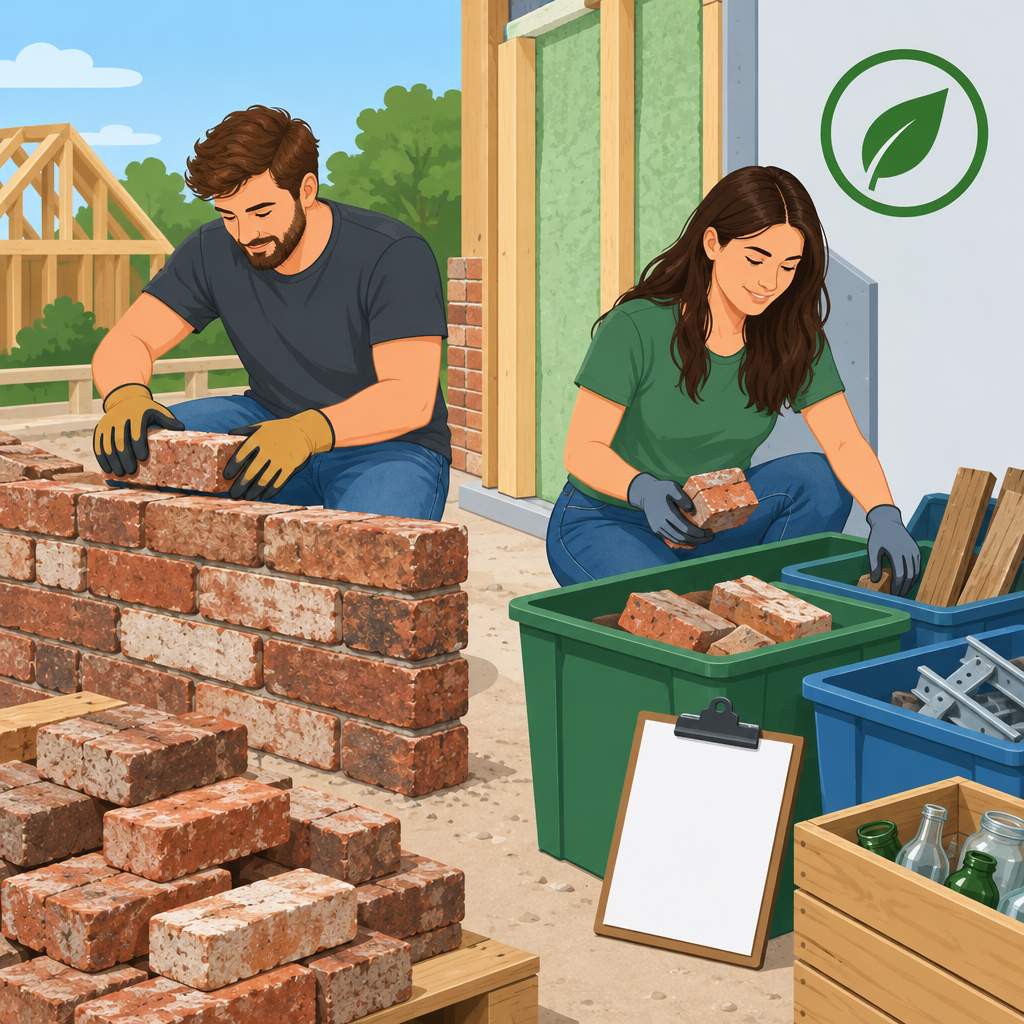
Crews can reuse bricks and concrete blocks whenever project conditions allow.
They should also minimize waste and dispose of construction debris responsibly.
Fly ash bricks can reduce water requirements during material production.
Water-efficient site practices, including rainwater harvesting, can provide additional conservation benefits.
Find Out More: Power Line Installation: A Step-by-Step Guide
Energy Efficiency
Improving energy efficiency supports sustainable construction.
Masons play a significant role in improving building energy performance.
They can apply several techniques that reduce unnecessary energy use.
- Proper Insulation: Masons can install insulation to limit heat transfer and reduce reliance on heating and cooling systems.
- Sealing: Masons can seal gaps and cracks around walls, windows, and doors to minimize air leakage.
- Innovative Masonry Techniques: Additionally, masons can use thermal mass and passive solar design to optimize energy use.
These practices help masons create more energy-efficient and environmentally friendly buildings.
You Might Also Like: Essential Skills Needed for a Pipelayer Career
Waste Reduction
Construction waste reduction supports more responsible masonry projects.
Transform Your Career Today
Unlock a personalized career strategy that drives real results. Get tailored advice and a roadmap designed just for you.
Start NowMasons can reduce waste through careful planning and efficient material use.
They can also support responsible practices by recycling, reusing, and sorting materials.
Minimizing Material Waste
- Masons can plan projects carefully to avoid ordering excessive materials.
- Precise measurements and cutting techniques can reduce excess material.
- Lean construction practices can improve workflows and limit unnecessary material use.
- Suppliers can provide exact quantities when masons coordinate orders carefully.
Recycling and Reusing Materials
- Recycling bricks, concrete, and steel can reduce the environmental impact of masonry projects.
- Reclaimed bricks and stone can add character while reducing demand for new materials.
- Recycling and reuse can conserve natural resources and reduce manufacturing energy consumption.
- Masons can support the circular economy by incorporating recycled and reused materials.
Sustainable Waste Management Practices
- A site waste management plan can help masons track and reduce waste generation.
- Workers can sort materials on-site for recycling and proper disposal.
- Masons can collaborate with disposal companies that prioritize recycling and sustainability.
- Educating workers can build stronger habits for waste reduction and proper disposal.
These actions help masonry teams reduce material waste during construction.
They also encourage responsible handling, recycling, and reuse across project activities.
Discover More: Lumberjack Techniques: Felling Trees Safely
Green Building Certifications
Green building certifications verify environmental performance and sustainability in construction.
They assess energy efficiency, water conservation, indoor air quality, and sustainable materials.
These frameworks recognize buildings that satisfy defined environmental and sustainability criteria.
- Masons help projects meet certification requirements through careful construction and sustainable material selection.
- They can use recycled content, locally sourced materials, and low-emission products.
- Furthermore, masons can reduce heat loss and increase natural light through thoughtful structural design.
- Green practices can reduce environmental impacts, support healthier interiors, and lower building energy consumption.
- At Seattle’s Bullitt Center, masons supported rainwater harvesting, composting toilets, and solar panels.
- Manitoba Hydro Place achieved LEED Platinum through local materials, efficient techniques, and green roofs.
These efforts can reduce carbon footprints while benefiting building occupants and surrounding communities.
Moreover, careful masonry work can support cost-effective, environmentally responsible construction projects.
You Might Also Like: How to Maintain Quality Standards as an Assembler
Community Engagement
Community engagement strengthens sustainable building by involving local residents in decision-making.
Masons can work with communities to explain sustainable construction techniques and materials.
This involvement helps communities share their needs and concerns during the building process.
Importance of Community Engagement
Community engagement builds trust and transparency throughout construction projects.
It also promotes social cohesion and encourages local ownership and pride.
Furthermore, community participation fosters responsibility and accountability among project participants.
- Builds trust and transparency
- Promotes social cohesion
- Encourages local ownership and pride
- Fosters responsibility and accountability
Working with Local Communities
Masons can host workshops and training sessions about sustainable building practices.
Residents can contribute ideas about design and construction decisions.
Additionally, local partnerships can support community projects, employment, and skill development.
- Host workshops and training sessions on sustainable building practices
- Seek resident input on design and construction decisions
- Partner with local organizations and schools for community projects
- Provide job opportunities and skill development for community members
Examples of Community-Based Masonry Projects
Community partnerships can support affordable housing for low-income families.
Residents can also help renovate community spaces with sustainable materials and techniques.
Moreover, local participation can preserve cultural significance and heritage during restoration projects.
- Build affordable housing with a local community organization
- Renovate a community center using sustainable materials and techniques
- Construct a playground from recycled materials with local children and masons
- Restore a historic building with community involvement
Continuing Education
Staying informed about sustainable building practices helps masons contribute effectively.
Ongoing education keeps masons aware of advancements in sustainable construction techniques.
Therefore, learning opportunities can strengthen their ability to support current project requirements.
Importance of Ongoing Education
Masons who prioritize ongoing education can improve their skills and efficiency on the job.
Continual learning helps masons adapt to new technologies and sustainable construction practices.
As a result, informed masons can ensure their work meets current sustainability standards.
- Masons can improve their skills and efficiency through ongoing education.
- Continual learning helps masons adapt to new sustainable construction practices.
- Current knowledge helps masons meet sustainability standards.
Benefits of Training for Masons
Training helps masons deliver higher quality work aligned with sustainability goals.
Additional training allows masons to expand their expertise and handle more complex projects.
Furthermore, sustainable construction knowledge can increase a mason’s marketability.
- Training can enhance job performance and support higher quality work.
- Additional expertise can create opportunities for career advancement.
- Strong sustainable building knowledge can increase demand for masons.
Resources for Further Knowledge
Workshops and seminars give masons opportunities to study sustainable building methods.
Online courses can provide accessible training for masons interested in sustainable construction.
Industry certifications can demonstrate a mason’s commitment to sustainable building practices.
- Masons can attend workshops and seminars focused on sustainable building methods.
- Platforms such as Coursera and Udemy offer relevant online courses.
- Green building certifications can demonstrate professional commitment to sustainability.
By seeking continuing education, masons can strengthen their contributions to sustainable building practices.
Masons’ Role in Sustainable Construction
Masons significantly support sustainable building through their expertise and careful craftsmanship.
They select eco-friendly materials and apply responsible techniques that reduce construction projects’ carbon footprint.
Additionally, they prioritize energy efficiency, waste reduction, and durability throughout their work.
These priorities help create buildings that remain environmentally responsible and long-lasting.
Transform Your Career Today
Unlock a personalized career strategy that drives real results. Get tailored advice and a roadmap designed just for you.
Start NowMoreover, their attention to detail integrates sustainable practices into each project while maintaining quality.
Therefore, masons help promote sustainability by modeling environmentally conscious practices across the construction industry.
Readers can consider masonry’s environmental impact when supporting sustainability in future projects.


