Essential Skills for Successful Masons
The construction industry relies heavily on skilled masons to build strong structures.
Essential skills support every mason’s success and improve their ability to complete quality work.
Without these skills, masons may struggle to excel in their craft.
Technical Knowledge
Masons need a deep understanding of various tools and materials.
They must also know how to use and manipulate these resources correctly.
Consequently, limited technical knowledge can reduce the quality of their work.
Physical Strength and Stamina
Masonry requires physical strength and endurance because the work demands sustained effort.
Masons often lift heavy materials and work in challenging conditions.
Therefore, insufficient strength can make it difficult to perform the job effectively.
Attention to Detail
Accuracy remains crucial because even a minor masonry mistake can become costly.
Masons must carefully check measurements and maintain proper alignments.
As a result, careful work helps protect a building’s structural integrity.
Problem-Solving Skills
Masons often encounter challenges that require quick thinking and creative solutions.
They must troubleshoot issues and resolve problems while working.
Without these abilities, obstacles may delay progress and disrupt the job.
Teamwork and Communication
Masonry projects often involve collaboration with other construction professionals.
Masons must communicate clearly with their teammates throughout each project.
Effective teamwork reduces mistakes and helps prevent unnecessary project delays.
By developing these essential skills, masons can prepare for success in the construction industry.
Physical Strength and Endurance
Masonry work requires lifting heavy materials and working long hours.
To improve strength, masons can combine weight training with cardio exercises.
Therefore, staying fit and healthy helps masons prevent injuries and maintain productivity.
Attention to Detail in Masonry Work
Precision in masonry work remains crucial because small mistakes can affect project quality.
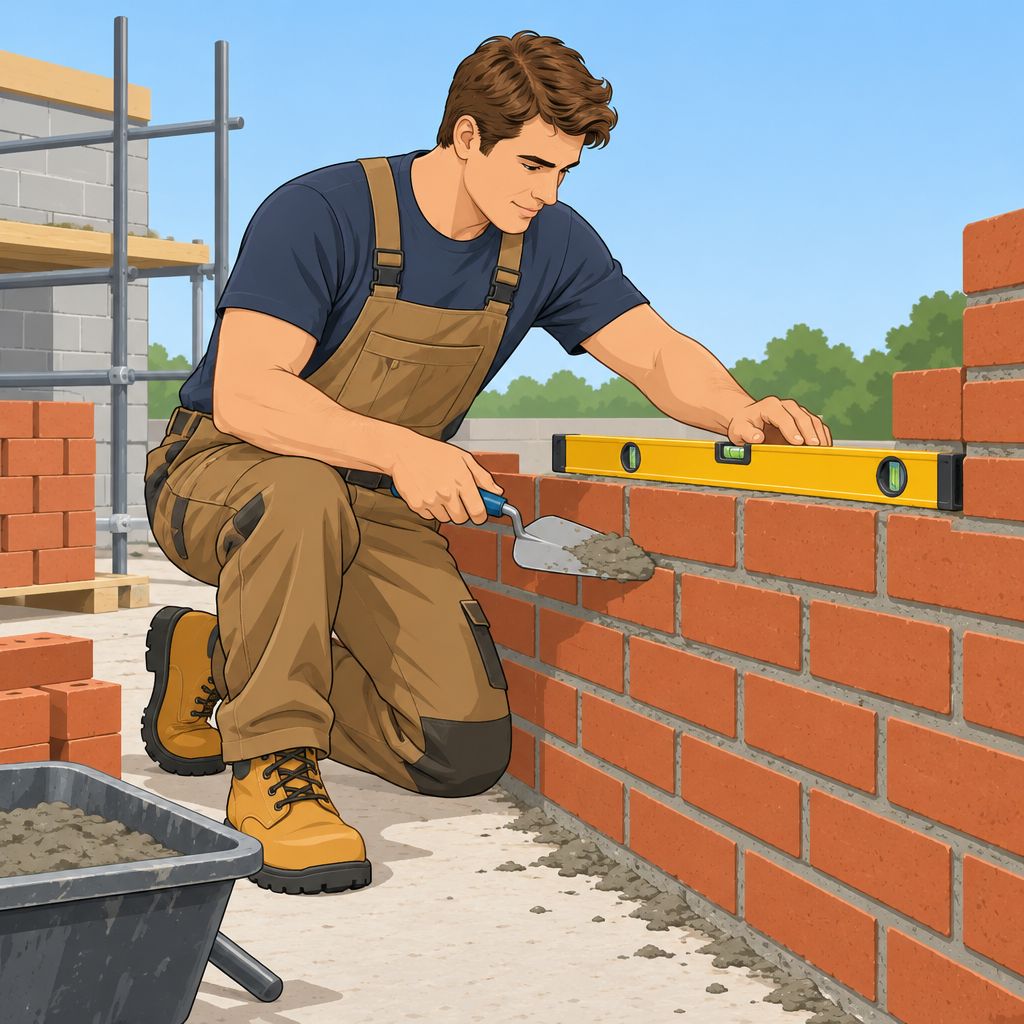
Each brick, stone, or block requires accurate placement for structural integrity and visual appeal.
Therefore, masons can strengthen this skill through deliberate checks and focused work.
Masons can develop a keen eye for detail by following several practical habits.
- Measure twice and cut once to reduce errors.
- Check the alignment and spacing of every brick or stone.
- Use a level and plumb line to maintain straight, level surfaces.
- Step back regularly to assess the project’s progress.
- Practice mindfulness and focus on each task without distractions.
Furthermore, attention to detail can significantly improve the quality of completed masonry projects.
- Consistent mortar joints make a brick wall look more attractive.
- Precise cuts help bricks fit tightly together for a sturdy structure.
- Evenly spaced stones create a smooth and welcoming pathway.
- Careful architectural details showcase the mason’s craftsmanship and skill.
- Small overlooked imperfections can cause costly repairs later.
Attention to detail does not require perfection in every moment.
Instead, it demonstrates a mason’s commitment to excellence throughout the work.
You Might Also Like: How to Protect Your Roof During Storm Season
Common Challenges Masons Face on the Job
Masons often face unexpected obstacles that can affect their schedules and workmanship.
Before choosing a remedy, they should identify each condition and its likely cause.
Meanwhile, careful planning helps them address common site challenges safely and efficiently.
- Uneven surfaces require precise leveling and alignment.
- Cracks or gaps in existing structures require careful repairs.
- Limited access can restrict movement around work areas and materials.
- Changing weather conditions can affect how masonry materials cure.
Strategies for Solving Masonry Problems
After assessing a problem, masons can select a practical response for the work area.
Next, they should discuss difficult conditions with colleagues or supervisors for additional perspectives.
Finally, a systematic process can help them deliver thorough and lasting repairs.
- Assess the situation carefully to understand the problem’s root cause.
- Consult colleagues or supervisors for additional insights and perspectives.
- Use suitable tools and techniques to address the issue effectively.
- Follow a systematic approach to create a thorough solution.
Quick and Creative Thinking in Masonry
Quick thinking helps masons prevent delays when unexpected problems arise.
They must adapt their plans while protecting the quality of their work.
Additionally, creativity can help them find efficient solutions to complex masonry issues.
By developing these abilities, masons can approach obstacles with confidence and professionalism.
Transform Your Career Today
Unlock a personalized career strategy that drives real results. Get tailored advice and a roadmap designed just for you.
Start NowDiscover More: Day in the Life of a Professional Groundskeeper
Communication Skills for Masonry Projects
Clear communication helps masons convey instructions, information, and expectations to team members and clients.
It keeps everyone aligned, reduces misunderstandings, and supports a harmonious working environment.
When team members and clients understand project objectives, they can collaborate toward a shared goal.
Moreover, effective communication builds trust and transparency, strengthening relationships and improving project outcomes.
Ways to Improve Communication Skills
Masons can improve communication by listening carefully, speaking plainly, showing empathy, requesting feedback, and adapting their approach.
These practices help workers address different needs and preferences.
Additionally, consistent communication makes project expectations easier to understand.
- Active Listening: Pay attention without interrupting, paraphrase important points, and ask clarifying questions.
- Clarity and Conciseness: Speak directly and avoid jargon that could confuse others.
- Empathy: Consider other perspectives and acknowledge their feelings appropriately.
- Feedback: Ask team members and clients whether they understood your message correctly.
- Adaptability: Adjust your communication style according to each audience’s needs and preferences.
Communication Practices That Improve Project Outcomes
Good communication can improve several aspects of masonry projects.
Team members can identify concerns sooner and coordinate their responsibilities more effectively.
Clients also receive clearer updates, while teams gain better support for resolving disagreements.
- Efficient Problem-Solving: Clear discussions help teams identify issues and find solutions quickly.
- Increased Productivity: Clear roles and responsibilities help teams complete tasks efficiently.
- Client Satisfaction: Effective communication helps manage expectations and address client needs.
- Conflict Resolution: Good communication prevents misunderstandings and helps resolve conflicts early.
- Strong Team Dynamics: Clear communication encourages collaboration and unity during project completion.
Therefore, masons who communicate clearly can strengthen teamwork and client relationships.
They can also support successful project completion through shared understanding.
Find Out More: Effective Communication Skills for Janitors and Custodians
Technical Knowledge for Masonry Work
Masons need familiarity with the tools and materials used in masonry work.
These resources include trowels, hammers, levels, and cement mixtures.
Additionally, masons should follow new industry trends and techniques.
This knowledge helps them deliver quality work that meets modern standards.
To strengthen their technical knowledge, masons can attend workshops and take courses.
They can also participate in industry events and read books or online resources.
Moreover, learning about new tools and materials supports efficient, durable construction projects.
Understanding updated techniques allows masons to improve their skills and serve clients better.
Continuous learning supports success in the masonry field.
By tracking advances in technology and building materials, masons can adapt to changing demands.
Furthermore, networking with other professionals encourages knowledge exchange.
These connections help masons learn from each other’s experiences.
A strong professional network can also provide valuable insights and growth opportunities.
Delve into the Subject: The Importance of Roof Ventilation and Insulation
Time Management Skills
- Masonry projects move quickly, so masons must manage time efficiently to meet deadlines.
- Effective time management involves prioritizing tasks and setting realistic goals.
- Successful masons plan each day, assign time for tasks, and monitor progress.
The Fast-Paced Nature of Masonry Projects
Masonry projects can demand quick work because clients expect timely completion.
Whether the job involves repairs or large construction, time management supports a mason’s success.
Delays can disrupt the wider project schedule and damage a mason’s reputation.
Therefore, masons must manage their time carefully while maintaining quality work.
Masons who follow schedules and meet deadlines consistently earn trust from clients and contractors.
That reliability can encourage repeat business and referrals.
Strategies for Effective Time Management
- Prioritize critical tasks and give them immediate attention.
- Set realistic goals by dividing large projects into smaller, achievable tasks.
- Create a daily schedule with task periods and buffer time for delays.
- Use project management tools or apps to organize tasks and deadlines.
- Delegate tasks according to each team member’s strengths and expertise.
- Monitor progress regularly, adjust timelines, and address possible delays.
How Time Management Supports Professional Success
- Efficient planning can help masons complete projects ahead of schedule.
- Careful scheduling helps prevent delays that create extra expenses or penalties.
- Consistent deadline management builds client trust and supports future referrals.
- Good time management can improve work-life balance by reducing unnecessary overtime.
Teamwork and Collaboration
- Working well with others helps masons succeed in team settings.
- Effective communication supports smooth workflows and successful project completion.
- Building trust creates a positive environment and encourages collaboration.
Ways to Strengthen Teamwork Skills
- Active listening helps masons understand team members’ perspectives and concerns.
- Open and honest communication helps address issues and conflicts.
- Recognizing contributions boosts morale and motivates each team member.
- Adaptability helps masons accommodate different working styles and preferences.
Teamwork Practices That Support Project Success
- Teams can coordinate tasks efficiently to complete each project phase on time.
- Collaborative problem-solving helps teams overcome challenges and find innovative solutions.
- Team members can support one another while maintaining high workmanship standards.
- Celebrating achievements and milestones strengthens unity and shared accomplishment.
Safety Awareness
Masonry work involves inherent risks that require constant safety awareness.
Masons must recognize these hazards before starting each task.
Safety awareness helps masons choose appropriate precautions during their work.
Inherent Risks in Masonry Work
Masonry work includes heavy lifting, elevated tasks, and sharp tool use.
These conditions can cause accidents when workers neglect proper precautions.
Handling bricks and stones can strain muscles and cause back injuries.
Transform Your Career Today
Unlock a personalized career strategy that drives real results. Get tailored advice and a roadmap designed just for you.
Start NowMasons can reduce this risk by using proper lifting techniques.
Scaffolding and ladders create fall hazards that can cause serious injuries or fatalities.
Sharp tools, including chisels and saws, also require precision and focus.
Careless tool handling can cause cuts, infections, or other complications.
Ways to Prioritize Workplace Safety
Always wear personal protective equipment to reduce the risk of injury.
Use hard hats, safety glasses, gloves, and steel-toed boots when working.
Before use, inspect scaffolding and ladders for proper setup and good condition.
Regular breaks help prevent fatigue from impairing judgment and coordination.
Additionally, stay focused and avoid distractions, including cell phones and loud music.
Importance of Following Safety Protocols
Following safety protocols protects masons and everyone else on the job site.
Safety guidelines help prevent accidents, injuries, and fatalities.
They also create a safer working environment for everyone.
Failure to prioritize safety can lead to fines, lawsuits, and reputational damage.
Those consequences may also reduce future work opportunities.
Therefore, masons should make safety their highest priority throughout their careers.
Core Masonry Skills for Accurate Work
Masons measure and cut materials accurately so construction pieces fit properly.
They interpret blueprints and plans to understand designs and execute required work.
Masons lift heavy materials and work in challenging conditions, so the job demands physical endurance.
They check each construction step carefully because small mistakes can affect the finished result.
Ongoing Skill Development for Masonry Success
Masons should continue developing these skills as new techniques and materials enter the construction industry.
Regular skill development helps them remain competitive and produce high-quality work.
By refining their methods, masons can support long-term success in the industry.
- Precision in measuring and cutting materials accurately.
- Ability to interpret blueprints and plans effectively.
- Strong physical stamina and endurance.
- Attention to detail throughout the construction process.