




Introduction
Print remains vital across industries, including marketing, education, and publishing.
Organizations use printed materials to communicate, advertise, and educate.
Effective print production strengthens brand visibility and audience engagement.
Within print production, two important roles include Print Production Manager and Print Designer.
These professionals contribute different skills throughout the print process.
Print Production Managers oversee operational responsibilities.
They ensure projects progress smoothly from conception through completion.
In contrast, Print Designers manage the creative aspects of production.
They create visually compelling designs that attract target audiences.
This article explains the differences and similarities between these two roles.
Understanding their responsibilities clarifies each position’s importance in print production.
Ultimately, both professionals require collaboration and coordination to achieve successful results.
Definition of Print Production Manager
A Print Production Manager oversees the entire printing process.
This role blends creativity, organization, and technical knowledge.
The manager ensures projects finish on time and meet quality standards.
They coordinate with various teams to achieve these goals.
A successful Print Production Manager bridges design and execution.
Description of the Role and Responsibilities
The primary responsibilities of a Print Production Manager include several important duties.
- Project Coordination: The manager oversees the printing process from start to finish.
- Budget Management: The manager creates and oversees budgets for print projects.
- Vendor Relations: The manager develops and maintains relationships with printing vendors.
- Quality Control: The manager ensures printed materials meet the company’s quality standards.
- Timeline Management: The manager creates and monitors timelines to meet project deadlines.
- Problem Solving: The manager troubleshoots problems during the printing process.
The Print Production Manager takes responsibility for delivering finished products on time and within budget.
They work closely with designers and sales teams throughout each project.
This collaboration keeps print materials aligned with brand guidelines and client specifications.
Key Skills Required
A successful Print Production Manager should possess several key skills.
- Project Management: They manage multiple projects simultaneously and stay organized.
- Technical Knowledge: They understand different printing processes.
- Attention to Detail: They notice small errors before production begins.
- Communication Skills: They communicate effectively with team members and vendors.
- Negotiation Skills: They negotiate prices and contracts with printing vendors.
- Software Proficiency: Familiarity with Adobe Creative Suite helps them perform effectively.
These skills help Print Production Managers succeed in their roles.
They navigate print industry complexities and lead their teams effectively.
Typical Work Environment and Industries Employed
Print Production Managers typically work in offices or print facilities.
They often spend time on production floors, overseeing the printing process.
Several industries employ Print Production Managers for specialized print projects.
- Publishing: They oversee the printing of books and magazines.
- Advertising: They manage printed materials for campaigns and promotions.
- Marketing: They support brochures, flyers, and other marketing materials.
- Packaging: They oversee the production of product packaging.
- Merchandising: They ensure promotional items meet printing specifications.
In these environments, Print Production Managers collaborate with graphic designers, marketing teams, and external vendors.
They ensure print materials align with brand standards and serve their intended purposes.
Definition of Print Designer
A print designer creates visual content for printed materials.
This professional combines artistic talent with technical design skills.
Print designers shape how readers receive information on paper.
Responsibilities of a Print Designer
Print designers handle projects across many industries and printed formats.
They balance creative ideas with practical production requirements.
They also guide projects from early concepts through final artwork.
- They create visual concepts that communicate important messages.
- They develop layouts and choose typography that improves readability.
- They apply brand guidelines consistently across printed materials.
- They discuss client visions and requirements during collaboration.
- They prepare accurate, high-quality artwork for printing.
Every project requires careful decisions about color, typography, and spatial arrangement.
Furthermore, designers engage viewers while presenting essential information clearly.
They must combine visual appeal with accurate communication.
Skills Required for Print Designers
Successful print designers rely on several creative and technical abilities.
These abilities help them satisfy client needs and production requirements.
Transform Your Career Today
Unlock a personalized career strategy that drives real results. Get tailored advice and a roadmap designed just for you.
Start NowThey also support accurate work throughout each design project.
- Creativity: Designers develop original ideas through imaginative thinking.
- Design software: Designers use InDesign, Photoshop, and Illustrator effectively.
- Print processes: Designers understand digital and offset printing techniques.
- Attention to detail: Designers check accuracy throughout every project.
- Time management: Designers manage multiple projects and deadlines simultaneously.
These skills help designers produce attractive materials that meet client expectations.
Moreover, technical knowledge helps them maintain quality during print production.
Careful planning ensures the final product reflects the client’s vision.
Common Print Media Formats
Print designers create materials for many communication and promotional purposes.
Each format requires design decisions suited to its physical presentation.
Designers adapt their methods according to each project’s specific requirements.
- Brochures: These pamphlets provide detailed product or service information.
- Posters: These large prints promote events and advertising messages.
- Packaging: Designers attract customers while communicating brand messages.
- Business cards: These cards display contact details and brand identity.
- Magazines: Designers create layouts and covers that emphasize visual appeal.
- Flyers: These single-page materials communicate event or service information quickly.
Consequently, a designer’s portfolio can demonstrate experience across varied printing needs.
Different media types demand distinct layouts, visual treatments, and communication strategies.
Print designers use flexible skills to address those differences effectively.
The Value of Print Design
Print designers contribute significantly to marketing and communication efforts.
Their work influences how brands present products and services.
Quality design can increase the perceived value of printed materials.
Well-designed materials can influence customer behavior and decision-making.
Additionally, print design gives brands a tangible presence.
Businesses use brochures, flyers, and other materials to reach audiences effectively.
Print designers connect creativity with practical communication needs.
By mastering design principles and software, they create impactful printed materials.
Delve into the Subject: Voiceover Artist: Handling Technical Difficulties
Educational Requirements for Print Production Managers
Print Production Managers oversee print projects from preparation through completion.
Their work requires technical knowledge, organizational ability, and effective leadership.
Several educational paths can prepare professionals for these responsibilities.
- Bachelor’s Degree in Graphic Arts: This program introduces printing technology and production processes.
- Bachelor’s Degree in Business Administration: This degree develops knowledge of business practices and team management.
- Technical Certifications: Certifications from organizations like Printing Industries of America can strengthen professional credibility.
- Associate’s Degree in Print Production: This program covers technical processes from pre-press through post-press work.
Additionally, practical experience helps managers understand production workflows and equipment.
Many professionals begin as production assistants or coordinators.
As they gain experience, they can pursue greater responsibility and advancement.
Educational Paths for Print Designers
Print Designers develop visual concepts for materials that audiences read and use.
Their education builds skills in design principles, software, and project execution.
Formal study and practical work can both support a successful design career.
- Bachelor’s Degree in Graphic Design: This common pathway teaches design theory, software proficiency, and project execution.
- Associate’s Degree in Graphic Design: This two-year program develops essential design and software skills.
- Certificates in Design Software: Adobe Creative Suite certifications can strengthen technical abilities.
- Portfolio Development: A strong portfolio demonstrates creativity and practical design capabilities.
Internships and freelance assignments give designers valuable experience with client needs.
Moreover, practical assignments help designers refine their creative and technical skills.
These experiences also deepen their understanding of professional design work.
Continuing Education and Professional Development
Print technology and design practices continue to change.
Therefore, professionals in both fields must continue developing their knowledge.
Ongoing learning helps them maintain relevant skills and respond to industry changes.
- Workshops and Seminars: These events provide practical instruction about new technologies and practices.
- Online Courses: Platforms like Coursera and Udemy offer specialized learning opportunities.
- Conferences: Industry conferences support networking and exposure to new developments.
- Professional Organizations: Groups like the American Institute of Graphic Arts provide resources and networking opportunities.
Print Production Managers can strengthen their careers through project management and leadership training.
Project management certifications can prepare them to manage larger projects and teams.
Meanwhile, Print Designers can explore new software, trends, and design methodologies.
Design expos can also encourage fresh ideas and support creative growth.
Finally, professional networking can create mentoring opportunities and encourage knowledge sharing.
Both roles benefit from strong educational foundations and consistent professional development.
Transform Your Career Today
Unlock a personalized career strategy that drives real results. Get tailored advice and a roadmap designed just for you.
Start NowBy embracing lifelong learning, professionals can approach future print industry challenges with greater confidence.
You Might Also Like: How to Balance Multiple Media Platforms
Daily Responsibilities and Workflow
Print production depends on coordinated work between managers and designers.
Each professional handles different tasks throughout the project.
Together, they help create accurate, attractive, and timely printed materials.
Print Production Manager Responsibilities
A Print Production Manager oversees production from the beginning through completion.
The role combines scheduling, coordination, quality control, budgeting, and problem solving.
Daily work requires communication with clients, vendors, sales teams, and production staff.
- Coordinate with clients to understand their print requirements.
- Create and manage production schedules that support project deadlines.
- Collaborate with vendors to source materials and equipment.
- Monitor printing processes to maintain quality standards.
- Resolve production issues quickly and efficiently.
- Ensure compliance with safety regulations and industry standards.
- Prepare budgets and manage production costs.
- Update sales and marketing teams about project progress.
Print Designer Responsibilities
A Print Designer creates visual artwork for printed materials.
Their creative decisions influence how audiences perceive printed products.
Their workflow combines client communication, concept development, revision, and technical preparation.
- Meet with clients to gather design requirements and feedback.
- Create concept art, layouts, and mockups for print materials.
- Use graphic design software to develop visual elements.
- Incorporate client feedback into design revisions.
- Prepare final files according to production specifications.
- Share ideas with creative teams across different projects.
- Track design trends and software advancements.
- Prepare presentations that showcase concepts and designs.
Collaboration Across the Project Lifecycle
The manager and designer collaborate throughout every project stage.
This teamwork keeps designs practical and supports smooth production.
Clear communication helps both professionals address creative and technical requirements.
- During initial meetings, both professionals discuss scope, timelines, budgets, and design expectations.
- During concept development, the designer creates ideas for the proposed materials.
- The manager provides guidance about technical limits, materials, and production capabilities.
- During design approval, the designer presents mockups for practical review.
- The manager evaluates material use, printing methods, and cost implications.
- After approval, the designer prepares files with suitable dimensions, colors, and formats.
- The manager reviews final files for potential production problems.
- During production, the manager monitors output and coordinates with press operators.
- Frequent checks allow the team to correct discrepancies quickly.
- After printing begins, the manager examines samples for quality assurance.
- The manager gives the designer feedback when adjustments become necessary.
- After completion, the manager coordinates timely delivery to clients.
- Both professionals collect client feedback to improve future collaboration.
Tools and Software Used
Both roles use tools that support planning, communication, design, and quality control.
Some tools overlap, but each professional emphasizes different functions.
These tools help teams manage information and complete print projects effectively.
Common Tools for Print Production Managers
Production managers use planning and reporting tools to control project progress.
They also use communication platforms to coordinate with different teams.
Quality checklists help them monitor standards during production.
- Project management software, such as Trello and Asana, supports scheduling and workload allocation.
- Estimating tools support accurate cost projections.
- Collaboration platforms, such as Slack and Microsoft Teams, support team communication.
- Quality assurance checklists help maintain production standards.
- Reporting tools help analyze production efficiency and costs.
Common Tools for Print Designers
Designers rely on software that supports artwork creation and technical preparation.
They also manage colors, fonts, layouts, and shared project files.
These resources help designers deliver organized files for production.
- Adobe Photoshop, Illustrator, and InDesign support print artwork creation.
- Figma and Sketch support wireframes and layout prototypes.
- Color management software supports accurate printed colors.
- Google Drive and Dropbox support file sharing and collaboration.
- Font management software organizes design font libraries.
Distinct responsibilities allow managers and designers to support different parts of print production.
Their coordinated workflows connect creative decisions with practical production needs.
This partnership supports compelling printed materials and consistent project quality.
Find Out More: Film Producer's Insight: From Script to Screen
Career Paths and Opportunities
Print professionals can pursue several career paths as their experience and industry knowledge grow.
Managers may advance through leadership, operations, quality control, or consulting roles.
Designers can develop creative expertise, pursue specialized roles, or work independently.
Potential Career Progression for Print Production Managers
Print Production Managers oversee production from initial concepts through completed projects.
As they gain experience, these professionals develop insights that support advancement into several roles.
They can also pursue technology-related leadership positions as printing methods continue evolving.
- Senior Print Production Manager: Experienced professionals manage larger teams and oversee more complex projects.
- Print Production Director: This role adds strategic responsibility for print operations and organizational planning.
- Operations Manager: Operations Managers optimize processes and improve production efficiency across departments.
- Quality Control Manager: These specialists maintain quality assurance standards throughout print production.
- Consultant: Experienced managers advise businesses about improving production workflows.
Digital printing and publishing can provide additional leadership opportunities for adaptable managers.
Professionals must remain willing to learn emerging techniques and adjust to technological changes.
Advancements in printing technology may create further opportunities for experienced production leaders.
Career Trajectories for Print Designers
Print Designers manage creative elements such as layout, typography, and color theory.
As their careers progress, designers may specialize or broaden their creative responsibilities.
Their interests and talents often influence the direction of their professional development.
- Junior Designer: Entry-level designers learn from experienced mentors and build professional portfolios.
- Mid-level Designer: These designers manage projects independently and collaborate with clients and creative professionals.
- Senior Designer: Senior designers lead projects, provide creative direction, and mentor junior colleagues.
- Creative Director: Creative Directors oversee design teams and shape company-wide visual strategies.
- Freelance Designer: Freelancers gain flexibility while working across diverse projects.
- UX/UI Design Specializations: Some designers apply print skills to digital products through UX/UI work.
- Marketing and Branding Specialist: Designers use visual skills to create branding and marketing materials.
Designers can select paths that match their creative strengths and professional interests.
Transform Your Career Today
Unlock a personalized career strategy that drives real results. Get tailored advice and a roadmap designed just for you.
Start NowSpecialization can increase their value as market expectations and design tools change.
Many designers combine print expertise with digital, marketing, or branding capabilities.
Job Market Trends and Demand for Each Profession
The job market for Print Production Managers and Print Designers continues to change.
Industry trends influence demand, required skills, and opportunities for professional growth.
Understanding these trends helps aspiring professionals make informed career decisions.
Print Production Managers
Businesses increasingly seek managers who streamline production and control costs.
Knowledge of lean production processes can help managers stand out.
Digital printing technology increases the value of managers who understand digital workflows.
Environmental priorities also increase demand for managers familiar with sustainable materials and processes.
Growing e-commerce activity supports demand for effective printed marketing materials.
Managers who create impactful print campaigns can attract attention in competitive markets.
Print Designers
Digital design skills can strengthen a Print Designer’s marketability while print remains important.
Designers who understand both print and digital work can access more opportunities.
Companies increasingly value strong branding and visually effective brand elements.
Freelancing gives designers flexibility, creative freedom, and access to varied projects.
Print Designers can work across industries, including fashion and corporate branding.
Both professions offer advantages and challenges that require careful career planning.
Aspiring professionals should research relevant industries and pursue useful networking opportunities.
Continuous learning helps both managers and designers adapt as technology evolves.
Both career paths offer meaningful growth for professionals who embrace change and maintain their passion for print.
Uncover the Details: Freelance Voiceover Artist: Pros and Cons
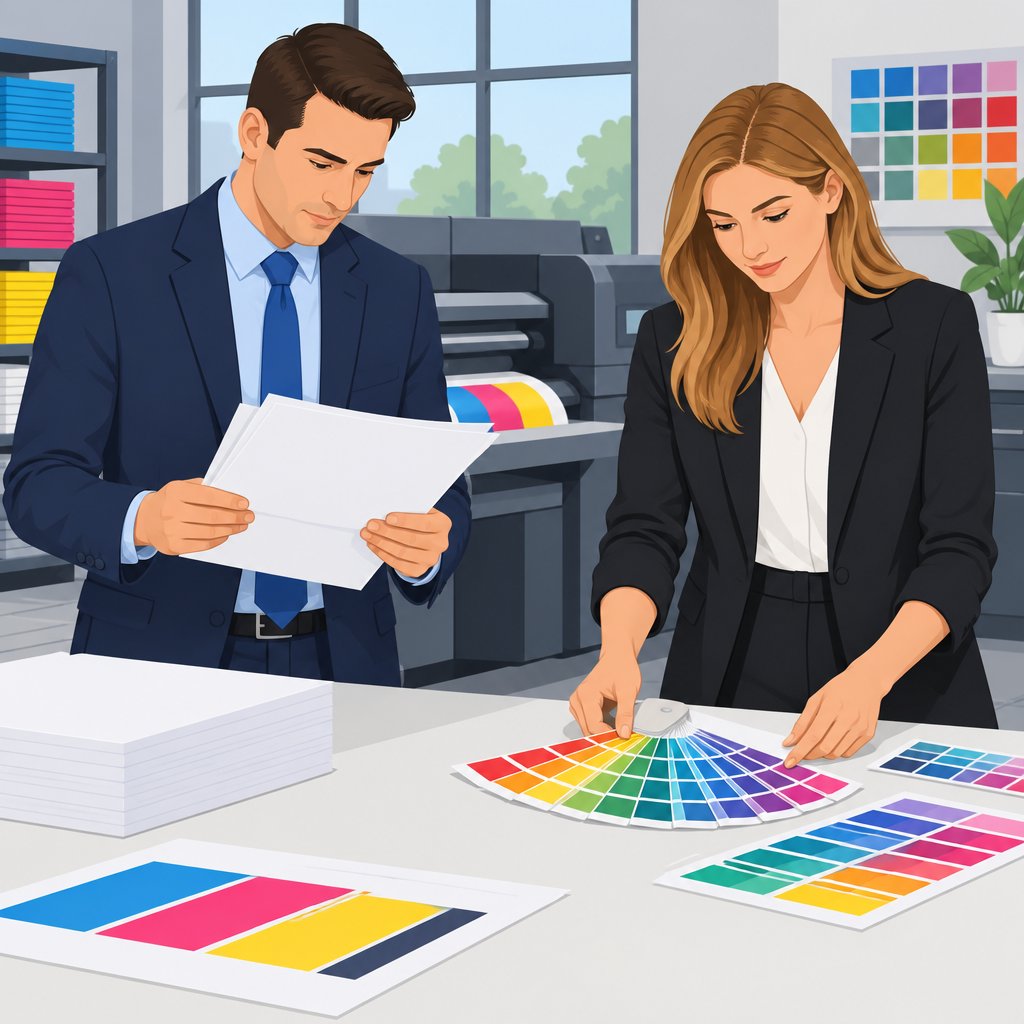
Interplay Between Print Production Managers and Print Designers
Print production managers and designers contribute different skills to every print project.
Their collaboration connects creative ideas with practical production requirements.
Clear communication helps both professionals deliver accurate, effective, and visually engaging printed materials.
Collaboration and Communication in Print Projects
Effective collaboration creates a smoother workflow between production managers and designers.
Regular communication helps both professionals address challenges before they affect the project.
Scheduled check-ins keep everyone aligned throughout the project timeline.
- Streamlined Work Process: Clear communication helps both roles manage transitions from design to production.
- Problem Solving: Teamwork allows professionals to identify and resolve potential issues early.
- Resource Management: Production managers help designers select materials that fit project budgets.
- Feedback Loop: Production feedback helps designers make stronger choices for printed materials.
Teamwork Across Successful Print Projects
Successful print projects often depend on close cooperation between creative and production professionals.
Each professional applies specialized knowledge to strengthen the final result.
The following examples show how shared expertise supports different project goals.
- Corporate Branding Campaign: Designers created branding materials while production managers selected suitable materials and printing techniques.
- Event Collateral for a Conference: Designers developed conference materials while production managers scheduled efficient print runs within budget.
- Product Packaging Design: Designers shaped the packaging appearance while production managers sourced eco-friendly material options.
- Promotional Merchandise: Designers developed merchandise concepts while production managers evaluated mass-production feasibility.
Learning Through Shared Expertise
Designers and production managers can improve their work by learning from each other’s experience.
Shared learning builds understanding between creative decisions and production requirements.
Both roles should actively seek opportunities to exchange knowledge.
- Workshops and Training Sessions: Joint sessions help designers learn production techniques and managers understand design processes.
- Cross-Department Shadowing: Shadowing gives each professional direct insight into the other role’s challenges.
- Project Debriefings: Reviewing completed projects helps teams identify effective practices and improvement opportunities.
- Design and Production Guidelines: Shared guidelines create consistency between design preparation and production execution.
Building a Culture of Partnership
Organizations can strengthen collaboration by treating designers and production managers as project partners.
Shared expectations improve accountability and encourage stronger communication.
Recognition and cooperation also help teams maintain productive working relationships.
- Encourage Open Communication: Open dialogue removes barriers between design and production teams.
- Recognize Joint Achievements: Celebrating shared successes builds morale and supports future teamwork.
- Set Joint Objectives: Shared goals align responsibilities and strengthen accountability.
- Invest in Technology: Collaborative software can improve communication and project management.
Shared Standards for Stronger Print Projects
Strong cooperation connects creative thinking with reliable print production.
Designers and production managers achieve better results when they combine their knowledge.
This partnership supports innovation, efficiency, and excellence across print projects.
Choosing Between Print Production and Design
Print Production Managers and Print Designers serve distinct, complementary roles in the print industry.
Transform Your Career Today
Unlock a personalized career strategy that drives real results. Get tailored advice and a roadmap designed just for you.
Start NowProduction Managers oversee printing processes, schedules, budgets, and project coordination.
Meanwhile, Designers develop visual concepts that support client goals.
Both roles require attention to detail and strong communication.
Successful collaboration connects creative ideas with production requirements.
Designers rely on managers for technical guidance during projects.
In turn, managers depend on designers to deliver creative work that satisfies client expectations.
When choosing a career, consider your strengths and interests.
Creative problem-solving may indicate that design suits you well.
Conversely, organizing and managing projects may make production a better fit.
Both professionals influence the quality of the final product.
Recognizing each role supports a more efficient workflow.
Your passion and aptitude can guide your career choice.
Additional Resources
Google search results for Print Production Manager vs. Print Designer Media and Communication
Bing search results for Print Production Manager vs. Print Designer Media and Communication


