




IoT-Enabled Agricultural Management
IoT connects agricultural devices and systems, helping farmers monitor and manage crops more effectively.
Sensors, drones, and software collect data that improves agricultural decision-making.
These technologies increase farming efficiency and support more sustainable practices.
Furthermore, IoT enables precise monitoring of environmental conditions.
Farmers can track soil moisture, temperature, and crop health in real time.
As a result, they can improve yields and manage resources more effectively.
Additionally, IoT solutions reduce resource waste by optimizing water and fertilizer usage.
For example, smart irrigation systems adjust water supplies according to soil moisture levels.
This approach reduces water consumption while keeping crops adequately hydrated.
Moreover, predictive analytics helps farmers anticipate pest outbreaks and weather impacts.
These systems analyze historical and real-time data to identify potential agricultural risks.
Consequently, farmers can intervene promptly and reduce potential losses.
Meanwhile, connected devices continuously relay information across agricultural networks.
This connectivity strengthens collaboration among farmers, agronomists, and suppliers.
Shared insights can improve farming practices and increase productivity.
IoT also improves supply chain transparency by tracking produce from farms to tables.
Consumers can use this information to understand where their food originates.
Therefore, sensor-based tracking supports quality, safety, and consumer trust.
Ultimately, IoT transforms agriculture by improving efficiency, sustainability, and transparency.
As developers expand these applications, they support a more resilient agricultural ecosystem.
Overview of IoT in Agriculture
The Internet of Things connects devices that collect and exchange data.
In agriculture, IoT includes smart devices that help farmers improve daily practices.
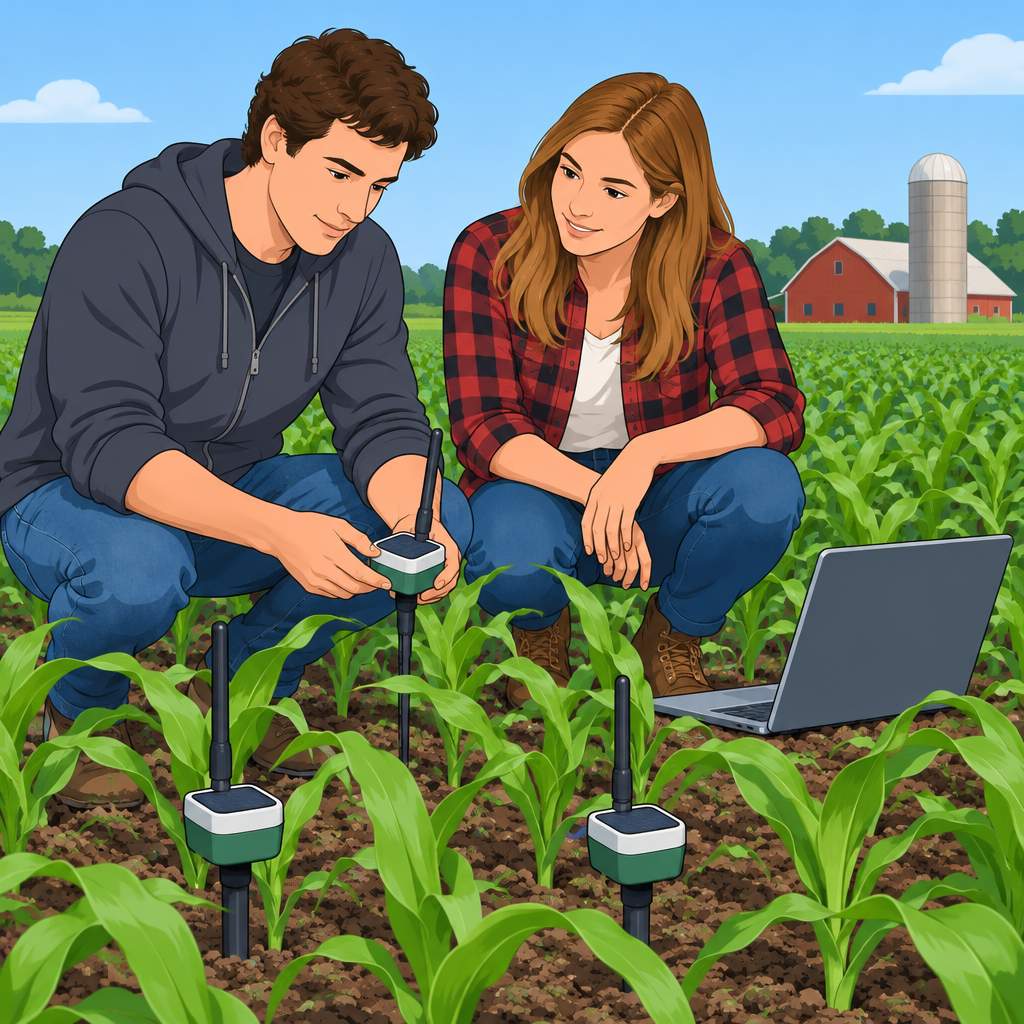
These devices monitor soil moisture, temperature, and crop health.
Through real-time data collection, farmers can make informed decisions.
This approach transforms traditional farming into a data-driven industry.
Benefits of Using IoT Devices in Farming
IoT devices offer several advantages for agricultural operations.
These benefits improve productivity, sustainability, and profitability across farming practices.
- Improved Resource Management: IoT devices monitor water usage and optimize irrigation.
- Increased Crop Yields: Continuous monitoring helps farmers identify suitable harvesting times.
- Pest and Disease Control: Smart sensors detect infestations early and support timely interventions.
- Data-Driven Decisions: Farmers analyze data to improve efficiency and reduce resource costs.
- Remote Monitoring: Farmers monitor fields remotely and respond quickly to changing conditions.
- Cost Reduction: Efficient resource allocation can lower operational costs and increase profitability.
Examples of IoT Applications in Agriculture
IoT applications demonstrate how technology supports agricultural innovation and efficiency.
Each application addresses specific needs across different farming activities.
Together, these tools help farmers manage crops, animals, equipment, and products.
- Smart Irrigation Systems: Soil moisture sensors adjust irrigation schedules and provide crops with adequate water.
- Precision Agriculture: GPS and IoT devices reveal field variability and guide efficient input use.
- Livestock Monitoring: Wearable devices track animal health, location, feeding habits, and illnesses.
- Climate Monitoring: Weather stations collect local conditions that influence crop growth.
- Automated Machinery: Connected tractors and drones perform tasks autonomously while reducing labor demands.
- Supply Chain Management: IoT devices track products from farms to markets and improve traceability.
These applications create opportunities for developers and farmers.
Hardware and software integration provides a foundation for innovative agricultural solutions.
As technology advances, IoT continues to reshape agricultural practices.
Future Directions for IoT in Agriculture
Future IoT developments will provide farmers with increasingly sophisticated tools.
Several trends will influence how agricultural technology develops.
- Integration with AI: AI will improve IoT data analysis through predictive analytics and automation.
- Increased Use of Drones: Sensor-equipped drones will provide aerial monitoring and real-time field data.
- Sustainable Practices: Precision techniques will help IoT support environmental preservation.
- Blockchain Technology: Blockchain integration will improve supply chain transparency and consumer trust.
- Enhanced User Interfaces: User-friendly interfaces will help farmers interpret data and act quickly.
- Affordability and Accessibility: Lower technology costs may help more smallholder farmers adopt IoT devices.
IoT creates significant opportunities for developers working in agriculture.
Demand for innovative solutions continues to grow across the industry.
By focusing on user needs, developers can improve productivity and sustainability.
These advances can also support global food security.
Rising Demand for Agricultural IoT Solutions
Agriculture faces fluctuating weather patterns, labor shortages, and growing sustainability requirements.
Transform Your Career Today
Unlock a personalized career strategy that drives real results. Get tailored advice and a roadmap designed just for you.
Start NowConsequently, farmers increasingly use technology to improve productivity and manage resources.
IoT solutions help farmers address these challenges through connected monitoring and automated processes.
Farmers want precision tools that increase crop yields and reduce resource waste.
Through sensors and data analytics, IoT systems deliver timely insights about farm conditions.
Several agricultural applications continue to drive demand for these technologies.
- Soil Monitoring: Sensors measure soil moisture and nutrient content.
- Weather Tracking: Connected devices provide farmers with real-time weather updates.
- Pest Detection: Smart traps alert farmers when pests become active.
- Irrigation Management: Automated systems adjust watering according to soil moisture data.
- Crop Health Monitoring: Drones and imaging tools assess crop conditions remotely.
These applications improve operational efficiency across many farming activities.
Therefore, developers can pursue varied careers while creating practical agricultural technologies.
Innovation Opportunities for Agricultural IoT Developers
Agricultural IoT gives developers a broad environment for technical creativity.
They can design applications that address specific farming practices and operational challenges.
Because agricultural needs vary, developers can explore multiple specialized technology areas.
- Crop Management: Developers can create software that tracks soil conditions and plant diseases.
- Livestock Management: Wearable devices can monitor animal health and behavior.
- Sustainable Farming: Energy-efficient systems can help reduce farming carbon footprints.
- Supply Chain Management: Platforms can improve transparency and efficiency throughout supply chains.
- Smallholder Farming: Affordable devices can support the needs of small-scale farmers.
Furthermore, artificial intelligence and machine learning can make agricultural IoT devices more responsive.
Developers can build models that forecast yields, identify pest outbreaks, and schedule irrigation.
They must also design interfaces that farmers with limited technical experience can use confidently.
Clear user experiences can encourage wider adoption of agricultural technologies.
Additionally, software developers can collaborate with hardware engineers on more efficient devices.
Such partnerships can support robotics for planting and harvesting activities.
Collaboration Across Agricultural Technology Projects
Successful agricultural IoT projects depend on cooperation among developers, farmers, and specialists.
Farmers explain their workflows and identify practical problems that technology should address.
Meanwhile, agronomists, soil scientists, and extension agents contribute specialized agricultural knowledge.
These relationships help developers create solutions that respond to real farming conditions.
Agricultural communities also provide opportunities to collect feedback and improve product designs.
Universities can support pilot programs that test IoT solutions in working farm environments.
International partnerships can help developers adapt solutions for different crops and cultural practices.
Developers can use several approaches to strengthen collaboration with agricultural stakeholders.
- Workshops and Seminars: Developers can educate farmers about available IoT technologies.
- Field Trials: Teams can test devices directly on operating farms.
- Feedback Surveys: Surveys can measure device usability and perceived effectiveness.
- Co-Creation Projects: Developers can design solutions alongside farmers facing specific challenges.
- Networking Events: Industry events can connect developers with agricultural leaders and innovators.
Through collaboration, developers expand their agricultural knowledge and refine their technical decisions.
They can then create user-centered solutions that support sustainable farming practices.
The sector’s growth creates rewarding opportunities for developers who want to support global food security.
Discover More: Tools and Software for IT Compliance Officers
Challenges in Implementing IoT in Agriculture
IoT adoption offers agricultural advantages, but developers still face substantial implementation challenges.
Understanding these obstacles helps teams create practical and effective agricultural solutions.
These challenges affect both technology providers and farming operations.
Managing the Cost of IoT Devices and Technology
Cost remains one of the foremost challenges in agricultural IoT adoption.
Smaller farms often struggle to allocate enough money for advanced tools.
Several factors contribute to the overall expense.
- Hardware expenses for sensors, drones, and other devices can require substantial upfront investment.
- Custom software development can increase costs when solutions require specialized features.
- Maintenance and updates create ongoing expenses throughout the technology lifecycle.
- Farmers may require training before they can use new technologies effectively.
- Connecting IoT devices with existing systems can demand additional time and funding.
Therefore, developers should create affordable solutions that can scale with farm requirements.
Technology companies and farming organizations can collaborate to identify funding opportunities.
They can also explore government subsidies that encourage agricultural technology adoption.
Improving Connectivity in Rural Farming Areas
Connectivity presents another significant challenge for agricultural IoT implementation.
Many rural areas lack reliable internet access for connected devices.
Consequently, weak connections can limit IoT applications and disrupt their functions.
Transform Your Career Today
Unlock a personalized career strategy that drives real results. Get tailored advice and a roadmap designed just for you.
Start Now- Limited broadband coverage prevents many rural farmers from accessing high-speed internet.
- Intermittent networks can interrupt data transfers and device operations.
- Geographic features may weaken signals and reduce device performance.
- Building new infrastructure can require considerable time and financial investment.
- Ongoing internet fees can burden smaller farming operations.
Developers can address these limitations by exploring alternative connection methods.
Mesh networks and satellite technology may provide useful connectivity options.
Furthermore, developers can support infrastructure investments from governments and service providers.
Protecting Agricultural Data and Privacy
Data security and privacy create major concerns for agricultural IoT systems.
Connected devices generate large amounts of farm data during regular operations.
Without proper protection, cyberattacks could expose or misuse that information.
- Unauthorized data access can create serious consequences for farming operations.
- Poorly designed IoT devices can provide hackers with easy entry points.
- Weak security protocols can increase exposure to digital threats.
- Farmers may remain uncertain about ownership of collected data.
- Privacy regulations can create complicated compliance responsibilities.
Developers should prioritize security throughout the design of every IoT application.
For example, end-to-end encryption and regular updates can strengthen protection.
Additionally, farmer education can encourage safer data management practices.
Encouraging Farmers to Adopt New Technology
Resistance to change can also slow agricultural IoT adoption.
Farmers may hesitate when unfamiliar technologies appear complex or risky.
Several concerns can influence their willingness to adopt connected tools.
- Some farmers may find IoT technologies intimidating or difficult to understand.
- Limited awareness can prevent farmers from recognizing potential benefits.
- Long-standing traditions can discourage changes to established practices.
- Distrust in technology can reduce willingness to depend on connected systems.
- Farmers may fear that technology failures could harm their operations.
Developers can reduce resistance through education and direct outreach.
Demonstrating practical benefits can help farmers evaluate these technologies confidently.
Pilot programs can also present successful applications and encourage broader adoption.
Creating Practical Paths for Agricultural IoT Adoption
Agricultural IoT implementation requires solutions that address financial, technical, and human concerns.
Developers can improve adoption by combining affordability, reliable connectivity, and strong security.
They can also build trust through education, outreach, and practical demonstrations.
As agriculture evolves, these efforts can support the continued integration of IoT technologies.
Discover More: IT Change Management Best Practices and Tips
Impact of IoT on Agricultural Practices
IoT technology continues to transform modern agriculture.
Farmers use smart devices to improve productivity and sustainability.
These tools support precision farming, resource optimization, and informed decision-making.
Precision Farming and Resource Optimization
IoT helps farmers manage fields according to measured and observed variations.
Consequently, farmers can direct resources toward areas that need them most.
This approach improves productivity while conserving important agricultural resources.
- Resource Efficiency: Sensors report water use, soil conditions, and crop health in real time.
- Yield Monitoring: Smart devices track crop growth and yields throughout production stages.
- Targeted Treatment: Sensors guide fertilizer and pesticide applications, reducing waste and environmental effects.
- Water Management: Smart irrigation systems adjust supplies according to soil moisture levels.
- Automated Machinery: Drones and autonomous tractors collect information and complete agricultural tasks.
As a result, precision farming reshapes traditional agricultural practices.
Monitoring Soil Conditions and Crop Health
IoT devices continuously monitor conditions that influence soil and plant performance.
Farmers receive useful information and can respond to changing field conditions.
Moreover, continuous monitoring supports earlier and more effective interventions.
- Soil Moisture Levels: Sensors identify moisture changes and alert farmers when irrigation becomes necessary.
- Nutrient Levels: Soil sensors assess nutrients and support appropriate fertilizer recommendations.
- Temperature and Humidity: Devices track conditions that can indicate possible pest or disease outbreaks.
- Pest Detection: Smart sensors identify minor infestations before they cause extensive damage.
- Plant Health Monitoring: Drones use imaging technology to evaluate crop vigor and potential stress.
Therefore, monitoring tools give farmers actionable information about field conditions.
IoT-Enhanced Decision-Making for Farmers
IoT technology gives farmers timely information for daily operational decisions.
Farmers can combine current observations with historical information to evaluate potential outcomes.
In addition, predictive tools help farmers prepare for changing agricultural conditions.
- Data-Driven Decisions: Farmers analyze trends, forecasts, and potential yields using collected data.
- Climate Adaptation: Predictive analytics help farmers adjust practices to changing conditions.
- Crop Rotation Planning: Soil and crop information supports stronger rotation plans.
- Market Trends: IoT insights help farmers align production with demand and pricing patterns.
- Risk Management: Alert systems notify farmers about adverse weather and possible losses.
These capabilities improve operational efficiency and help farmers respond quickly.
Future Opportunities for Agricultural IoT
IoT can help farmers increase productivity while conserving vital resources.
Developers can create applications that address the specific needs of modern agriculture.
Ultimately, IoT supports smarter and more sustainable farming practices.
Uncover the Details: How IT Strategy Consultants Stay Ahead of Trends
Several agricultural IoT trends will shape future farming practices.
Transform Your Career Today
Unlock a personalized career strategy that drives real results. Get tailored advice and a roadmap designed just for you.
Start NowThese developments offer farmers and developers new opportunities to improve efficiency.
Moreover, evolving technologies could transform how agricultural teams manage resources and operations.
Artificial Intelligence and Machine Learning in Agricultural IoT
Artificial Intelligence and Machine Learning will strengthen agricultural IoT devices.
These technologies can improve data analysis and help farms operate more efficiently.
Additionally, intelligent systems can support faster and more accurate agricultural decisions.
- Predictive Analytics: AI can forecast weather patterns and crop yields, helping farmers plan operations.
- Precision Farming: AI can determine suitable amounts of water, fertilizer, and pesticides.
- Automated Decision Making: Machine learning can provide timely recommendations for farm interventions.
- Data-Driven Insights: Advanced analytics can reveal useful patterns across diverse agricultural datasets.
Consequently, AI and IoT collaboration can improve accuracy across farming operations.
Farmers can use these tools to optimize processes and support profitability.
Furthermore, intelligent systems can help agricultural teams respond to changing conditions.
IoT Applications for Livestock Management
IoT applications now support livestock management alongside crop production.
Smart animal management tools can improve welfare, productivity, and resource use.
Meanwhile, connected monitoring systems can help farmers identify animal needs earlier.
- Wearable Devices: Sensors can monitor livestock health metrics, location, and behavior.
- Feeding Optimization: IoT tools can track feed consumption and nutritional requirements.
- Breeding Management: Connected tools can monitor reproductive cycles and support breeding outcomes.
- Environmental Monitoring: Devices can measure temperature and humidity inside animal housing.
- Traceability: Blockchain and IoT can improve supply chain transparency for meat products.
These applications can help farmers address animal health and management needs.
As a result, connected livestock systems can support better welfare and productivity.
Farmers can also gain economic benefits from more informed livestock decisions.
Smart Agriculture Platforms for Comprehensive Farm Management
Modern farms need platforms that combine technologies and data sources.
Smart agriculture platforms can present essential information through one accessible interface.
Therefore, these systems can help farmers coordinate complex operations more effectively.
- Centralized Data Management: Platforms can consolidate information from multiple agricultural sources.
- Remote Monitoring: Mobile applications can help farmers monitor fields and livestock remotely.
- Customizable Dashboards: Farmers can view the metrics most relevant to their operations.
- Collaboration Tools: Platforms can improve communication among farmers, agronomists, and suppliers.
- Technology Integration: Smart platforms can connect with drones, satellites, and sensors.
By combining these capabilities, farmers can gain a broader view of farm performance.
Additionally, centralized platforms can support faster communication and operational planning.
These benefits can improve productivity, sustainability, and profitability across agricultural operations.
Future Opportunities for Connected Agriculture
Agricultural IoT will continue developing through stronger connections among devices, data, and intelligent software.
AI, ML, livestock applications, and smart platforms will create new opportunities for agricultural developers.
Farmers can use these innovations to build more efficient and sustainable operations.
Delve into the Subject: Key Tools and Technologies for IT Security Managers
Government Initiatives to Encourage IoT Adoption
Government support plays a crucial role in agricultural IoT adoption.
Financial assistance helps farmers overcome the initial costs of these technologies.
This support can include grants, low-interest loans, and tax incentives.
- Grants: Governments can offer grants for farmers implementing IoT solutions.
- Low-interest loans: These loans help farmers purchase IoT devices, sensors, and software.
- Tax incentives: Tax deductions or credits can encourage farmers to invest in IoT technologies.
Additionally, government agencies can collaborate with educational institutions to provide training programs.
These programs teach farmers about IoT benefits and effective implementation methods.
- Workshops: Hands-on workshops can demonstrate IoT applications within specific agricultural contexts.
- Online courses: Online resources give farmers continuous access to useful knowledge and training.
- Field demonstrations: Real-world demonstrations can build farmer confidence in IoT adoption.
Industry Partnerships and Collaboration
Technology companies and agricultural organizations can partner to foster innovation.
These collaborations can produce IoT solutions that address specific agricultural needs.
- Joint research initiatives: Industry players can work with research institutions on farming technologies.
- Co-development of solutions: Companies can create systems that integrate with existing agricultural practices.
- Knowledge sharing: Partnerships encourage the exchange of ideas, practices, and technological advancements.
Moreover, industry leaders can educate farmers about IoT advantages.
They can also address myths and uncertainties surrounding these technologies.
- Public campaigns: Industry leaders can demonstrate IoT benefits through public campaigns.
- Case studies: Successful examples can help farmers understand potential implementation outcomes.
- Dedicated support teams: Support teams can assist farmers throughout the adoption process.
Regulatory Guidelines for Ethical IoT Adoption
Agricultural IoT adoption also requires clear regulatory guidelines.
These regulations should improve productivity without compromising ethical standards.
Therefore, regulators must address privacy, environmental protection, and technological transparency.
- Data privacy regulations: Guidelines should control how farmers’ data gets collected, stored, and used.
- Wildlife and environmental protection: Regulations should prevent devices from harming wildlife or degrading environments.
- Transparency in technology: Farmers should understand device functions and data usage purposes.
Regulatory bodies can establish standards for responsible agricultural IoT usage.
These standards can address performance, interoperability, and liability.
- Performance benchmarks: Standards should define required performance levels for agricultural IoT technologies.
- Interoperability guidelines: Device communication standards can encourage broader IoT adoption.
- Liability frameworks: Clear liability rules can protect farmers after malfunctions or data breaches.
Benefits of Coordinated IoT Adoption
Governments, industries, and farmers must cooperate to advance agricultural IoT adoption.
Financial assistance, partnerships, and ethical regulations can support more efficient agriculture.
Transform Your Career Today
Unlock a personalized career strategy that drives real results. Get tailored advice and a roadmap designed just for you.
Start NowAs IoT technologies advance, farmers who adopt them may gain substantial benefits.
They can achieve increased productivity, lower operating costs, and more sustainable practices.
Government and industry support remains essential for successful agricultural IoT adoption.
Opportunities for Transforming Agriculture
IoT offers agriculture numerous benefits.
Real-time data collection and analysis can improve farm productivity.
Farmers gain insights into soil health, crop conditions, and weather patterns.
These insights support informed decisions and can improve yield quality and quantity.
Moreover, IoT technology reduces resource waste.
Smart irrigation systems optimize water usage and conserve this vital resource.
Similarly, precision agriculture applies fertilizers and pesticides efficiently.
This approach minimizes costs and environmental impact.
Additionally, IoT improves supply chain management.
Farmers can track produce from farms to markets, supporting freshness and quality.
This tracking reduces food spoilage and increases consumer trust.
Furthermore, IoT devices let farmers monitor operations remotely.
This capability helps farmers manage farms effectively and respond to issues promptly.
Advanced analytics can help farmers anticipate diseases and pest invasions before problems develop.
Developers hold a key position in revolutionizing agriculture.
The demand for innovative IoT solutions continues to grow.
By creating applications and tools for real-world challenges, developers can drive the industry forward.
We encourage developers to harness this potential.
Collaboration among farmers, researchers, and agricultural experts can produce groundbreaking solutions.
Together, these groups can revolutionize agriculture in an increasingly technology-driven world.
IoT in agriculture presents significant opportunities.
Increased efficiency, reduced waste, and enhanced productivity offer substantial benefits.
Therefore, developers can help transform agriculture and support future food security.
Additional Resources
Google search results for IoT in Agriculture: Opportunities for Developers Information Technology
Bing search results for IoT in Agriculture: Opportunities for Developers Information Technology


