




Introduction
A host or hostess in fine dining creates a positive first impression for guests.
Excelling in this role supports smooth operations and exceptional customer service.
Additionally, this position helps establish a welcoming experience from the beginning.
Dress and Appearance
Dress and appearance play a crucial role in fine dining.
These choices help create the right impression for guests.
Therefore, hosts and hostesses should maintain a polished, professional presentation.
Dress Code Expectations
- Always follow the restaurant’s dress code, which typically includes formal suits or dresses.
- Keep your attire clean, well-fitted, and free from wrinkles or stains.
- Choose neutral or understated colors that communicate elegance and sophistication.
- Use minimal jewelry and avoid accessories that might jingle during work.
- Wear comfortable, professional footwear that supports efficient movement without sacrificing style.
Personal Grooming Tips
- Maintain excellent hygiene by showering daily, using mild deodorant, and brushing your teeth regularly.
- Keep your hair neat and styled for a professional, manageable appearance throughout your shift.
- Keep your nails clean and trimmed, and avoid brightly colored polish or long artificial nails.
- Choose minimal makeup that enhances your features without appearing overly dramatic.
- Maintain good posture, make eye contact, and greet guests with a welcoming smile.
Knowledge of the Restaurant
Strong restaurant knowledge helps hosts and hostesses answer questions confidently.
This knowledge supports clear communication throughout the guest experience.
Furthermore, informed hosts and hostesses represent the restaurant professionally.
Understanding the Menu and Wine List
Hosts and hostesses should study the menu thoroughly before serving guests.
They need to understand ingredients and preparation methods for each dish.
Additionally, they should learn the wine list and its suggested food pairings.
- Study the menu, including ingredients and preparation methods, to answer guest questions.
- Familiarize yourself with wine varietals, regions, and suggested pairings.
- Recommend suitable options according to guest preferences and budgets.
Familiarity with the Restaurant’s History and Concept
Hosts and hostesses should learn the restaurant’s history and important milestones.
They should also understand the founders’ vision and the restaurant’s concept.
This background enables them to explain the restaurant’s distinctive qualities clearly.
- Learn when the restaurant opened and identify significant milestones.
- Understand the cuisine, ambiance, and guests the restaurant serves.
- Communicate the restaurant’s unique qualities with confidence.
Mastering these details prepares hosts and hostesses to represent the establishment effectively.
Consequently, they can provide accurate guidance and professional communication.
Their preparation contributes to a memorable dining experience for guests.
Find Out More: Balancing Work and Life as a Financial Advisor
Communication Skills
Effective communication helps hosts and hostesses excel in fine dining settings.
Guest interactions can shape the dining experience.
Therefore, hosts and hostesses should communicate clearly, warmly, and attentively.
- Greet and seat guests warmly and professionally to create a positive first impression.
- Handle inquiries and special requests effectively to support a smooth dining experience.
Greeting and Seating Guests
When guests arrive, greet them with a warm smile and welcoming demeanor.
This approach sets a positive tone and shows that you value their presence.
Next, escort guests to their table promptly so they feel supported from arrival.
Maintain a professional attitude by speaking clearly and using polite language.
If guests raise concerns, address them promptly and effectively.
Handling Guest Inquiries and Special Requests
Guests may ask about the menu, ingredients, or preparation methods.
Provide accurate information to help guests make informed decisions.
When guests make special requests, communicate them clearly to the kitchen staff.
Then, verify that staff members carry out each request correctly.
Additionally, check with guests periodically to confirm their satisfaction.
Proactive communication can prevent misunderstandings and dissatisfaction.
Address issues promptly and demonstrate a willingness to help.
These actions support a memorable and enjoyable dining experience.
You Might Also Like: Restaurant Manager's Role in Cost Control
Time Management
Fine dining hosts and hostesses need strong time management to coordinate responsibilities effectively.
This skill helps them respond promptly while maintaining an organized guest experience.
Therefore, they can support efficient service without losing attention to guest needs.
Ability to Multitask and Prioritize Tasks Efficiently
Hosts and hostesses often manage several responsibilities at once.
Transform Your Career Today
Unlock a personalized career strategy that drives real results. Get tailored advice and a roadmap designed just for you.
Start NowFirst, they assess each task’s urgency and importance before choosing what to handle.
Then, they allocate time carefully so necessary duties receive timely attention.
- Hosts and hostesses prepare to handle multiple tasks simultaneously.
- They assess the urgency and importance of each task before prioritizing responsibilities.
- They allocate time wisely to complete all tasks efficiently.
Ensuring Smooth Guest Flow in the Dining Area
Guest movement requires careful attention from arrival through seating.
Meanwhile, hosts and hostesses track reservations alongside walk-in guests.
By coordinating these details, they help maintain an orderly dining area.
- Hosts and hostesses keep track of reservations and walk-in guests.
- They coordinate with serving staff to seat guests promptly.
- They manage the waitlist effectively to minimize guest wait times.
By mastering time management, hosts and hostesses create a seamless dining experience for guests.
They also contribute to the fine dining establishment’s success through organized service.
Find Out More: Customer Service in the Fitness Center Industry
Problem Solving in Fine Dining
Problem-solving skills help hosts and hostesses manage challenging situations in fine dining establishments.
Calm decisions can protect the guest experience and support smooth restaurant operations.
Effective solutions also help staff respond professionally when unexpected concerns arise.
- Remain calm and composed when facing a difficult guest.
- Listen actively to the guest’s concerns and respond politely.
- Offer solutions or alternatives to address the issue.
- Involve a manager discreetly when necessary.
- Keep other guests from experiencing disruptions.
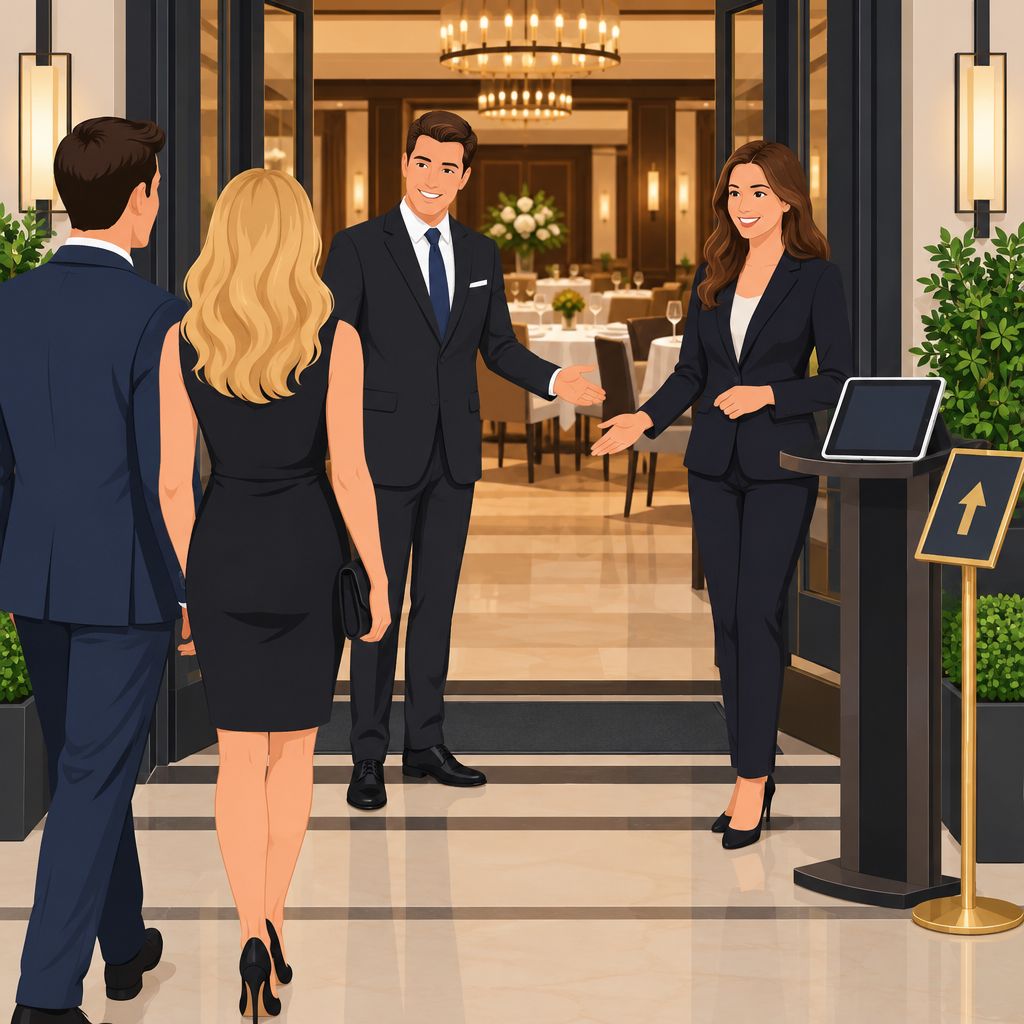
Resolving Conflicts Between Guests or Staff Members
Hosts and hostesses should identify the conflict’s root cause before intervening.
Separating the involved parties can create space for calm, individual conversations.
Open communication helps everyone understand concerns and work toward a practical resolution.
- Identify the conflict’s root cause before intervening.
- Separate the involved parties and speak with them individually.
- Encourage open communication and active listening.
- Find common ground and propose a compromise when needed.
- Follow up to confirm that everyone accepts the resolution.
Strong problem-solving skills help hosts and hostesses navigate difficult situations effectively.
These skills can earn the respect and trust of guests and staff members.
See Related Content: The Impact of Technology on the Casino Dealer Role
Teamwork and Collaboration
- Working closely with servers, bartenders, and kitchen staff
- Communicating effectively to ensure seamless service
In fine dining, teamwork and collaboration help hosts and hostesses support a superior dining experience.
Hosts and hostesses connect servers, bartenders, and kitchen staff during service.
They also encourage cooperation across the team.
Hosts often serve as the team’s central connection.
By building respectful working relationships, they help colleagues coordinate responsibilities.
Consequently, the team can maintain an orderly service rhythm.
Hosts should share reservation details with servers promptly.
That information includes special requests and seating arrangements.
Meanwhile, timely updates help servers prepare for each table.
Hosts also coordinate with bartenders to support timely drink service.
A positive rapport with bar staff can help expedite drink orders.
This cooperation enhances the dining experience for guests.
Clear coordination with kitchen staff helps align food orders and table timing.
Hosts can communicate relevant details to chefs and line cooks.
This cooperation helps reduce service delays and supports restaurant standards.
Furthermore, respectful collaboration strengthens relationships among coworkers.
When staff work together, they can respond more effectively during service.
Guests benefit when employees coordinate their efforts smoothly.
These combined efforts help create a seamless and enjoyable dining experience.
Attention to Detail
Attention to detail helps hosts and hostesses excel in fine dining.
This focus supports cleanliness, organization, and personalized service.
It also helps create a positive dining experience for every guest.
Cleanliness and Organization in the Dining Area
Hosts and hostesses should inspect the dining area regularly.
Transform Your Career Today
Unlock a personalized career strategy that drives real results. Get tailored advice and a roadmap designed just for you.
Start NowThey should address spills and debris promptly to maintain a clean environment.
They also help maintain the intended lighting and ambiance for guests.
- Regularly inspect the dining area to ensure tables remain clean and properly set.
- Check the floor for spills or debris, and address these issues promptly.
- Ensure that cutlery, glassware, and linens remain spotless and neatly arranged.
- Monitor the lighting and ambiance to create the intended atmosphere for guests.
Special Preferences and Requests of Regular Guests
Hosts and hostesses should remember details that regular guests share.
They can use these details to provide more personalized service.
They should also anticipate needs by remembering favorite dishes or drinks.
- Take note of dietary restrictions or allergies that guests may have.
- Remember regular guests’ seating preferences and accommodate them whenever possible.
- Be aware of specific drink or food preferences to provide personalized service.
- Anticipate guest needs by remembering favorite dishes or drinks.
These details can elevate the dining experience for guests.
Guests may appreciate personalized service that addresses their individual needs.
This attention can also foster loyalty and repeat business.
Upselling and enhancing the guest experience are key aspects of fine dining hospitality.
These skills help hosts and hostesses support memorable experiences for guests.
They also contribute to guest satisfaction and restaurant success.
Recommending Specials and Add-Ons
- Highlighting daily specials can pique guest interest and encourage additional orders.
- Suggesting popular appetizers or wine pairings can elevate the dining experience.
- Recommending desserts or premium menu items can increase the check average.
Making Personalized Recommendations
- Learning each guest’s preferences helps hosts tailor recommendations to individual tastes.
- Suggesting dishes or drinks that suit dietary restrictions demonstrates attentiveness.
- Remembering past orders and suggesting similar items creates familiarity and comfort.
By mastering upselling, hosts and hostesses can elevate the fine dining experience.
Personalized recommendations can also increase guest satisfaction.
These techniques further contribute to the restaurant’s success.
Sustaining Excellence in Fine Dining Hospitality
Greet every guest with a warm smile and a friendly attitude.
Meanwhile, maintain a professional appearance and demeanor throughout each shift.
Communicate effectively with guests and staff to support a smooth dining experience.
Also, notice details and anticipate guest needs to deliver exceptional service.
Seek feedback regularly and use it to improve your performance as a host or hostess.
Furthermore, embrace challenges as opportunities to learn and grow professionally.
Excellence in this role requires dedication, passion, and commitment to exceeding expectations.
Continue studying fine dining service standards and best practices to strengthen your performance.
Your role remains crucial because it helps create a memorable dining experience for guests.
Finally, stay positive, remain organized, and consistently provide high-quality service.
Additional Resources
Google search results for How to Excel as a Host/Hostess in Fine Dining Service Industry
Bing search results for How to Excel as a Host/Hostess in Fine Dining Service Industry


