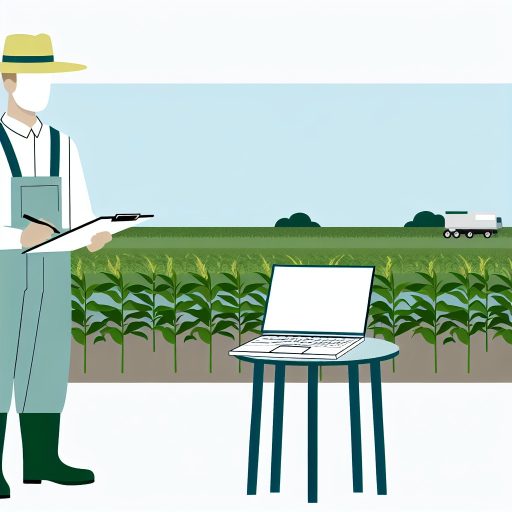




Introduction
Agricultural economists play a crucial role in rural development.
They analyze the economic aspects of agriculture.
Their work is essential in enhancing agricultural productivity.
They also boost the economic growth of rural areas.
By studying market trends, they help optimize farming practices.
Resource allocation and policy impact are key study areas for them.
Agricultural economists contribute to sustainable development.
They promote efficient resource management in agriculture.
Their research provides valuable insights for policymakers and stakeholders.
The work of agricultural economists supports rural communities’ development and prosperity.
Who are Agricultural Economists?
- Definition and explanation of what agricultural economists do
- Education and skills required to become an agricultural economist
What Are Agricultural Economists?
Agricultural economists study economic activities related to agriculture.
They analyze production, distribution, and consumption of food and agricultural products.
They apply economic principles to understand choices by farmers, policymakers, and consumers.
What Do Agricultural Economists Do?
Agricultural economists conduct research on agricultural production and management.
They analyze data and create economic models to forecast trends.
Their insights help policymakers and businesses make informed decisions.
They examine factors that affect agricultural markets including government policies.
They also study environmental issues and global trade impacts.
Education and Skills Required to Become an Agricultural Economist
To become an agricultural economist, individuals typically need a bachelor’s degree.
The degree should be in agricultural economics, economics, or a related field.
Some roles require a master’s or Ph.D. in agricultural economics.
Strong analytical, research, and communication skills are essential.
They must interpret data, write reports, and present findings clearly.
Other important skills include:
- Quantitative analysis skills to work with large datasets and statistical software
- Economic modeling skills to develop and test theoretical models
- Problem-solving skills to address complex economic issues in agriculture
- Knowledge of agriculture and rural development policies and practices
- Ability to work independently and as part of a team on research projects
Role of Agricultural Economists in Sustainable Agriculture and Food Security
Agricultural economists help improve economic aspects of agriculture and rural development.
They apply economic principles and analytical skills to shape policies and strategies.
Their work supports sustainable agricultural practices and enhances food security worldwide.